There is something inherently personal about cake.
It appears at birthdays, graduations, anniversaries and family gatherings. It is brought to offices to celebrate promotions, ordered when friends reconnect and sometimes bought for no particular reason other than making an ordinary day feel a little better.

The founder and CEO of Gula Cakery – Nor Arieni Adriena Mohd Ritzal.
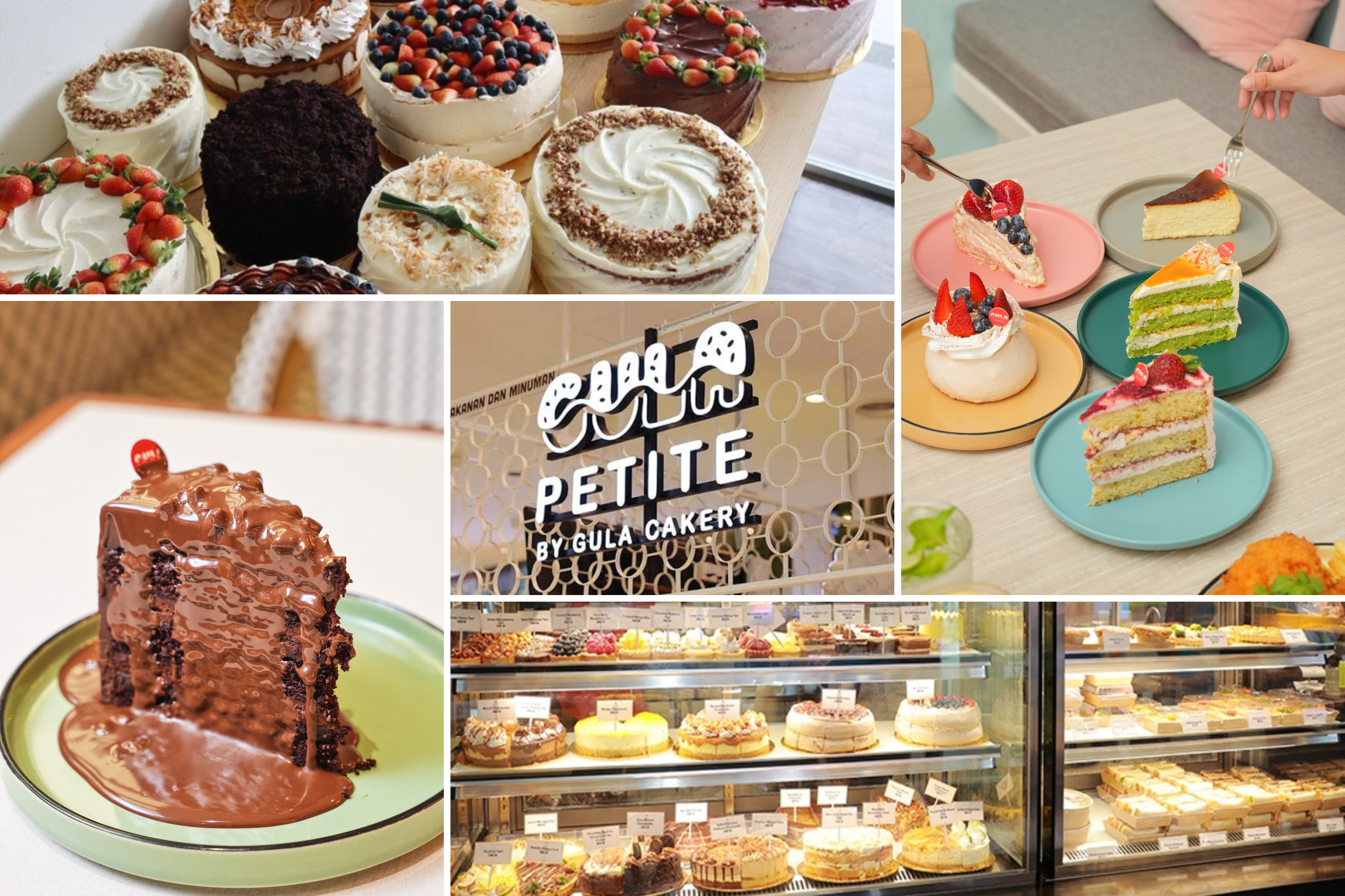
For Gula Cakery, understanding this emotional relationship has helped transform what began as a homegrown Malaysian cake business into a growing café and hospitality brand. Across its outlets in the Klang Valley, the company has built its following not simply around what comes out of the kitchen, but around the occasions that bring customers through its doors.
That distinction matters.
In an F&B market crowded with new concepts and constantly changing trends, customers have more choices than ever. A beautiful cake or photogenic café may attract someone once. Getting them to return requires something considerably harder to manufacture: connection.
A Place at the Table
Gula Cakery’s customer base stretches from young families and students to professionals and corporate clients. Its cakes and extensive flavour selections remain central to the brand, but the café experience has gradually become just as important.
The idea is refreshingly uncomplicated. Create spaces that feel welcoming rather than intimidating, deliver quality without pushing the experience out of reach, and give customers somewhere they genuinely want to spend time.
It was this middle ground that Gula Cakery identified early. Premium café experiences existed, but they could often feel expensive, exclusive or detached. The opportunity was to combine good food and thoughtful surroundings with the warmth and accessibility of a neighbourhood favourite.
Today, expectations are considerably higher. Customers want flavour, ambience, convenience, good service, social-media appeal and consistency—often simultaneously. The challenge for Gula Cakery is therefore no longer simply making great cakes. It is reproducing the feeling surrounding them across every location.
Knowing When Not to Grow
Perhaps the more revealing chapter of Gula Cakery’s story is what happened once opportunities began arriving.
As the brand became more visible, so did invitations to expand. Shopping malls approached. Partnership possibilities emerged. Investment proposals followed.
For a young business, saying yes can feel like progress.
Gula Cakery has discovered that sometimes saying no requires greater confidence.
Its approach to expansion has become noticeably more selective, with decisions now assessed against operational capacity, team readiness, location sustainability and long-term value rather than visibility alone. That change in philosophy recently resulted in the company exiting selected outlets, including Sunway Pyramid and IOI Damansara Mall, allowing resources and management attention to be redirected towards stronger locations and future opportunities.
It is a counterintuitive lesson in an entrepreneurial culture that often celebrates opening more locations as the clearest evidence of success.
For Gula Cakery, becoming bigger and becoming better are no longer assumed to be the same thing.
What Customers Don’t See
While customers encounter cakes, coffee and welcoming interiors, much of the company’s most important work is currently happening out of sight.
Processes are being centralised. SOPs are being strengthened. Workflows are being refined and responsibilities clarified. Selected production and planning functions are being reorganised to reduce dependence on individuals.
None of this makes for particularly glamorous Instagram content.
But it may determine whether Gula Cakery can successfully become a much larger business.
The founders have learnt that an organisation can expand quickly while becoming increasingly fragile underneath. When too much knowledge and decision-making sits with a handful of people, every new outlet adds another layer of complexity.
That has also forced a change in leadership.
During Gula Cakery’s earlier years, founders could intervene whenever something went wrong. It was efficient, but ultimately created dependency. Today, greater responsibility is being placed on middle management, with team members expected to make decisions, take ownership and occasionally learn through mistakes.
The difficult part is knowing when not to step in.
Alongside empowerment has come a more mature approach to accountability. Performance expectations, culture alignment and consequence management have become unavoidable parts of running a larger organisation.
It has led to one of the company’s clearest lessons from scaling: building people can be considerably harder than building a brand.
The Memory of a Brand
Gula Cakery’s attention to human behaviour also extends to its customers.
The company spends considerable effort understanding why people return and which seemingly small details become part of their memory of an experience. That thinking influences menu development, packaging, café design, service recovery and even the way the brand communicates on social media.
It is an interesting advantage because it cannot necessarily be captured in a recipe.
Someone may forget precisely which table they sat at or what song was playing. They are less likely to forget how a place made them feel during an important moment.
For a hospitality business, that emotional memory can become remarkably powerful customer equity.
The Next Slice
Gula Cakery is now considering expansion outside the Klang Valley, with Johor among the markets being explored. But the approach will be different this time.
New locations will depend on stronger supply-chain coordination, leadership depth, centralised operations and systems capable of maintaining consistency across greater distances.
The objective is not to plant flags on a map as quickly as possible. It is to ensure that wherever Gula Cakery eventually opens, customers still recognise the experience that made them fall in love with the brand in the first place.
There is an appealing maturity in that thinking.
After all, anyone can measure a growing café business by the number of outlets it opens.
The harder measure is whether, years later, people still choose its cakes for the moments they want to remember.