Growth is one of the most celebrated words in business. More customers, bigger contracts, higher revenues and wider market reach are typically seen as signs that a company is moving in the right direction.
But after almost three decades in business, Kimal Awning & Iron Works has learned that growth presents a different challenge: becoming bigger without becoming less dependable.

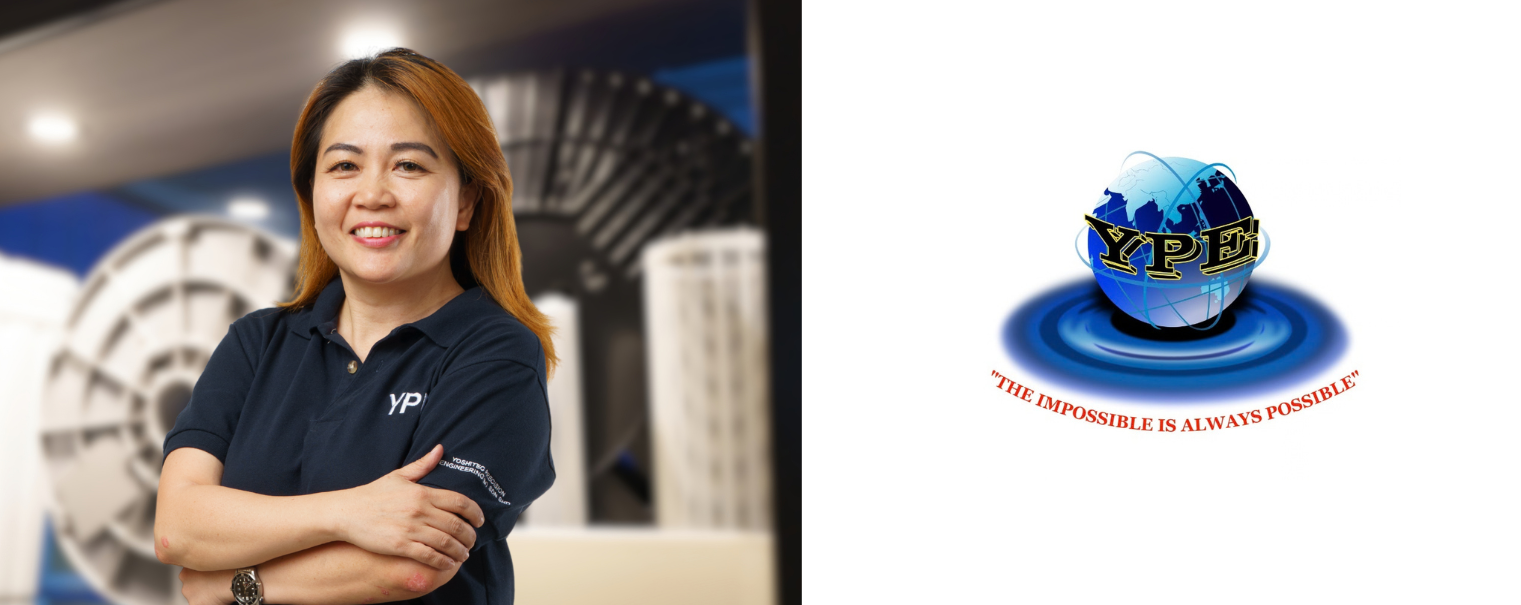
Founder and Head of Kimal Awning & Iron Works Sdn Bhd – Chin Mee Yoke.
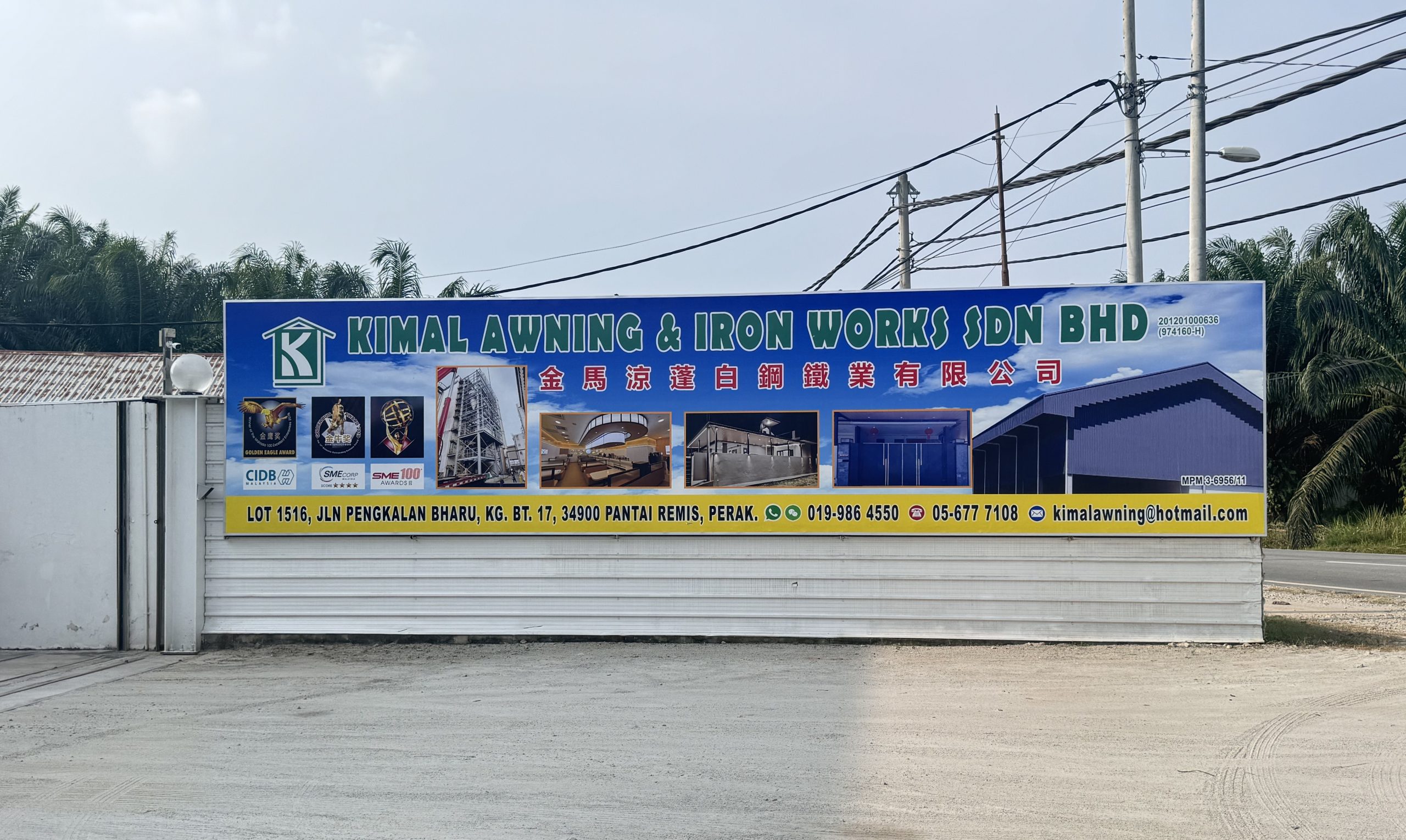
Established in 1998 and incorporated as a private limited company in 2012, Kimal has accumulated more than 28 years of experience in Malaysia’s construction and metal fabrication industry. Today, the company specialises in awning systems, structural steel, stainless steel works, aluminium products, gates, railings, fencing and customised metal solutions for residential, commercial, industrial and government clients throughout Malaysia.
What began as a business centred on fabrication and installation has gradually evolved into something more comprehensive. Kimal now manages projects from design and technical consultation through fabrication, installation and after-sales support, supported by its own factory, specialised machinery, transportation fleet and experienced technical team.
That evolution has taught the company that longevity is not simply about staying in business. It is about continually adapting the way the business operates while protecting the standards that established its reputation.
The Market Doesn’t Stand Still
When Kimal entered the industry, customers faced a relatively straightforward problem. Quality could be inconsistent, customisation was limited and dependable after-sales service was not always easy to find.
The company saw an opportunity to provide greater control over the finished product by investing in its own manufacturing capabilities, equipment and quality processes.
But the definition of good service has changed considerably since 1998.
Today’s clients expect more than workmanship. They want faster turnaround times, greater design flexibility, stronger safety standards, regulatory compliance and clear communication throughout a project. They also expect suppliers to coordinate effectively with other stakeholders and solve problems rather than simply manufacture what appears on a drawing.
Kimal has consequently shifted from thinking primarily as a product supplier to operating as a project partner.
Its work increasingly begins with understanding the problem a customer is trying to solve. An awning may be required to protect a commercial space from Malaysia’s weather. A steel structure may need to improve an industrial facility’s functionality. Custom metalwork might be required to increase safety, create additional usable space or improve the long-term value of a property.
The finished structure matters, but so does everything required to deliver it correctly.
Not All Revenue Is Good Revenue
Perhaps one of the most valuable lessons accumulated over 28 years is knowing when an opportunity is worth pursuing.
Kimal’s current strategy is deliberately focused on long-term sustainability rather than expansion for expansion’s sake.
Investment is concentrated on improving manufacturing efficiency through technology and modern equipment, developing employees, strengthening digital systems and pursuing higher-value projects that make use of the company’s customised engineering capabilities.
Every significant investment is considered against three practical measures: whether it improves customer value, strengthens operational capability and contributes to sustainable profitability.
The same discipline applies to projects.
Kimal does not believe in competing through unsustainably low prices simply to secure more work. Nor does it intentionally pursue projects that could compromise quality, safety or profitability. Expansion into unfamiliar sectors purely to increase turnover is approached with similar caution.
It is a philosophy that places reputation ahead of short-term numbers.
Recognition including SME Corp Malaysia’s 4-Star SCORE rating, Golden Eagle Award 2018, Golden Bull Award 2019 and SME100 Award 2025 reflects the business foundation Kimal has established along the way.
The Hard Part Starts When You Get Bigger
Interestingly, Kimal does not identify winning projects as the hardest part of scaling.
It is maintaining consistency.
As projects become larger, more departments become involved. Sales needs to communicate effectively with design. Procurement must align with production. Production affects logistics. Logistics needs to coordinate with installation, while customer service must remain informed throughout the process.
What might once have been managed through direct conversations now requires structured systems.
This has forced leadership itself to change.
Instead of senior management being involved in every operational detail, Kimal has invested in standard operating procedures, digital management tools, production planning, inventory management and structured reporting. The objective is to give teams clearer responsibilities while providing management with better visibility across the organisation.
Leadership increasingly becomes less about solving every problem personally and more about developing people capable of solving those problems themselves.
For an established SME, that transition can be just as important as investing in new machinery.
Reputation Compounds
After 28 years, Kimal’s definition of growth has therefore become considerably broader than revenue.
Productivity matters. Technical capabilities matter. Developing employees matters. But repeat customers, long-term partnerships and a reputation for delivering what was promised have become equally important measures of progress.
That may explain why the company continues to emphasise quality control and end-to-end project management despite operating in a market where price competition can be intense.
A cheaper project can win business once.
Reliability can win it repeatedly.
The structures Kimal fabricates are designed to endure weather, daily use and the demands of the environments around them. There is an obvious parallel with the company itself.
Twenty-eight years in business has taught Kimal that growth does not always mean moving faster or becoming bigger.
Sometimes, the strongest form of growth is having the discipline to know what to improve, what opportunities to pursue—and what standards should never be compromised.