Author name: admin

Investment & Market Trends, News

Malaysia’s Tax Reforms Help Stimulate Innovation, Advanced Technologies

KUALA LUMPUR: Malaysia’s latest tax reforms, outlined in Budget 2024 to stimulate domestic startups, drive clean energy investment and modernise tax administration, are set to benefit innovative startup businesses, green technology sectors and service-oriented companies. BMI, a Fitch solutions company, said the budget’s sweeping tax reforms aimed to stimulate local industries and channel investment into key sectors, including advanced manufacturing. Among the initiatives are reinvestment allowance (RA), electric vehicles (EVs) tax incentives and global services hub tax incentives. According to BMI, the RA effectively lowers the tax burden on companies that undertake capital investments to modernise machinery, upgrade technology or diversify into higher-value products. Meanwhile, the extended tax incentives until the assessment year 2027 for EVs will reduce operational costs for businesses in the rental sector, which could potentially accelerate fleet upgrades and increase the adoption of green vehicles. “Companies that set up global service centres in Malaysia will benefit from a reduced tax rate under the Global Services Hub Tax Incentive,” it said in a statement. BMI noted that Malaysia’s corporate income tax rate of 24% positions it towards the higher end of the spectrum in the broader Asia region. In contrast, ASEAN neighbours such as Singapore and Thailand offer more competitive rates of 17% and 20% respectively, positioning them as a more favourable investment destination on a tax basis. However, BMI said that introducing targeted incentives can offset the high tax rates. “While Malaysia’s corporate income tax rate is high by regional standards, the introduction of targeted investment incentives is poised to enhance investment appeal in key innovative and sustainable sectors. “This strategy will enhance Malaysia’s attractiveness as an investment hub before the Global Minimum Tax (GMT) comes into effect. Once the GMT is adopted broadly across Asia, the competition edge will shift as low tax rates will no longer be a draw for foreign direct investment, given that the tax floor will be uniform in adopting markets,” it said. Consequently, it said that economies like Malaysia will need to offer additional incentives to enhance their attractiveness to businesses. “Such proactive measures are expected to strengthen Malaysia’s overall value proposition for companies operating within its borders,” it added. Malaysia’s implementation of the GMT as part of the Organisation for Economic Co-operation and Development’s (OECD) Base Erosion Profit Sharing (BEPS) 2.0 project, has been deferred to 2025. This tax will affect multinational enterprises (MNEs) with consolidated revenues exceeding 750 million euros, by instituting a floor of 15% on their tax rates. — BERNAMA


Investment & Market Trends, News

IATA Raises 2024 Net Profit Forecast for Airlines to US$30.5 Bil

KUALA LUMPUR: The International Air Transport Association (IATA) has upgraded its 2024 profitability projections for airlines to US$30.5 billion (RM143.16 billion) in net profit compared to the US$25.7 billion (RM120.63 billion) forecast made in December 2023. It said the improved profitability is also estimated to be higher than 2023’s US$27.4 billion (RM128.61 billion). IATA said North America continues to be the most significant contributor to industry profits, supported by a high passenger load factor, robust yields and strong consumer spending despite cost-of-living pressure. Meanwhile, Asia Pacific is expected to be responsible for half of the world’s revenue passenger kilometres (RPK) growth in 2024, driven largely by recovering domestic markets in China, Japan and Australia. “International travel in the region remains subdued, especially China where it is still below pre-Covid levels. “This indicates that there is still a lot of pent-up demand for cross-border travel in the region, which will likely boost future growth prospects,” IATA said, forecasting revenue in 2024 to hit a new high of US$996 billion (RM4.67 trillion). “Passenger revenues are expected to reach US$744 billion (RM3.49 trillion) in 2024, up 15% from US$646 billion (RM3.03 trillion) in 2023 with RPK growth expected to be 11.6% year-on-year,” it said. In contrast, cargo revenues are expected to fall to US$120 billion (RM563.2 billion) in 2024 from US$138 billion (RM647.7 billion) in 2023. “Despite the strength of demand, cargo yields are expected to fall 17.5% in 2024 while remaining slightly above 2019 levels. “This is normalisation after extraordinary pandemic highs. A key factor in this is the significant belly capacity that entered the market in 2023 in tandem with the recovery of passenger travel,” it stated. Overall, IATA projected total travellers to reach a new record of 4.96 billion this year, while total air cargo volumes are expected to reach 62 million tonnes in 2024. Meanwhile, the operating profits of airlines are expected to reach US$59.9 billion (RM281.1 billion) in 2024, up from an estimated US$52.2 billion (245.02 billion) in 2023. IATA said an aggregate return above the cost of capital, however, continues to elude the global airline industry. It said the return on invested capital in 2024 is expected to be 5.7%, which is about 3.4 percentage points below the average cost of capital. “The airline industry is on the path to sustainable profits, but there is a big gap still to cover. A 5.7% return on invested capital is well below the cost of capital, which is over 9%. “Earning just US$6.14 (RM28.82) per passenger is an indication of just how thin our profits are. It is barely enough for a coffee in many parts of the world,” said IATA Director-General Willie Walsh. On top of that, jet fuel is expected to average US$113.8 (RM534.18) per barrel in 2024, translating into a total fuel bill of US$291 billion (RM1.36 trillion), accounting for 31% of all operating costs. IATA added that high crude oil prices are expected to continue to be further exaggerated for airlines as the crack spread (premium paid to refine crude oil into jet fuel) is expected to average 30% in 2024. — BERNAMA

Investment & Market Trends, News

Sustainable Aviation Fuel Production on Track to Triple in 2024

KUALA LUMPUR: The International Air Transport Association (IATA) announced that its projection for sustainable aviation fuels (SAF) to triple, reaching 1.9 billion litres (1.5 million tonnes) in 2024 is on track. This would account for 0.53% of aviation’s fuel needs this year. Meanwhile, IATA also emphasised the need for several policy measures to accelerate SAF use. “Governments have set clear expectations for aviation to achieve a 5% carbon dioxide emissions reduction through SAF by 2030 and to be net zero carbon emissions by 2050. “They now need to implement policies to ensure that airlines can actually purchase SAF in the required quantities,” said IATA Director-General Willie Walsh. The association said incentives to build more renewable energy facilities, strengthen the feedback supply chain and allocate a greater portion of renewable fuel output to aviation would help to decarbonise aviation. “Governments can also facilitate technical solutions with accelerated approvals for diverse feedstocks and production methodologies as well as co-processing renewable feedstocks in crude oil plants,” said Walsh. IATA said incentives aimed at SAF could help facilitate the renewable diesel-SAF switch, which requires minimal modifications at existing stand-alone renewable fuel facilities. It said that production of all renewable fuels will need to scale up rapidly and among them, the need for a growing share of SAF production will necessitate strong policy support. “One such articulated policy is the US Grand Challenge and the US$3 billion (RM14.1 billion) of investments it supports. “Stable, long-term tax credits would further maximise SAF production capability in both existing and new facilities,” it noted. In a separate statement, IATA announced that it would establish the SAF Registry to accelerate the uptake of SAF by authoritatively accounting for and reporting emissions reductions from SAF. 17 airlines, 1 airline group, 6 national authorities, 3 original equipment manufacturers (OEMs) and 1 fuel producer are already supporting the effort to develop the registry. The registry is expected to launch in the first quarter of 2025. — BERNAMA

Investment & Market Trends, News

TalentCorp Announces Grant for Tokyo-Based M’sian Researchers

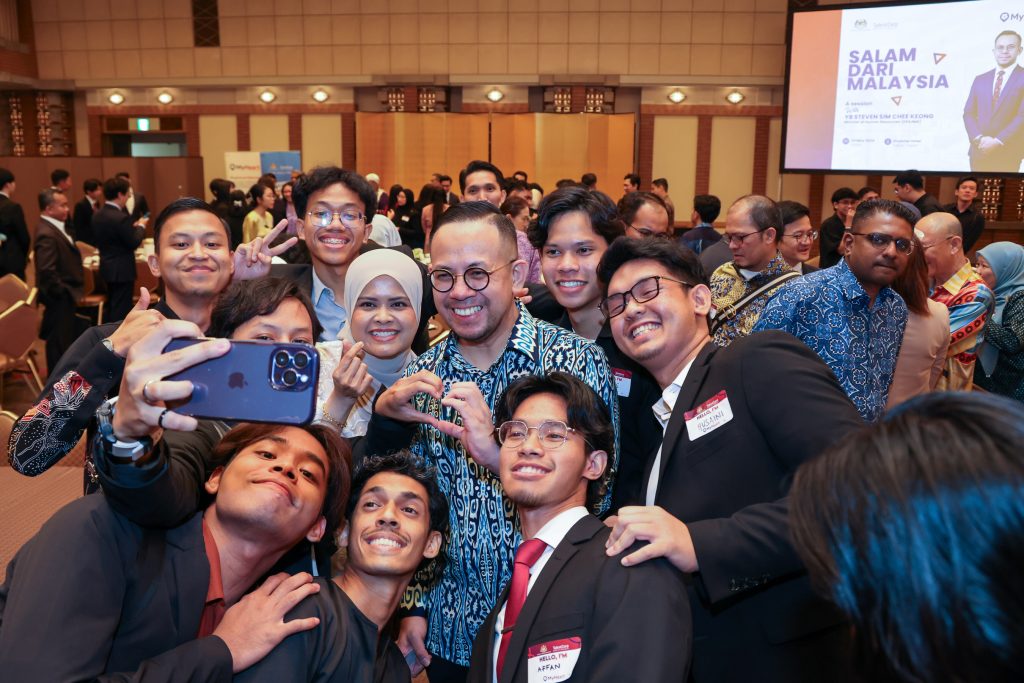
KUALA LUMPUR: Talent Corporation Malaysia Bhd (TalentCorp), an agency under the Ministry of Human Resources (KESUMA), continues its commitment through the Malaysia at Heart (MyHeart) initiative, providing a platform for Malaysians worldwide to contribute to the nation’s development, regardless of their location. During a recent TalentCorp MyHeart ‘Salam Dari Malaysia’ outreach event in Tokyo, which drew over 180 Malaysians residing in Japan, KESUMA Minister Steven Sim Chee Keong, announced that TalentCorp will come on board as a strategic partner for the upcoming Malaysia-Japan Visionaries Conference 2024 (MJVC2024). In this first MyHeart collaboration for Japan, TalentCorp will provide a RM30,000 grant (equivalent to ¥1,000,000) to ensure the conference’s success. Additionally, TalentCorp will allocate a RM50,000 bursary to assist up to 20 Malaysian researchers to participate in the conference in Tokyo. “In today’s global market, the best talents, especially our Malaysians, will excel wherever they are. Through MyHeart, KESUMA is committed to developing Malaysian talents abroad, so they can contribute to the nation’s growth and benefit fellow Malaysians. “Our country’s human capital is a valuable asset, no matter where they reside, and KESUMA is dedicated to nurturing these assets for the greater good,” the minister said. The MJVC2024 is organised by a team of 45 Malaysian and Japanese researchers, led by Amy Poh Ai Ling. A Malaysian hailing from Bukit Mertajam, Penang, with dual PhD credentials, Amy Poh currently resides in Tokyo with her family and is committed to advancing excellence in interdisciplinary research between Malaysia and Japan. “To me, this is what a diaspora programme like MyHeart is about. Each MyHeart session offers more than just a chance to connect with fellow Malaysians abroad, but it is an opportunity to pitch and engage in collaborations to breathe life into your projects. These can create tangible outcomes that directly benefits both Malaysians and Malaysia, transforming into genuine brain gain stories,” Steven Sim emphasised. At the event, TalentCorp Group CEO, Thomas Mathew signed Memoranda of Understanding (MoU) with the Japan Graduates Association of Malaysia (JAGAM) and the Malaysian Students’ Association Japan (MSAJ), which aims to bolster TalentCorp’s initiatives, including MyHeart and Ilham KESUMA Antarabangsa, through increased collaboration with these active Malaysian associations in Japan. Mathew highlighted that previous TalentCorp’s efforts in the diaspora space were mainly on facilitating the return of Malaysians abroad and that the role has since evolved to encompass all Malaysians living abroad, recognising that they can contribute significantly to the circulation of knowledge and expertise. “By coming on board as a strategic partner for meaningful initiatives such as the MJVC2024, we are stating emphatically that we support our Malaysians abroad who drive and are committed to projects that provide opportunities to fellow Malaysians. That is the essence of what MyHeart is,” he commented.

Energy & Technology, Events, News

AI Apex Asia Announces Its Inaugural Event to Enhance AI Capabilities

SINGAPORE: AI Apex Asia, a new organisation dedicated to driving artificial intelligence (AI) advancements across Asia, has a core mission centred on enhancing AI access, progress, and governance. It aims to spearhead AI innovation, application, and mass adoption throughout the region and unite AI professionals, policymakers, technology companies, researchers, investors, and startup founders to collaboratively address Asia’s most pressing AI challenges. By harnessing innovative technologies, AI Apex Asia seeks to boost economic prosperity while minimising the AI divide across Asia. With strategic partnerships and its extensive network, AI Apex Asia is set to play a vital role in the AI ecosystem, spearheading initiatives to drive AI advancements and its practical applications. These efforts are geared to push the boundaries of technological implementation while ensuring that AI’s transformative potential is harnessed to foster inclusive growth. In conjunction with its launch, AI Apex Asia also announced its inaugural event, the AI Apex Asia 2024, which will be held on 5 June 2024, during the Singapore AI Week, and will take place at Lazada One, Singapore. Themed ‘The Asia Advantage’, AI Apex Asia 2024 spotlights Asia’s emerging dominance in the global AI sector and gathers esteemed guests of AI leaders, thinkers, and innovators to discuss pivotal advancements and strategies in AI. The exclusive event features several renowned leaders including a former member of the Singapore Parliament and Emad Mostaque and also the founder of Stability AI, Inderjit Singh. While AI Apex Asia aims to position Asia at the forefront of global AI innovation, its inaugural event is the first of many initiatives designed to continuously advance the frontier of AI development and foster a collaborative ecosystem for AI professionals. Through these ongoing efforts, AI Apex Asia is committed to sustaining Asia’s leading role in technological innovation and global dialogue.

Energy & Technology, Investment & Market Trends

Singapore Invests $S300 Mil in Quantum Strategy, Announces Green Data Centre Roadmap

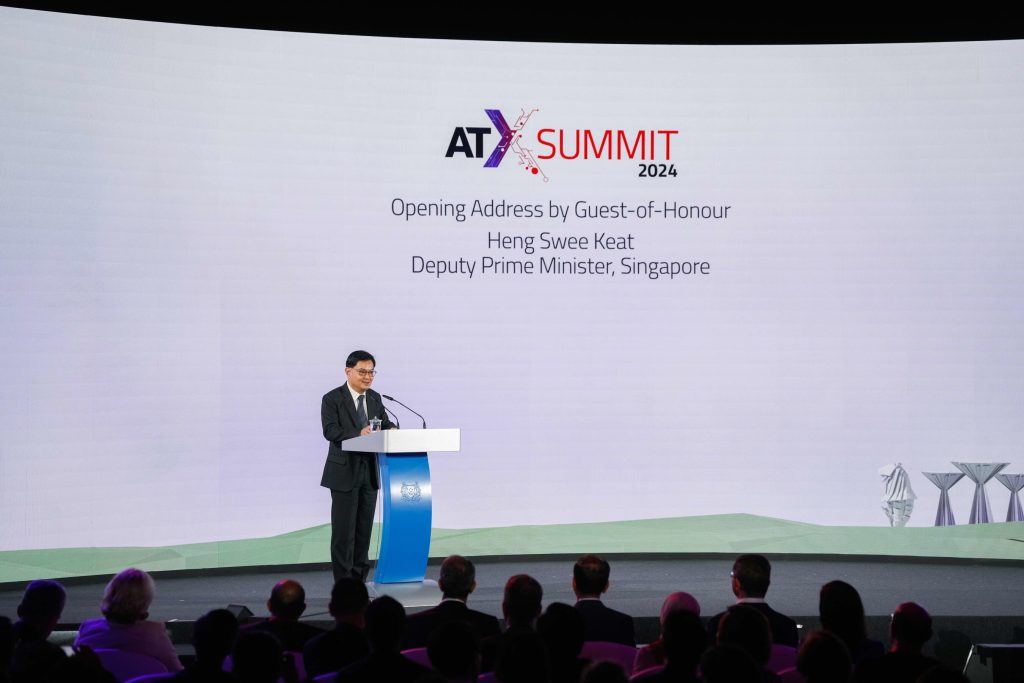
SINGAPORE: Singapore Deputy Prime Minister and Chairman of the National Research Foundation NRF, Heng Swee Keat outlined an investment of close to S$300 million into Singapore’s National Quantum Strategy (NQS) to advance the country’s growing quantum industry. The investment will strengthen the nation’s position as a leading hub in the development and deployment of quantum technologies over the next five years. DPM Heng also launched the Green Data Centre (DC) Roadmap to guide digital sustainability and chart green growth pathways for DCs, supporting AI and computing developments. For AI, DPM Heng announced the release of the Model AI Governance Framework (Generative AI), as well as the development of the Digital Forum for Small States (DFOSS) AI Governance Playbook with Rwanda to advance AI safety. The NQS will focus on four funding initiatives, namely: The Centre for Quantum Technologies (CQT), a research centre of excellence hosted by the National University of Singapore, will be elevated to a flagship national research centre. New National Quantum Sensor Programme established under Quantum Engineering Programme 3.0 (QEP 3.0) while existing national-level quantum programmes will enhance their current suite of capabilities to meet industry needs. New National Quantum Processor Initiative (NQPI) set up to enable Singapore to design and build its own practical quantum processor. The National Quantum Scholarships Scheme (NQSS) will be launched to develop Singapore’s talent pipeline in quantum research & development (R&D). Senior Minister of State for Communications and Information, Dr Janil Puthucheary shared how Singapore is taking the lead in ensuring the long-term sustainable growth of DCs with the Green DC Roadmap, which aims to provide at least 300 megawatts of additional capacity in the near term, with much more through green energy deployments. The additional capacity is aimed at seeding innovative ways to accelerate energy efficiency, as well as hybrid ways to unlock further capacity through green energy. The roadmap also outlines IMDA’s plans to partner with the industry to push boundaries and accelerate DC sustainability on two fronts: Accelerate DC’s energy efficiency at hardware and software levels and allow industry and end-users to put in place best-in-class technologies to maximise efficiency, capacity and economic potential. Accelerate DCs’ use of green energy to expand capacity, and explore how we can deploy this at scale over time to maximise space for continued DCs’ growth. Singapore has been actively contributing to global AI safety discussions through initiatives and the Model AI Governance Framework (Gen AI) is the first comprehensive framework that consolidates global conversation AI governance. Additionally, the finalised framework will be mapped to international AI principles such as the G7 Hiroshima Principles for interoperability.

Energy & Technology, Investment & Market Trends

Masan High-Tech Materials Signs Definitive Agreements With Mitsubishi Materials Corp

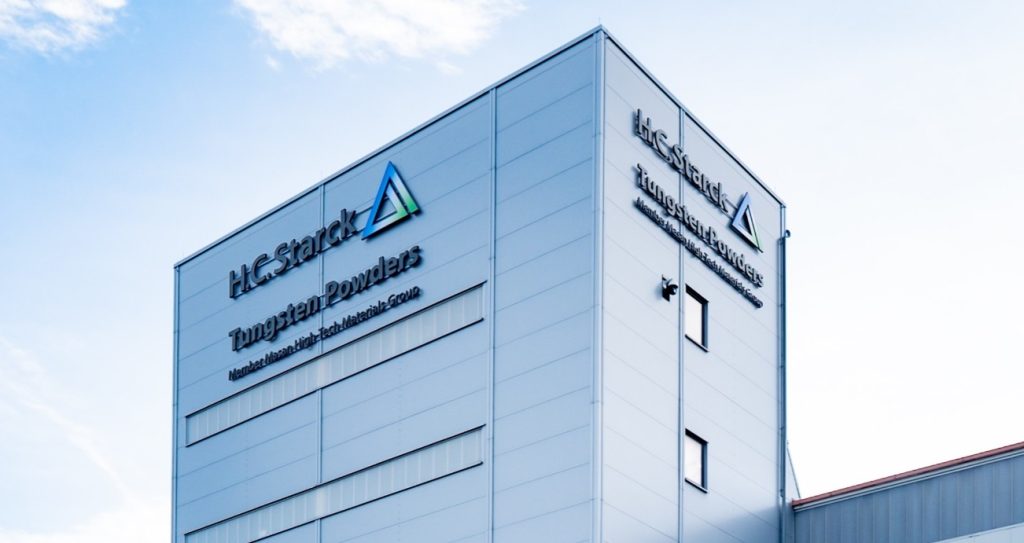
HO CHI MINH: Masan High-Tech Materials Group announced the signing of definitive agreements with Mitsubishi Materials Corporation Group, which includes MMC Group that will acquire 100% of HC Starck Holding (Germany) GmbH from MHT Group for an equity purchase price of US$134.5 million (RM633.09 million). The parties will enter into a long-term, win-win APT and tungsten oxide offtake agreement, where Masan will retain its ownership in Nyobolt, a fast-charging tungsten and niobium-based battery technology company based in the United Kingdom. Masan will also retain potential monetary upside from the future commercialisation of black mass recycling technology developed by HCS. Transaction proceeds will be used to reduce MHT’s outstanding debt balance, consistent with Masan Group’s target to reduce net debt to its earnings before interest, taxes, depreciation and amortization (EBITDA) to below 3.5 times. Masan is expected to report a one-time profit gain of approximately US$40 million (RM188.28 million) as a result of the transaction and benefit from long-term net profit after tax uplift of US$20-30 million (RM94-141 million). Meanwhile, in July 2023, Nyobolt unveiled an EV concept with a 6-minute charging time and has signed head terms with two major commercial customers. There is also a monetary upside for Masan as Nyobolt starts to commercialise its innovative tungsten-niobium battery technology. MHT Chief Executive Officer of Masan Group and Chairman, Danny Le commented, “We will focus on rebuilding MHT to the lowest cost producer of tungsten to maximize cash flows. At the same time, we will continue to explore strategic alternatives to transform Masan Group into a consumer pure-play.” MMC Group’s acquisition of HCS plays to its strengths in the mid-stream and downstream tungsten value chain. The acquisition will provide MMC Group with access to HCS’s production hubs in Europe, North America and China as well as a comprehensive tungsten scrap recycling platform backed by proprietary intellectual property including 90 worldwide patents and another 53 patents in the application phase. The transaction also marks the next step of business cooperation between the parties, representing a unique opportunity to create an end-to-end global tungsten alliance. UBS AG Singapore Branch acted as the financial advisor to MHT. The closing of the transaction is expected by the end of 2024 and is subject to customary corporate and regulatory approvals.

Energy & Technology, Investment & Market Trends

Primax, IAdea Enters Partnership to Revolutionise Smart Meeting Solutions

TAIPEI: Primax Electronics and IAdea have announced a strategic partnership to invest in and develop cutting-edge smart meeting solutions that aims to position both companies as leaders in the smart conference ecosystem. Primax has long been dedicated to visual, audio, and interface integration technologies. With its strong manufacturing capabilities and AI development experience, the company provides customers with high-quality products. According to Frost & Sullivan’s 2024 market report, the video conferencing devices market is projected to grow at an annual rate of 16.8% to reach US$7.7 billion (RM36.25 billion) by 2028. As businesses increasingly seek to enhance meeting efficiency and reduce costs, new market opportunities will emerge through the integration of artificial intelligence, big data, and cloud computing in smart meeting management. IAdea focuses on smart workplace system integration and product development. Its cloud-based smart meeting device management (MDM) solution enables IT administrators to remotely manage, monitor, and troubleshoot devices via a centralized platform. IAdea’s security-enhanced embedded platforms benefit businesses by improving device manageability, extending equipment lifespan, and reducing IT management and deployment costs. Primax specialises in the development and manufacturing of visual, audio, and interface integration technologies. Through continuous innovation and R&D efforts, Primax applies its advanced technologies to a range of audio and video conferencing products, ensuring high-quality meeting solutions that meet customer demands for top-tier performance and reliability. IAdea and Primax are committed to infusing more innovation and value into smart meeting solutions. IAdea Co-Founder and CEO John Wang stated, “In the post-pandemic era, businesses face numerous challenges introduced by flexible work arrangements. “We are excited to combine IAdea’s expertise in smart workplace AIoT and cloud platforms with Primax’s leading manufacturing capabilities and audio/visual/interface technologies to launch smart meeting products with cloud-based management and security features,” he said, highlighting that it will add tremendous value to Taiwan’s electronic industry and allow the partnership to tap into emerging market opportunities. Meanwhile, Primax Senior Director, Janet Wang said, “Primax is committed to providing customers with a one-stop integrated video conferencing solution. Through advanced manufacturing and a professional R&D team, combined with IAdea’s cloud management system, we are creating an integrated video conferencing solution from the cloud to the edge to meet various customer needs.”

ESG, News

ESG-i Assessment Framework Launched By Ficus Capital, INCEIF to Empower MSMEs

KUALA LUMPUR: Ficus Capital, in collaboration with INCEIF University, launched its ESG-i Assessment Framework that will serve as an innovative tool to empower micro, small and medium enterprises (MSMEs) in Malaysia with sustainable practices. The launching was held at the Global Forum on Islamic Economics and Finance GFIEF 2024 that was organised by Bank Negara Malaysia (BNM), in collaboration with key industry players and under the patronage of the Ministry of Finance. The assessment framework is an inclusive blueprint for assessing sustainability that incorporates Shariah principles and the Quadruple Bottom Line (QBL) – planet, people, profit and principle. “It is natural for Islamic finance development to converge with ESG as Islamic Social Finance has been practised by Islamic Banks and Islamic Financial Institutions in Malaysia. This robust ESG-i framework is timely as a catalyst towards greater integration between Islamic finance and ESG, especially since it comes on the back of our Prime Minister Datuk Seri Anwar Ibrahim’s recent announcement on the government’s commitment towards Islamic finance innovation via partnerships,” said Religious Affairs Deputy Minister Senator Zulkifli Hasan. By simplifying complex sustainability criteria, the ESG-I Assessment Framework provides practical tools for MSMEs to help them transition to a low carbon, circular and resilient (LCCR) future, enabling them to mitigate risks, unlock new markets and enhance their financial performance. On this, Ficus Capital Chairman Nor Azamin Salleh said, “The ESG-i Framework offers a practical solution to help MSMEs integrate sustainability into their operations, which aligns with our commitment to supporting companies that operate according to ESG-i principles. “Hence, the launch of the ESG-i Assessment Framework comes at a crucial time, as global sustainability standards evolve, making it imperative for Malaysian MSMEs to adopt practices that keep them competitive and resilient while fulfilling Islamic finance principles,” he added. The Assessment Framework was piloted with a diverse group of MSMEs, demonstrating its real-world applicability and impact, highlighting the need for targeted support and the framework’s potential to drive significant improvements in sustainability practices. Meanwhile, INCEIF University President and CEO, Professor Emeritus Mohd Azmi Omar said, “The positive response from the pilot phase underscores the framework’s practicality and impact. It provides MSMEs with the necessary tools to integrate sustainability into their business practices effectively. Additionally, it empowers them to be resilient, competitive, and future-ready. “The framework aims to be a catalyst for change, promoting a sustainable supply chain and addressing the evolving sustainability landscape,” he explained.

Energy & Technology, News

PolyU Research Finds AI Helps to Better Align Human Brain Activity

HONG KONG: With generative artificial intelligence (GenAI) transforming the social interaction landscape in recent years, large language models (LLMs) – which use deep-learning algorithms to train GenAI platforms to process language – have been put in the spotlight. A recent study by The Hong Kong Polytechnic University (PolyU) found that LLMs perform more like the human brain when being trained in more similar ways as humans process language, which has brought important insights to brain studies and the development of AI models. Current LLMs mostly rely on a single type of pretraining, namely contextual word prediction. This simple learning strategy has achieved surprising success when combined with massive training data and model parameters, as shown by popular LLMs such as ChatGPT. Recent studies also suggest that word prediction in LLMs can serve as a plausible model for how humans process language. However, humans do not simply predict the next word but also integrate high-level information in natural language comprehension. A research team led by the Faculty of Humanities Dean, Professor Li Ping and PolyU Humanities and Technology Foundation Professor, Sin Wai Kin has investigated the next sentence prediction (NSP) task, which simulates one central process of discourse-level comprehension in the human brain to evaluate if a pair of sentences are coherent, into model pretraining and examined the correlation between the model’s data and brain activation. The study has been recently published in the academic journal Sciences Advances. Recent LLMs, including ChatGPT, have relied on vastly increasing the training data and model size to achieve better performance. “There are limitations in just relying on such scaling. Advances should also be aimed at making the models more efficient, relying on less rather than more data. Our findings suggest that diverse learning tasks such as NSP can improve LLMs to be more human-like and potentially closer to human intelligence,” Li Ping said. “More importantly, the findings show how neurocognitive researchers can leverage LLMs to study higher-level language mechanisms of our brain. “They also promote interaction and collaboration between researchers in the fields of AI and neurocognition, which will lead to future studies on AI-informed brain studies as well as brain-inspired AI,” he added.

Scroll to Top

Subscribe
FREE Newsletter