ESG

ESG, Lifestyle

ZALORA Highlights Climate, Circular Fashion Gains for Earth Day

SINGAPORE:  ZALORA, Asia’s leading fashion and lifestyle e-commerce platform under Global Fashion Group (GFG), has reaffirmed its sustainability commitment by sharing key achievements in climate action and circular fashion, in conjunction with Earth Day. In its latest People and Planet Positive Report, ZALORA outlined significant strides in lowering its environmental impact across Southeast Asia. In 2024, the company enhanced its logistics strategy by partnering with third-party last-mile providers that use hybrid vehicles, electric bikes, bicycles, and walking deliveries — supporting GFG’s 2030 target to work with providers that operate at least 50% low or zero-emission fleets. In Malaysia, ZALORA collaborated with the Malaysian Green Technology and Climate Change Corporation (MGTC), UNIDO, and partners Blueshark and RydeEv to pilot electric motorcycle deliveries. The company also made notable progress in packaging sustainability by using 100% RCS-certified recycled polyethylene flyers, responsibly sourced paper fillers, and recycled-content boxes. ZALORA has begun trials with paper packaging and implemented automation to reduce excess material in its fulfilment processes. These efforts led to ZALORA’s inclusion in the Singapore Alliance for Action (AfA) on Packaging Waste Reduction, co-led by the Singapore Manufacturing Federation and SingPost. In waste management, ZALORA diverted over 34,630 kg of garments from landfills through partnerships with organisations such as The Salvation Army, Life Line Clothing, and Tukar Tambah Celana. The initiative supports second-life use or upcycling of textiles, contributing to a growing circular economy. ZALORA employees across the region also recorded nearly 1,300 volunteering hours in 2024, engaging in causes from forest replanting and food waste rescue to animal welfare and community kitchens. “Sustainability isn’t just a commitment for us at ZALORA, it’s a shared journey with our customers, partners, and communities,” said Christopher Daguimol, Corporate Communications Director at ZALORA Group. “From driving climate action to promoting circular fashion, we’re proving that small steps lead to meaningful change.” ZALORA plans to expand its sustainable practices further throughout 2025, strengthening community collaborations and scaling impact-led innovations across its operations.

ESG

UOA and Alliance Bank Partner to Launch Green Financing Scheme for Duo Tower

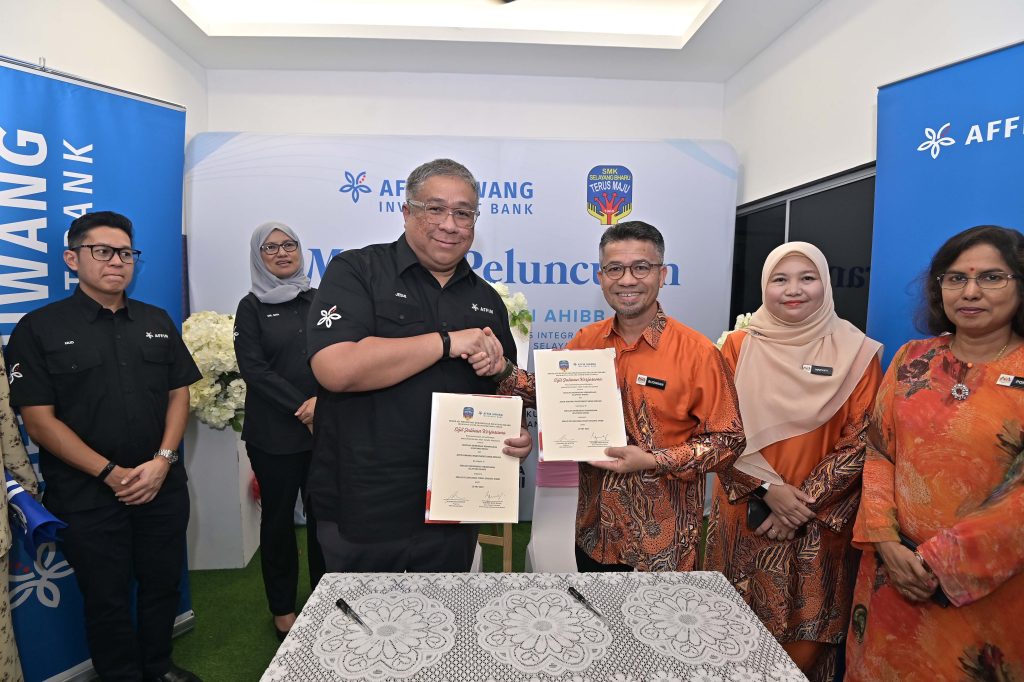
KUALA LUMPUR: UOA Development Bhd (UOA) has entered into a strategic partnership with Alliance Bank Malaysia Berhad through the signing of a Memorandum of Understanding (MoU) to launch the Alliance Green Properties Financing for its latest commercial development, Duo Tower in Bangsar South. The initiative aims to promote the ownership of green-certified properties and support the broader vision of sustainable urban development. Duo Tower is the first commercial project to formalise an MoU under this green financing scheme, signalling a significant step forward in driving environmentally responsible real estate investments. As the newest addition to Bangsar South, Duo Tower features two sleek, biophilic-designed corporate towers rising over 30 storeys. Conceptualised by the township’s master developer, the project integrates sustainable features with modern aesthetics, reflecting a next-generation approach to workplace environments. This green financing solution is aligned with Alliance Bank’s Acceler8 strategy, which focuses on expanding property financing offerings to the consumer market. Under this scheme, eligible borrowers can benefit from preferential financing rates, making eco-conscious property ownership more attractive and attainable. “Duo Tower sets a precedent for green commercial development, and this collaboration with Alliance Bank highlights our mutual commitment to shaping a more sustainable urban landscape,” said a UOA spokesperson. For Alliance Bank, the partnership supports its broader ESG agenda, with the consumer banking division actively driving green property financing solutions and supporting the development of energy-efficient, ESG-certified residential and commercial projects. Beyond property ownership, the bank also sees this collaboration as a means to channel investments into wider community sustainability initiatives, including rainwater harvesting systems, green communal spaces, and affordable housing schemes with environmental features. For further details on this partnership, visit www.duotower.com.my or www.alliancebank.com.my.

ESG

Malaysia Forest Fund and Gold Standard Ink MoU to Advance High-Integrity Forestry Carbon Projects

The Malaysia Forest Fund (MFF) and Gold Standard have entered into a strategic partnership through the signing of a Memorandum of Understanding (MoU), marking a significant milestone in Malaysia’s efforts to enhance the integrity and global alignment of its forestry carbon initiatives. Held at the MFF headquarters in Putrajaya, the MoU exchange ceremony signifies a collaborative commitment to strengthen MFF’s institutional capabilities and support the development of a robust, high-quality national carbon credit framework. The agreement aims to align Malaysia’s Forest Carbon Offset (FCO) programme and Forest Conservation Certificate (FCC) with internationally recognised benchmarks under the Gold Standard for the Global Goals (GS4GG). Through this collaboration, Gold Standard will provide technical guidance and policy support to enhance MFF’s readiness and facilitate the implementation of high-integrity forestry projects. Key areas of focus include exploring alignment with international certification standards, raising awareness of Gold Standard’s procedures and infrastructure—particularly in relation to Article 6 of the Paris Agreement—and rolling out capacity-building activities such as targeted training sessions and stakeholder engagements. Dato’ Mohamed Shah Redza bin Hussein, Chief Executive Officer of MFF, emphasised the importance of the partnership in elevating the credibility of Malaysian forestry carbon projects on the global stage. “This MoU reflects our collective ambition to raise the standards of forestry carbon projects in Malaysia. We are honoured to partner with Gold Standard, whose reputation and rigour will significantly enhance our ability to deliver projects that are not only impactful but also credible in the eyes of the international market,” he said. He further highlighted the need for continued support from both federal and state governments, noting the MoU as a demonstration of shared commitment to environmental sustainability and Malaysia’s proactive role in global climate action. Margaret Kim, CEO of Gold Standard, also welcomed the collaboration. “Gold Standard is committed to supporting high-integrity carbon pricing mechanisms across a range of markets and compliance regimes. As Asian markets scale their climate ambitions, we are especially pleased to partner with Malaysia, whose leadership is helping to shape a credible and effective ASEAN carbon market,” she said. The partnership reinforces Malaysia’s aspiration to be a regional leader in sustainable forestry and carbon finance, and to position its forestry sector as a key contributor to national and international climate objectives.

ESG, News

The Exchange Asia and ESG Association Malaysia Seal Strategic Partnership to Launch ESG PLUS Awards 2025

KUALA LUMPUR:  Magnate Media Sdn Bhd, the media house of The Exchange Asia, has officially announced a strategic partnership with the ESG Association Malaysia (ESGAM) – launching the ESG PLUS Awards 2025. The signing ceremony, held on 16 April 2025 in Kuala Lumpur, was attended by media, industry leaders, and ESG advocates from across multiple sectors. This collaboration marks a pivotal milestone in Asia’s ESG journey, with ESGAM formally joining the initiative as the Strategic Advisory and Judging Partner. The partnership is set to elevate the ESG PLUS Awards as a regionally respected recognition platform, reinforcing credibility, transparency, and alignment with global ESG standards. A Regionally Credible ESG Benchmark The ESG PLUS Awards 2025 aims to celebrate and spotlight outstanding leadership and innovation across the Environmental, Social, and Governance (ESG) spectrum. With ESGAM’s thought leadership and strategic role in shaping the award framework and evaluation process, the awards are positioned to become a premier ESG recognition platform across Asia. Representing Magnate Media Sdn Bhd at the ceremony were its Executive Chairman, Dato’ Dr. Muhamad Iqbal Bin Mohamad, CEO, Michelle Lee, and Director, Jasmine Cheung — the driving force behind The Exchange Asia’s growing influence in the regional media and recognition landscape – covering news,  business and lifestyle stories, “This partnership is more than just a collaboration — it’s a commitment to accountability, inclusion, and long-term impact across Asia,” said Jasmine Cheung, Director of Magnate Media. “Through ESG PLUS, we aim to provide not just recognition, but a platform that challenges businesses to lead responsibly, engage meaningfully, and grow sustainably. With ESGAM as our strategic partner, we are confident in creating an avenue that will shape ESG discourse across the region.” “Being recognised for ESG is more than a badge of honour — it’s a call to continuous action and improvement,” said Adjunct Practice Prof. Cheah Kok Hoong, President of ESGAM. “The ESG PLUS Awards creates a necessary platform for benchmarking, learning, and inspiration across industries. As part of this initiative, ESGAM is proud to bring our council’s collective expertise to ensure the highest standards of integrity and impact are upheld. ESG is no longer a ‘nice to have’ — it is a business imperative. It is the foundation upon which sustainable growth, stakeholder trust, and long-term value are built. By recognising those who lead in ESG, we not only honour their efforts, but also encourage more organisations to embed responsible practices at the core of their operations.” ESGAM: A Council of Cross-Industry ESG Champions ESGAM brings together a diverse and influential council of professionals who are actively shaping ESG transformation across Malaysia and the region. Among its esteemed members that were present at the event were: Adjunct Practice Prof. Cheah Kok Hoong, President, ESGAM & Executive Chairman, SteerQuest Sdn Bhd Mr Jeffrey Ooi, Deputy President, ESGAM & Founder/Director, Fintech Qriocity Sdn Bhd Adjunct Prof. Rina Neoh, Secretary General, ESGAM & Managing Director, Ficus Group Capital Sdn Bhd Mr Harry Tan Hui Ann, Treasurer, ESGAM & Managing Director, Pan Kinetics Group Mr Tony Ooi Eng Hong, Vice President, ESGAM & Director, Greenpro Newfin Academy Sdn Bhd Mr Danny Lee, Vice President, ESGAM & Executive Director, E Tech IT Sdn Bhd Dato Eric Ku, Council Member, ESGAM & Executive Director, iTrain Asia Singapore Dr. Kevin Ho, Council Member, ESGAM & Business Development Manager, i-Chem Solution Sdn Bhd Mr Eric Chong, Honorary Advisor, ESGAM & Chairman of the Board, Boost Connect Mr Hong Kok Cheong, Vice President, ESGAM & Director, Strateq Group & Safeguards G4S Sdn Bhd Mr Chan Voon Jhin, Council Member, ESGAM & Chief Operating Officer, MMM Digital Sdn Bhd With representation from digital innovation, fintech, investment, green technologies, chemical engineering, and corporate governance, the ESGAM Council brings authoritative credibility and oversight to the ESG PLUS platform. Launching ESG PLUS into the Spotlight The official signing on 16 April 2025 also served as the public launch of the ESG PLUS Awards, with media invited to witness the formation of this material alliance. The platform is designed to attract participation from a wide spectrum of businesses — including public-listed companies, corporates, GLCs, NGOs, SMEs, startups, regional ESG-driven initiatives and even individual advocates. For public-listed companies and corporates, participating in the ESG PLUS Awards offers a unique opportunity to go beyond compliance and demonstrate real ESG leadership. ESG PLUS serves as a valuable platform to showcase measurable impact, share compelling ESG case studies, and position their brand as a forward-thinking, responsible organisation. In a market increasingly influenced by sustainability and stakeholder scrutiny, being recognised for ESG excellence enhances investor confidence, attracts talent, strengthens stakeholder trust, and sets a benchmark for others to follow. Through transparent evaluation and high-level visibility, the ESG PLUS Awards enables businesses to tell their ESG story with authenticity, celebrate progress, and inspire collective action across industries. With endorsement from ESG Association Malaysia and strategic support through The Exchange Asia, the programme is set to be a public stage for recognising those who are truly making a difference. Looking Ahead Nominations for the ESG PLUS Awards 2025 are now open, with the awards gala scheduled for September 2025. Through The Exchange Asia, Magnate Media will continue to champion purposeful content, high-level industry dialogues, and recognition programmes that matter.

Energy & Technology, ESG

Indonesia and Turkey Strengthen Clean Energy Ties with Geothermal Collaboration

JAKARTA: In a significant move to accelerate the global clean energy transition, PT Pertamina Geothermal Energy Tbk (PGE) (IDX: PGEO) has entered into a Joint Study Agreement (JSA) with Zorlu Enerji Elektrik Üretim A.Ş., a leading Turkish energy firm. The agreement, signed in Ankara on April 10, was witnessed by Indonesia’s Coordinating Minister for Economic Affairs, Airlangga Hartarto, and Türkiye’s Minister of Agriculture and Forestry, İbrahim Yumaklı. The signing took place during the Turkey-Indonesia CEO Roundtable Meeting, jointly hosted by the Indonesian Chamber of Commerce and Industry (KADIN Indonesia) and the Foreign Economic Relations Board of Türkiye (DEIK). This collaboration represents a strategic milestone in intergovernmental cooperation on renewable energy development, particularly in geothermal exploration and technology. Under the agreement, both companies will jointly assess the feasibility of developing a geothermal power plant in one of Zorlu Enerji’s geothermal working areas in Turkey. This partnership is a direct follow-up to the Memorandum of Cooperation (MoC) signed between Indonesia’s Ministry of Energy and Mineral Resources and Turkey’s Ministry of Energy and Natural Resources during President Erdoğan’s state visit to Indonesia on February 12, 2025. Julfi Hadi, President Director of PGE, emphasised the strategic importance of this collaboration: “Our ambition is to build a clean, sovereign, and future-oriented energy ecosystem. Geothermal energy is an indigenous resource for both nations and plays a central role in achieving energy security and sustainability. This agreement is expected to catalyse technology transfer, foster a robust geothermal supply chain, and attract further investments into Indonesia’s renewable energy sector.” Driving Regional Leadership in Geothermal Energy Indonesia holds approximately 40% of the world’s geothermal reserves—an estimated 24 GW—positioning the nation as a global geothermal powerhouse. Recognising its strategic value, geothermal energy has become a cornerstone of Indonesia’s roadmap to achieve Net Zero Emissions by 2060. With over four decades of operational experience, PGE is ramping up efforts to expand its installed geothermal capacity from 672 MW today to 1 GW by 2027, with a long-term goal of reaching 1.7 GW by 2034. The company has identified around 3 GW of potential reserves across 10 Geothermal Working Areas under its management. Zorlu Enerji, a key player in Turkey’s geothermal landscape, echoed the importance of the agreement as a shared commitment to advancing the global geothermal agenda. Beyond Energy: Paving the Way for Green Industry Innovation This cross-border collaboration also lays the groundwork for broader opportunities in green business innovation. Beyond power generation, both companies will explore downstream prospects in geothermal by-products, such as green hydrogen, silica, and carbon credits—paving the way for diversified and sustainable business models. The Joint Study Agreement marks a pivotal moment in strengthening bilateral relations between Indonesia and Turkey while demonstrating a concrete step toward global energy resilience and climate action.

ESG

Airbus and AMIC Partner on SAF Supply Chain Research

KUALA LUMPUR: Airbus and the Aerospace Malaysia Innovation Centre (AMIC) have entered into a strategic research and technology partnership aimed at enhancing the supply chain for Sustainable Aviation Fuel (SAF) across the Asia-Pacific region. This collaboration underscores both organisations’ commitment to accelerating the deployment of SAF by identifying key opportunities, addressing supply chain bottlenecks, and improving production scalability – all critical components in supporting the aviation sector’s decarbonisation goals. Focusing on ASEAN member states and selected Asia-Pacific economies, the joint initiative will involve comprehensive data collection and analysis to assess regional feedstock availability and production potential. Research will centre on SAF pathways approved under the ICAO-CORSIA framework, while also evaluating new, promising feedstock candidates for long-term viability. “This cooperation reflects AMIC’s strategic role in fostering high-impact innovation within the aviation ecosystem. By targeting supply chain optimisation, this research aims to unlock new economic opportunities while aligning with global sustainability imperatives,” said Dr Zakri Abdul Hamid, Chairman of AMIC. “Airbus is committed to building a robust global SAF ecosystem, and the Asia-Pacific region is central to that vision. Through this partnership with AMIC, we are deepening our engagement in Malaysia and investing in research that lays the foundation for a locally-driven, future-ready SAF industry. This initiative demonstrates how industry collaboration can translate sustainability ambitions into tangible outcomes,” said Julie Kitcher, Chief Sustainability Officer, Airbus. This initiative marks a significant step toward positioning Asia-Pacific as a key contributor in the global SAF value chain. By leveraging regional strengths in feedstock diversity and innovation capabilities, the collaboration aims to deliver scalable and sustainable solutions for aviation fuel production. Established in 2011, AMIC is a public-private partnership driving aerospace innovation in Malaysia. Its research agenda is aligned with national and industry priorities, including sustainable aviation, digital transformation, and next-generation aerostructures. SAF remains one of the most effective levers in reducing aviation’s environmental impact, offering up to an 80% reduction in lifecycle carbon emissions compared to traditional jet fuel. Today, all Airbus aircraft are certified to fly with up to 50% SAF, with the company targeting 100% SAF capability across its fleet by 2030.

ESG

NCGS2025 Sets Bold Agenda for Sustainable Finance and Climate Governance

KUALA LUMPUR: Over the first two days of the National Climate Governance Summit 2025 (NCGS2025), global leaders, policymakers, and industry experts gathered at Sasana Kijang to chart a transformative path for sustainable finance and climate governance in Malaysia and across the ASEAN region. Organised by Climate Governance Malaysia (CGM), the summit spotlighted innovative financial instruments, forward-looking regulatory frameworks, and inclusive governance practices as critical enablers of a low-carbon economy. Transition Finance: A Cornerstone for Climate Ambition The opening sessions of NCGS2025 set a decisive tone, positioning transition finance as the cornerstone of Malaysia’s and ASEAN’s sustainable economic transformation. Keynote speakers and panellists emphasised the urgency of mobilising innovative financial mechanisms that enable both public and private sectors to accelerate the shift toward a low-carbon future. Transition finance was framed not merely as a financial tool, but as a structural driver of climate ambition and long-term economic resilience. Datuk Nor Azimah Abdul Aziz, Chief Executive Officer of the Companies Commission of Malaysia (SSM), highlighted Malaysia’s ASEAN chairmanship under the theme of “inclusive sustainability”, saying it reflects the nation’s commitment to advancing regional climate action. “While the government continues to spearhead strategic policies, this responsibility cannot rest solely on policymakers. Cross-sector collaboration is crucial to secure a resilient and sustainable future for Malaysia and ASEAN,” she said. Redefining Climate Governance A recurring theme throughout the summit was the urgent need to evolve climate governance beyond traditional corporate boundaries. Delegates called for robust accountability frameworks and stronger board-level engagement to ensure climate action is embedded in core governance and decision-making. Dato’ Mohammad Faiz Azmi, Executive Chairman of the Securities Commission Malaysia, addressed the challenges of financing essential but less commercially attractive projects such as seawalls and water systems. “While transition finance often focuses on projects with strong returns, we must innovate with blended finance tools to bridge the gap—leveraging public, private, and community capital,” he said. “A just and orderly transition demands collaboration. Only by making transition finance the foundation of our economy can we secure a sustainable and resilient future.” Sustainability as Strategic Necessity The summit also underscored that sustainability is no longer a peripheral initiative, but a central business imperative. Companies were urged to embed climate strategies within their business models—not as a compliance obligation, but as a competitive advantage in an increasingly net-zero-aligned global economy. Dato’ Henry Barlow, Chair of the Board of Directors at Climate Governance Malaysia, echoed this sentiment in his Day 2 remarks. “Sustainability must be woven into the core of business strategy to ensure long-term resilience. Investors are now demanding transparent decarbonisation roadmaps. Companies that fail to adapt risk irrelevance,” he said. “The question is no longer whether to transition, but how to do so in a way that is financially viable and strategically sound.” From Strategy to Implementation As NCGS2025 moves into its next phase—featuring specialised workshops and technical masterclasses—the focus shifts from strategy to implementation. These sessions aim to equip participants with practical tools and actionable frameworks to turn climate pledges into measurable progress. By bridging high-level dialogue with real-world solutions, the summit reinforces its role as a key platform for regional collaboration and climate resilience—empowering stakeholders across all sectors to deliver on the promise of sustainable finance and equitable governance.

ESG, News

Alliance Bank Nears RM15 Bil ESG Loan Target for SMEs

KUALA LUMPUR: Alliance Bank Malaysia Bhd is on track to achieve its RM15 billion target in new sustainable banking business for green projects, aimed at supporting small and medium enterprises (SMEs) ahead of the 2027 financial year. As of January 2025, the bank has already disbursed RM14 billion in new sustainable financing, empowering SMEs to integrate environmental, social, and governance (ESG) practices into their operations, according to Aaron Sum, the bank’s Group Chief Strategy and Transformation Officer. The achievement comes just two years and 10 months into the initiative, having launched in November 2022. Sum attributes the success to a comprehensive suite of personalized financial solutions, including customized financing options and green funding schemes from Bank Negara Malaysia. These include low carbon transition facilities, technology and green facilities, and green mortgages. “We are ahead of schedule to meet our target, and we will announce a new goal in due course,” Sum said. “This growth reflects the increasing demand from SMEs as more of them adopt ESG practices and seek financing solutions.” The bank’s commitment to supporting SMEs on their ESG journeys continues to gain momentum. Sum pointed out that many SMEs are turning to banks and government grants for funding, instead of relying on self-financing. This shift is contributing to the bank’s strong results. SMEs’ Growing Awareness and ESG Adoption Alliance Bank’s second edition of its annual ESG report, “The Path to Sustainable Impact – Sectoral Insights of Malaysian SMEs” (ESG 2.0 Report), reveals that awareness of ESG among SMEs has surged to 80% from 14% in the span of 18 months. Additionally, ESG adoption has increased to 60% from 28% over the same period. The significant rise in awareness and adoption is driven by various factors, including regulatory pressures, cost savings, revenue growth, market positioning, and innovation. “One of the key reasons for increased ESG adoption is innovation,” Sum noted. “Businesses are no longer viewing ESG merely as a compliance requirement. The mindset has shifted to seeing ESG as an opportunity to innovate, create new products, and adopt sustainable manufacturing practices that reduce carbon footprints, lower costs, and support responsible local sourcing.” This shift is also reflected in the bank’s findings that 38% of SMEs incorporating ESG practices reported a revenue increase of more than 50%, demonstrating the financial benefits of sustainable practices. The report also highlights significant improvements in ESG awareness across various sectors: manufacturing (up from 18% to 84%), construction (up from 12% to 77%), services (up from 12% to 78%), and agriculture (up from 19% to 61%). Alliance Bank’s SME-Focused ESG Support While larger corporations are often ahead in ESG adoption due to their resources, Sum emphasized that smaller businesses face more challenges, particularly in terms of expertise and resources. “Larger corporations have had more time to prepare, but smaller businesses need more support,” he said. To help address this gap, Alliance Bank provides SMEs with diagnostic tools, workshops, and practical guidance to develop their own ESG transition roadmaps. The bank also encourages SMEs to implement cost-effective sustainability measures, such as improving energy efficiency, to make the transition smoother and more affordable. Importantly, Alliance Bank links ESG efforts to tangible financial benefits. “Once SME owners see the direct financial incentives, they are more likely to take action,” Sum explained. “It’s not just about compliance; it’s also about driving business growth and profitability.” With its proactive approach, Alliance Bank is helping to accelerate the adoption of ESG practices among SMEs, positioning them for long-term success in a sustainable economy.

ESG

Agrobank’s Hijrah Asnaf Programme Helps B40 group Improve Livelihoods

KOTA BHARU: Agrobank is empowering the asnaf and B40 communities to improve their livelihoods through agro-based ventures under its Hijrah Asnaf programme, which focuses on agriculture, aquaculture, and downstream products. Since its launch in 2021, the initiative has benefited 457 participants across Malaysia—including in Perlis, Kelantan, Terengganu, Sabah, and the Klang Valley—with an additional 466 participants expected to join this year. Agrobank president and CEO Datuk Tengku Ahmad Badli Shah Raja Hussin said the programme reflects the bank’s commitment to both sustainable agricultural development and socioeconomic upliftment. “Participants are trained in modern farming techniques and relevant technologies. The programme not only increases household income but also stimulates employment in local communities,” he said. Support Tailored to Needs Support provided under Hijrah Asnaf is customised based on land size, project duration, and the nature of the venture—whether in crops, livestock, or aquaculture. Training is conducted through Agrobank’s Centre of Excellence (ACE) and supported by government agencies such as the Department of Agriculture. Success on the Ground Among the programme’s success stories is Zamri Mat Hassan, 54, a watermelon farmer in Tok Bali, Pasir Puteh. Since joining in 2023, Zamri has doubled his yield to 20,000 kilogrammes per season on his 0.8-hectare plot. “Demand has surged. Customers now come from Kuala Lumpur, Johor, Selangor—even Singapore,” he said. Meanwhile, Amaran Ibrahim, 55, credits the programme for increasing his understanding of critical farming factors such as soil type, irrigation, and fertiliser usage. “This has not only helped sustain my livelihood but has deepened my knowledge in agriculture,” he shared. Diversifying Livelihoods For P. Muhomed Ibrahim Muhomed Shariff, 64, the programme offered a lifeline. Previously growing vegetables for income, he now cultivates 40,000–50,000 shrimp seedlings every three months in Port Dickson, Negeri Sembilan. “I had no experience in aquaculture before this. Now I have regular customers from Kuala Lumpur and Perak. Agrobank helped me build a more secure future,” he said. As the programme expands, Agrobank continues to position agriculture as a viable pathway to economic resilience, particularly for vulnerable communities.

ESG

NTU Scientists Create Energy-Efficient ‘Fungi Tiles’ for Cooling Buildings

A team of scientists from Nanyang Technological University (NTU) Singapore has unveiled an innovative new solution to reduce heat in buildings without consuming energy. Their groundbreaking creation, called “fungi tiles,” combines the root network of fungi with organic waste to create an eco-friendly material that could revolutionise building insulation. These mycelium-based tiles are designed with a textured surface that mimics the heat-regulating properties of an elephant’s skin. Elephants, which lack sweat glands, have wrinkled skin that helps them cool down by trapping air and increasing surface area for evaporative cooling. The NTU team, in collaboration with local biomimicry design firm bioSEA, has replicated this natural design, enhancing the mycelium tiles’ cooling properties. A Game-Changer for Sustainable Building Materials Research has already shown that mycelium-bound composites outperform conventional insulation materials in terms of energy efficiency. The NTU team’s latest tests reveal that their elephant skin-inspired tiles are 25% more effective at cooling than flat mycelium tiles. Additionally, the cooling effect improves by a further 70% under simulated rain conditions, making the tiles particularly well-suited to tropical climates. “The construction industry accounts for nearly 40% of global energy-related emissions, and finding sustainable insulation materials is crucial,” said Associate Professor Hortense Le Ferrand, who led the study. “Mycelium-based composites offer a biodegradable, porous material that rivals synthetic alternatives in thermal conductivity while helping to reduce environmental impact.” A Natural Cooling Solution for Hot, Humid Climates To test the tiles’ effectiveness, the team used a hot plate to heat the tiles and measured their temperature changes using infrared cameras. The elephant skin-inspired texture helped the tiles absorb heat more slowly, improving their thermal performance by 25%. When exposed to humid conditions, the tiles showed an even more dramatic cooling effect, offering a 70% improvement in efficiency when misted with water. “This design is inspired by how elephants regulate their body temperature in hot and humid climates without sweating,” explained Dr. Anuj Jain, Founding Director of bioSEA. “By incorporating this natural cooling mechanism, we’ve created a material that mimics nature’s strategies for heat regulation.” The Path Ahead While the mycelium tiles show great promise, scaling up their production poses challenges. The growth process for these tiles takes three to four weeks, and there may be resistance to adopting them due to the entrenched infrastructure of synthetic building materials. Nonetheless, the team is working to improve the tiles’ mechanical stability and durability, as well as exploring different mycelium strains. “Through these tiles, we’re not just creating a more sustainable product but rethinking the way we approach thermal management in buildings,” concluded Assoc Prof Le Ferrand. “This innovation opens up the possibility for more nature-inspired designs and solutions in the construction industry.”

Scroll to Top

Subscribe
FREE Newsletter