Investment & Market Trends

Investment & Market Trends

CAB Cakaran Posted A Lower Net Profit Of RM38.38Mil For Q1

KUALA LUMPUR: Food producers CAB Cakaran Corporation Bhd (CAB) posted a net profit of RM38.38 million for the first quarter (Q1) ended December 31, 2023 (FY24), a 8.3 per cent decline posted in the same quarter last year. Net profit declined mainly due to a lower year-on-year (YoY) gain on fair value adjustment of the company’s biological assets, coupled with higher tax expenses. For Q1, CAB posted an RM11.27 million gain in the fair value of its biological assets. This, coupled with an increase in the average selling price (ASP) of feed, processed chicken and other processed food products, had sent the company’s net profit for Q1 FY23 to RM41.87 million, the highest on record. In Q1 FY24, CAB recorded an RM1.59 million gain on fair value adjustment of the company’s biological assets. Q1 FY24 tax expenses were RM15.71 million, an increase of 41.9 per cent from a year ago. Q1 revenue dipped 1.6 per cent YoY to RM548.48 million, dragged by a decline in the ASP for chicks and broilers. On a YoY basis, the average selling price of chicks and broilers fell 12.7 per cent and 5.7 per cent, respectively. CAB’s financial position continued to improve, with cash position rising 45.2 per cent YoY to RM202.61 million as of December 31, 2023, up from RM139.58 million a year earlier. Considering its latest results, CAB’s stock trades at a price-to-earnings (P/E) ratio of approximately 5.4x, compared to the peer average of 11.4x. Group managing director Christopher Chuah Hoon Phong said the company is pleased to start FY24 with a strong quarterly performance. “We will continue to pursue operational efficiency, economies of scale, and long-term sustainable growth opportunities. “In the near term, we expect to benefit from the recent shortages of pork and eggs, both staple foods for Malaysians. “These shortages should sustain high demand for chicken meat, which supports the outlook for broiler prices. “We will continue to seek strategic mergers and acquisitions (M&A) opportunities to develop innovative products and create sustainable food solutions. “With our strong cash position, we have the firepower to catalyze our evolution into a world-class food conglomerate,” he said in a statement. On the expansion front, Chuah said CAB continue to work towards launching Phase 1 of its venture in Indonesia with the Salim Group, its partner and shareholder. “We have proven we can win in Malaysia and have now set our eyes on replicating this model globally. “Our planned foray into Indonesia will diversify our revenue and give us a new engine of growth. “With the backing of Salim Group, one of Indonesia’s biggest conglomerates, we are confident that we have a long runway for growth in Indonesia,” he said. In the recent financial year ended September 30, 2023 (FY23), CAB reported a net profit of RM107.25 million, an increase of 85.8 per cent from a year ago. Increased demand, higher selling prices, and lower production costs drove the improved performance. FY23 revenue was RM2.25 billion, a 14.9 per cent YoY increase and the highest in the company’s operating history.

Energy & Technology, Investment & Market Trends

SMRT Holdings Post Healthy Results For Q2

KUALA LUMPUR: Pure play enterprise Internet of Things (IoT) solutions provider SMRT Holdings Bhd (SMRT) posted revenue of RM16.8 million for the second quarter (Q2) ended December 2023 (FY24) from RM18.4 million posted in the same quarter last year. Overall, SMRT maintained a similar profit before tax (PBT) of RM7.0 million in Q2 FY24, supported by a revenue mix featuring higher-margin solutions during the quarter. Meanwhile, SMRT’s Q2 FY24 net profit stood at RM6.6 million, translating into a net profit margin of 39.5 per cent. To recap, SMRT changed its financial year ending June 30, 2023, from December 31, 2022. As a result, comparative figures were unavailable for the preceding year’s corresponding quarter and period. For the first half (1H) of FY24, SMRT reported revenue and net profit of RM35.2 million and RM13.6 million, respectively. Group managing director Maha Palan said the healthy set of results shows SMRT’s journey as a pure-play enterprise IoT solutions provider. “Our focus remains on executing our strategic growth plans, particularly in strengthening our market presence in Malaysia and Indonesia and entering new markets in ASEAN. “Concurrently, our company is actively researching and developing new product offerings to expand into new verticals, as demonstrated by our recent successful expansion into the water utility sector. “On balance, we remain confident in our current strategy and will continue to pursue our goal of being the leading provider of comprehensive end-to-end IoT services in ASEAN,” Maha added.

Investment & Market Trends

Central Global Revenue Increase To RM222.04Mil For FY23

KUALA LUMPUR: Central Global Bhd (CGB) posted revenue of RM222.04 million for the financial year ended December 31, 2023 (FY23), reflecting an increase of RM10.87 million or 5 per cent posted in the same quarter last year, driven by its construction segment. As of December 31, 2023, CGB’s unbilled orderbook stood at RM227.85 million. Despite the significant revenue generation, CGB posted a loss before tax (LBT) of RM31.60 million compared to a profit before tax (PBT) of RM17.01 million recorded in FYE 31 December 2022. This was mainly due to the one-off impairment of trade, other receivables, and contract assets for the Gerbang Bukit Kecil and Sungai Pinang projects, which are under litigation and adjudication proceedings via the Construction Industry Payment and Adjudication Act 2012 (CIPAA) amounting to approximately RM41.91 million. On top of that, the expenses in connection to the shares grant scheme issued by CGB earlier in the year, amounting to RM3.54 million, also contributed to the drop. The adjusted PBT will be recorded at RM10.31 million without the one-off impairment.

Investment & Market Trends

Texchem Resources Net Loss Widens To RM3.59mil In Q4

KUALA LUMPUR: Texchem Resources Bhd’s (TRB) net loss widens to RM3.59 million for the fourth quarter (Q4) ended December 31, 2023 (FY23) from RM254,000 posted in the same quarter last year, mainly due to weak market demand. Revenue for the quarter stood at RM241.28 million from RM251.76 million posted in Q4 last year. For FY23, TRB reported a revenue of RM993.5 million compared to RM1.14 billion posted in FY22. This was mainly due to lower sales due to high interest rates, inflation, and inventory adjustments in specific industries we serve. The situation was further compounded by a rise in input, operating costs and tax expenses from profitable entities within the company, which led to a net loss of RM10.8 million for FY23, which included share-based payments amounting to RM3.0 million. Executive chairman Tan Sri Fumihiko Konishi said FY23 was an arduous year for the company given the demanding business operating landscape arising from various macroeconomic headwinds. “Nevertheless, we put forth our best effort to minimise the impact. “Moving forward, while we anticipate the market to remain volatile, we are steadfast in our strategy to enhance our capacity and capabilities. “This is to prepare ourselves to seize the opportunities and ride on the recovery of the sectors we serve, especially for the polymer engineering division, which serves end-user international clients in the semiconductor, medical life sciences and memory storage solutions sectors,” he said in a statement. Fumihiko said TRB has continued to pursue strategies for its industrial division, aimed at expanding market share and strengthening long-term relationships with principals and customers while riding on improving petrochemical prices. “In our restaurant and food divisions, acknowledging the lower revenue, we continue to drive operational improvements and streamline supply chain management to reduce costs and remain competitive. “On balance, we maintain our cautious optimism for FY24 and focus on executing our key strategies as we forge ahead,” Fumihiko said. Despite the challenging environment, TRB generated a net operating cash flow for FY23, amounting to RM81.9 million. The company has consistently produced positive net operating cash flow for over 20 years.

Investment & Market Trends

Heineken Malaysia To Navigate From Ringgit, Consumer Demand Challenges This Year

KUALA LUMPUR: Heineken Malaysia Bhd is banking on several strategies this year to navigate challenges, namely the weak ringgit and soft consumer demand. Further, the ongoing global geopolitical tension and the Red Sea crisis have also impacted supply chains and can potentially lead to unpredictable price fluctuations for raw materials. Managing director Roland Bala said these factors combined have created an uncertain business climate for Heineken Malaysia and consumers in Malaysia. “We have faced challenges regarding ringgit depreciation, weak consumer demand and ongoing geopolitical tension. “However, we see some improvements in the fourth quarter (Q4) of 2023, and we are banking on our marketing strategy to mitigate some of our challenges,” he told reporters at a media briefing yesterday. Heineken Malaysia announced its financial results for the full year ended December 31, 2023 (FY23), reporting a decline in revenue and profit as compared to the same period in 2022 (FY22). Revenue decreased by 8 per cent to RM2.64 billion compared to RM2.85 billion posted in FY22, mainly due to weak consumer sentiment attributed to growing macroeconomic concerns in 2023. The brewer had a strong base in 2022 following the re-opening of the economy at the end of the Covid-19 pandemic. Due to the rebound in FY22, Heineken Malaysia views its FY23 performance as a form of market correction. Group profit before tax (PBT) decreased by 14 per cent principally due to lower revenue, while net profit decreased by 6 per cent due to the absence of the one-off Prosperity Tax in 2023. For the fourth quarter (Q4) FY23, Heineken Malaysia’s revenue decreased by 8 per cent to RM728.62 million from RM791.68 posted in the same quarter in FY22. This reflects the lower sales arising from weak consumer sentiment driven by the rising cost of living and macroeconomic concerns. Group PBT also declined by 14 per cent in Q4, primarily driven by lower revenue. Similarly, net profit for the quarter also decreased by 5 per cent to RM99.0 million from RM104.63 million posted in Q4 FY22 due to the absence of the one-off Prosperity Tax. “2023 has been a challenging year, with the market experiencing corrections following the strong rebound observed in 2022. “Despite the challenging environment, we continued to execute and deliver our EverGreen strategy to drive premium growth with a consumer-first mindset whilst accelerating digitalisation, developing our talents, and making progress towards our sustainability ambitions,” Roland said. Heineken Malaysia board has proposed a single-tier final dividend of 88 per share for FY23 compared to 98 sen per share in FY22. The total dividend for the year amounts to 128 sen per share, comprising a single-tier interim dividend of 40 sen per share, which was paid on November 10, 2023. Subject to shareholders’ approval at the forthcoming annual general meeting, the final dividend will be paid on July 25, 2024. “We welcome the stance taken by the government not to increase excise duties on beer in its latest Budget 2024, as any hike in excise rates will drive greater demand for illicit alcohol. “Heineken Malaysia will continue to monitor and support the authorities in addressing this issue through comprehensive efforts and promoting greater awareness in the market,” he said.

Investment & Market Trends

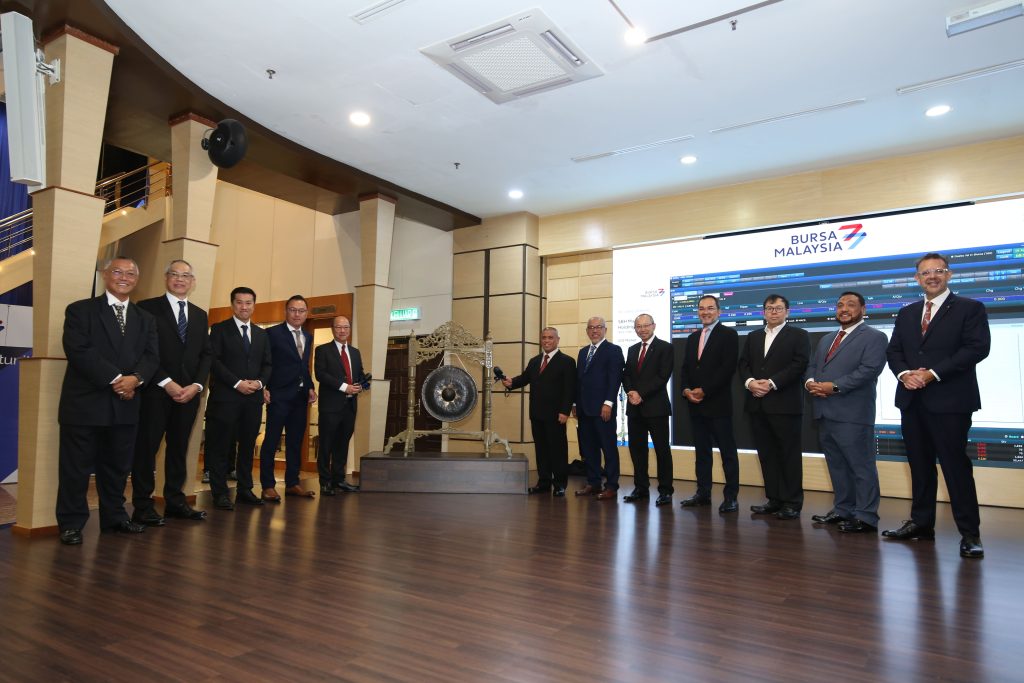
SC, Bursa Malaysia Pledge Speedier IPO Approvals For Main, ACE Markets

KUALA LUMPUR: The Securities Commission Malaysia (SC) and Bursa Malaysia have jointly committed to an expedited three-month approval period for initial public offerings (IPOs) on the Main Market and the ACE Market. The commitment applies to new IPO applications received as of March 1, 2024. In a joint statement, both agencies said the commitment to a prompt decision on regulatory approval within three months would be premised on the principal advisers and sponsors satisfactorily addressing the regulators’ queries and comments on IPO applications within five market days. This will augment the regulators’ current practice since 2021 of issuing queries and comments within ten market days following a complete IPO application and issuing subsequent queries and comments within five market days of each response round. The regulators will continue to maintain rigour in the assessment without compromising investors’ protection and public interests. To leverage a more vital collaboration between the regulators and the industry players to offer a more precise timeline for listing qualified IPO applicants, the regulators look forward to attracting quality companies to list, particularly those in sectors supporting national growth policies, blueprints, and roadmaps. SC chairman Datuk Seri Dr Awang Adek Hussin said the Malaysian equity capital market has remained a cornerstone of funding for companies, with IPOs raising RM3.6 billion in 2023. “We believe our approval timeframe can cater for the dynamic business needs of companies looking to raise funds in the capital market as part of our ongoing efforts to remain competitive and relevant for local and international investors. “This collaborative effort underscores our commitment to fostering a conducive environment for issuers, facilitating their access to capital markets with greater certainty and efficiency,” Dr Awang said. Bursa Malaysia chief executive officer Datuk Muhamad Umar Swift said the more competitive time-to-market will enhance the exchange’s attractiveness to companies seeking to list in Malaysia. “We aim to provide a holistic and customer-friendly facilitation by regulators and principal advisers and sponsors to support better companies that intend to raise capital through IPOs and elevate their status as public listed companies. “Our equities market is ready to support the cycle of fundraising and investing to grow businesses,” he said. The Malaysian Investment Banking Association (MIBA) recognise the critical importance of seamless collaboration between regulators and advisers to ensure a smooth listing process. “By working hand in hand, we can uphold the highest standards of due diligence, corporate governance, and compliance, ultimately facilitating a faster time-to-market for IPO issuers,” MIBA chairman Lee Jim Leng said. “This will not only benefit businesses seeking to raise capital but also enhance the overall credibility and transparency of the capital market,” she added. The SC and Bursa Malaysia said advisers and professionals should uphold due diligence standards to enable the highest quality IPO applications by adhering to guidelines and requirements, ensuring quality disclosures, high standards of corporate governance, as well as timely and satisfactory responses to regulator queries and comments. Further measures, including training modules, will be developed to support market professionals in meeting the unified objective of a smoother journey to IPOs.

Investment & Market Trends

Tiong Nam Net Profit Increases To RM44.7Mil In Q3 FY24 On Fair Value Gains

KUALA LUMPUR: Tiong Nam Logistics Holdings Bhd posted a net profit of RM44.7 million in the third quarter (Q3) ended December 31, 2023 (FY24) compared to RM0.2 million in the same quarter last year, mainly driven by fair value gain on investment properties. The fair value gain on investment properties, amounting to RM69.0 million after tax, resulted from revaluating a warehouse asset in Senai Airport City. Revenue maintained at RM188.9 million in Q3 FY24, increasing marginally from RM187.5 million a year ago. The logistics and warehousing segment, its key revenue contributor, registered stable revenue of RM183.7 million in Q3 FY24 versus RM185.4 million previously on resilient demand across diverse industries. Managing director Ong Yoong Nyock said the resilient performance of its logistics and warehousing segment underscores the company’s commitment to client service. “We reinforce our position as a leading total logistics solutions provider in Southeast Asia, facilitating stable and efficient supply chains for domestic and multinational enterprises. “Our ongoing construction of new warehouses and planned expansions cater to growing client demand and supporting future revenue growth. “These initiatives will enhance our capacity to meet the needs of our clients and provide greater operational control while mitigating long-term rental costs. By prioritising client satisfaction, investing in targeted expansions, and optimising operational efficiency, we are well-positioned to navigate the market challenges and capitalise on emerging opportunities,” he said in a statement. The company’s ongoing warehouse expansions encompass the construction of three new warehouses in Johor Bahru and Singapore, with a combined total capacity of 1.1 million sq ft, to be completed in the financial year ending March 31, 2025 (FY25). Tiong Nam’s total warehousing capacity will reach 8.8 million sq ft in FY25 from 7.7 million sq ft in Q3 FY24. Additionally, Tiong Nam plans to build five more warehouses with a total capacity of 1.2 million in Johor, Selangor, and Penang, to be completed in phases from FY26 until FY28. Meanwhile, the company’s property development segment contributed RM4.2 million in revenue in Q3 FY24, up 221.0 per cent from RM1.3 million previously, on the back of contribution from the company’s residential development project in Kota Masai, Johor. For the nine-month FY24, revenue rose 4.2 per cent to RM565.2 million from RM542.4 million a year ago. Net profit improved to RM46.7 million compared to RM2.2 million previously, on the back of the fair value gains from investment properties comprising a warehouse asset.

Investment & Market Trends

JF Technology To Continue Riding On Semiconductor Demand Wave

KUALA LUMPUR: Main market-listed leading innovator and manufacturer of high-performance test contacting solutions for global integrated circuit (IC) makers, JF Technology Bhd (JFT) posted revenue of RM10.9 million for the second quarter (Q2) ended December 31, 2023 (FY24) from RM11.0 million posted in the same quarter last year. Contribution from China rose 73.2 per cent year-on-year (YoY) to RM5.6 million for Q2 FY24 from RM3.2 million a year ago. Following the aforementioned change in the product mix contribution of the company, net profit came in lower at RM1.3 million compared to RM2.9 million posted in Q2 FY23. Managing director Datuk Foong Wei Kuong said looking ahead, the global semiconductor industry is anticipated to expand by 13.1 per cent to US$588.4 billion based on the latest estimates by the Semiconductor Industry Association (SIA) and World Semiconductor Trade Statistics (WSTS). “This double-digit rebound is certainly good news for the sector including the JFT, especially after a challenging year for all semiconductors players in 2023. “The exciting industry outlook bodes well for the company as we are ready to ride on this recovery. “Our new test contacting centre of excellence in Kota Damansara provides us with ample space and capacity to seize these opportunities. “On the other hand, JFT’s facility in China continues to chart good progress with healthy utilisation and rising demand. More excitingly, our footage in China has brought more possibilities for the company,” Foong said in a statement. For the first half of FY24, JFT reported a revenue of RM21.6 million, slightly lower than the RM22.5 million achieved a year ago. The contributions from the test interface products division and manufacturing facility in Kunshan, China, have allowed the company to offset the persisting slowdown in the semiconductor industry, impacting the demand for its test contacting sockets. Meanwhile, 1H FY24 net profit net profit stood at RM4.3 million compared to RM7.3 million in the previous year’s corresponding period. This was due to the company’s change in product mix contribution as these businesses are still advancing towards their optimal level. JFT had established a joint venture (JV) company in Malaysia with Shenzhen HFC Co Ltd to design and manufacture electromagnetic interference (EMI) shielding materials, thermal interface materials, and absorbing materials. Shenzhen HFC specialises in integrated research and development (R&D), manufacturing and sale of EMI shielding materials, thermal interface materials, wave-absorbing materials and ferrite. It presently serves a diverse range of industries and applications, including artificial intelligence (AI), semiconductors, smartphones, electric vehicles (EV), telecommunications as well as electronics manufacturing services (EMS). “We are delighted to share that the JV has progressed well, with machine installation commencing soon, followed by production. “JFT is excited by the synergies and potential from this arrangement, which is also part of our JF 4.0 transformation. “This latest phase aims to move JFT and Malaysia further up the semiconductor value chain. “We will be harnessing our resilient and sustainable business model with recurring and compounding sales of test consumables across diverse industries, while at the same time seeking more collaborations with high-value and niche high-tech companies,” he said. “On balance, the long-term outlook of JFT is bright, and the board expects the FY24 financial performance to be satisfactory, barring any unforeseen circumstances,” Foong said.

Investment & Market Trends

DXN Holdings Enters Brazil, To Strengthen Latin America Market

KUALA LUMPUR: Health-oriented and wellness consumer product direct-selling company, DXN Holdings Bhd (DHB) has made its entry into the Brazilian market as the company is optimistic about the growth prospects in the country. Non-independent executive chairman and founder Datuk Lim Siow Jin said his optimism on the growth prospects in Brazil stemmed from the country’s significant population of over 210 million and increasing urbanisation, which presents opportunities for consumer businesses like DXN. “Our strategic entry into Brazil is aimed at leveraging the strong brand presence and success DHB has achieved in other Latin American countries including Mexico, Peru, Bolivia, Columbia, and more. “DHB’s marketing strategy allows any of our global members to conduct and grow their business in any country where the company operates without geographical constraints. We are confident about the potential our members have in expanding into Brazil,” he said in a recent statement. DHB has set a plan to open its office in Sao Paulo in March 2024. “So far, DHB has successfully registered 10 products which are already approved for the Brazilian market. “Our flagship instant coffee product aligns well with Brazil’s rich coffee culture, enhancing our confidence in capturing market share there,” he said. Lim said the interest in health supplements that improve wellbeing is on the rise globally and DHB’s offerings, which include products formulated with herbs and medicinal plants such as spirulina, and lion’s mane mushroom, are well-positioned within this expanding market. “As the health supplement sector continues to grow, there is a significant opportunity for DHB to accelerate global expansion efforts to capitalise on this rising market,” Lim said. The company is expanding its product portfolio in alignment with dynamic consumer demands. In addition, DHB is actively in the process of establishing another branch office in Brazil as part of its strategic efforts to expand its market presence in the country. To support DHB’s growth in the Latin America region, the company’s second production facility in Mexico is now operational, with a size 2.8 times that of the first, and is involved in manufacturing coffee products, food supplements and beverages. Since DHB entered into the Latin America region in 2004, the company has strengthened its network there to 3.6 million members. Sales from the region have been instrumental in DHB’s revenue growth, accounting for 60 per cent of total revenue in the 9-month financial period ended November 30, 2023. DHB’s entry into the Brazilian market is expected to further enhance this growth trajectory.

Investment & Market Trends

Danone Malaysia, Singapore Achieves First Certified B Corporation Distinction In Malaysia

KUALA LUMPUR: Danone Specialized Nutrition (Malaysia) Sdn Bhd and Danone Specialized Nutrition (Singapore) Pte Ltd have become certified B Corporation in Malaysia, further recognising and deepening their commitment to social and environmental responsibility. Danone Malaysia and Singapore country manager Koh Kok Meng said becoming a certified B Corporation is putting the flag in the sand to say that Danone Malaysia is committed to the impacts the company has on the environment and communities it serves. “When we started our B Corporation certification, the team was at the forefront of what we could do collectively as an organisation. “Being a B Corporation is the ultimate badge of honour for our organisation to have, and today, we are proud to be part of the sustainable global community movement toward a more equitable future,” he said in a recent statement.Danone underwent a rigorous and extensive review of its environmental, social practices and policies. With this certification, Danone Malaysia and Singapore will be held to high standards of accountability, undergoing a recertification process every three years to update its impact assessment and recertify as a B Corporation. Danone Malaysia and Singapore join among the ranks of 50 purpose-led businesses in Malaysia and Singapore that meet highly verified standards of social and environmental performance, transparency, and accountability. As a specialised nutrition company, it has positioned itself as an advocate of iron deficiency anaemia (IDA) among Malaysian children. The Iron Strong Study was conducted in a collaborative effort with the University Malaya Medical Centre (UMMC) to understand the prevalence of anaemia risk amongst Malaysian young children using a non–invasive screening device. This multi-site clinical study was conducted for six months across selected government clinics in Kelantan, Johor, Selangor, and Sabah. The findings from the clinical study will further help to raise awareness of this critical issue provide a solution to improve the nutrition status in Malaysia and emphasise the importance of early intervention through proactive screening for anaemia by including it as part of primary care health screening programs.

Scroll to Top

Subscribe
FREE Newsletter