The Executives

The Executives

Solar Panel Manufacturers Upbeat On Rosy Demand For Green Energy

KUALA LUMPUR: Malaysia is set to register a rosy 9 per cent compound annual growth (CAGR) rate in the local solar energy market within the next five years. International market survey company Mordor Intelligence for the 2024-2029 forecast period noted that the Covid-19 pandemic had slightly affected the solar photovoltaics (PV) installations in the country due to lockdown restrictions, supply chain disruptions, disruption on the solar PV production, and project implementation delays. However, the market has now reached pre-pandemic levels, according to its findings. Factors propelling this robust growth include the increasing investments in the renewable energy sector and the country’s efforts to shift from fossil fuel-based power generation, which are expected to drive the market during this forecast period. However, high initial investment costs associated with solar projects are expected to hinder market growth during the study period. Nevertheless, Malaysia aims to install 9 gigawatts (GW) of solar energy capacity by 2050. According to the report, the country’s ambitious solar energy targets and business models, such as solar leasing, are expected to create many opportunities in the near future. Malaysia is increasing its usage of renewable energy in tandem with the acceleration of climate change. With the government’s efforts to encourage solar installations, the residential solar industry has shown a positive trend, and more homeowners are using solar systems. This shows that the country is on the right track to achieve the renewable energy installed capacity target of 70 per cent by 2050. This also means local players in the solar energy market are raring to use their strength to accrue the benefits of this gravy train. One such home-grown player, Verdant Solar Sdn Bhd (VSSB), envisions a Malaysia that is entirely reliant on solar energy. Since its founding in 2013, VSSB has been active in the renewable energy industry and is committed to providing high-quality solar energy services to Malaysian homes. Chief executive officer Zeth Lim told The Exchange Asia that the the future of solar panel usage in the country is promising. According to the National Energy Transition Roadmap (NETR), Malaysia aims to achieve 70 per cent renewable energy by 2050. “I believe we are on track. Solar PV remains the most encouraging segment of the National Renewable Energy landscape, showing significant growth from 4.2 GW in 2023 to a projected 56 GW in 2050. Malaysia’s CAGR for installed capacity stands at an impressive 48 per cent, expanding from 0.1GW to 2.6GW. “Moving forward, we anticipate a shift towards systems combining solar panels with battery storage. As the prices of both panels and battery storage continue to decrease, we expect to see an increasing trend in the installation of battery energy storage systems (BESS) over the next 3-5 years,” he said. Asked about the sentiments of commercial and industrial premises gravitating towards using solar energy, he said the high take-up rate for solar energy among these promises is primarily due to the favourable payback period. “Businesses are keen on investing because they anticipate recouping their initial costs within a relatively short timeframe. “Additionally, the availability of incentives for green investments further drives interest, potentially reducing the payback period to less than three years. “Another contributing factor is the attractiveness of solar system investors’ power purchase agreements (PPAs). These agreements provide appealing terms for purchasing solar energy, making it a financially viable option for businesses,” he said. Lim also pointed out that banks’ willingness to offer low-interest loans specifically tailored for industrial buildings looking to install solar systems plays a significant role. Access to affordable financing makes the transition to solar energy more feasible and attractive for businesses in this sector. “The government is supporting the industry through various initiatives, such as net energy metering (NEM) Rakyat and Nova Extension, which incentivize the adoption of renewable energy among the public and businesses. Alongside this, a framework for third-party access (TPA) and cross-border renewable energy (RE) Trading Platform will be established to facilitate renewable energy trading across borders. “Additionally, the government is providing financial support and incentives for renewable energy projects through various financing mechanisms and encouraging corporate commitments to carbon trading and Renewable Energy Certificates (REC) through platforms like the Bursa Carbon Exchange (BCX),” Lim said. Asked what it would take to reach the projected 56 GW in 2050, he said approximately 57GW of solar PV capacity must be installed to reach this goal. “This translates to a potential market worth around RM 142 billion by 2050. In terms of milestones, the government anticipates installing 7GW (approximately RM17.5 billion) by 2030 and 27GW (approximately RM 67.5 billion) by 2040,” he said. To another question on the government’s efforts to beef up the industry, he said, “First, government support. The government is working on policies encouraging banks to offer low-interest loans for solar panel installation, making it more affordable for Malaysians. “Investments in solar infrastructure, such as grid improvements announced in the NETR, also indicate the government’s commitment to enhancing solar infrastructure, which can facilitate the adoption of solar panels. “Moreover, Malaysia’s abundant solar resources further bolster the feasibility of adopting solar energy solutions amongst the Malaysian community. By embracing solar energy, Malaysians can bolster energy security and advance sustainability goals by reducing dependence on fossil fuels. “Lastly, there are ongoing public education and corporate social responsibility (CSR) efforts to raise awareness and foster expertise in the solar industry. At VSSB, we consistently utilise our social media platforms to advocate for the adoption of solar energy, contributing to the broader goal of widespread residential adoption of solar panels,” Lim said. He said his company is currently serving anchor clients like  Petronas, Daikin, Bandar Utama, Dutch Lady, 99 Speedmart, and Mavisco – while it doubled its previous record set in 2022 as the largest residential solar provider in the country in a year. According to him, in 2023, VSSB installed residential solar energy systems in over 1,300 homes across Malaysia, earning recognition through the Malaysian Book of Records. This brings the company’s current total of served landed properties and

News, The Executives

The Olive Tree Group Eyes Domestic, Regional Expansion

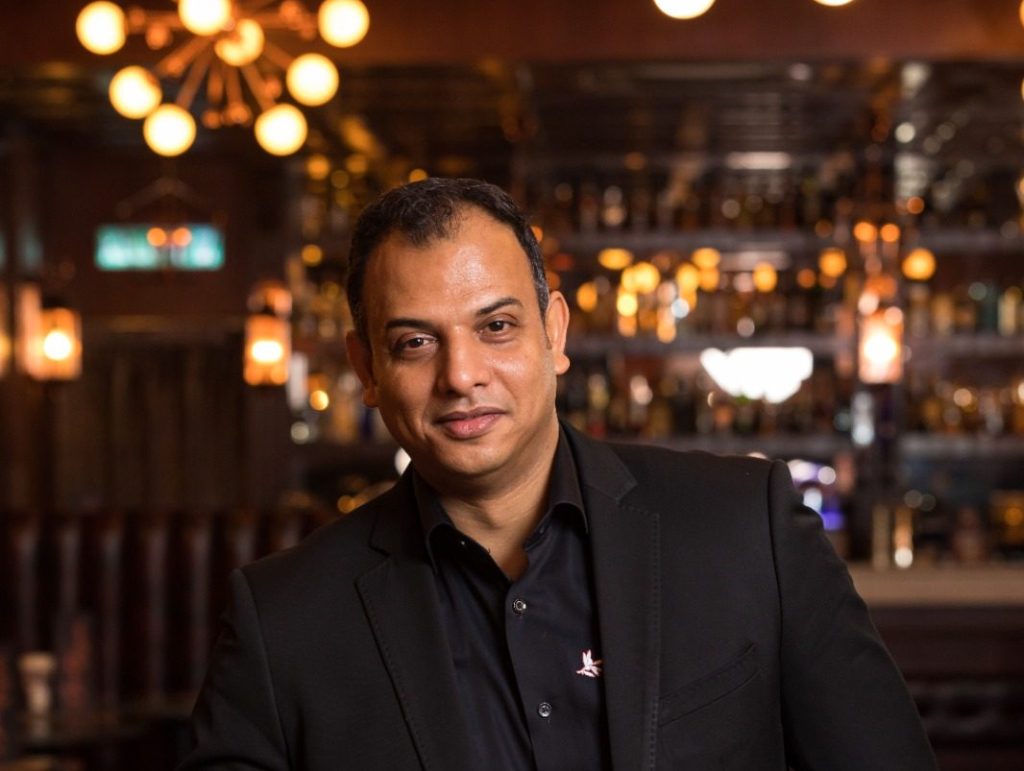
KUALA LUMPUR: The Olive Tree Group is targeting expansive growth within Malaysia, with a strategic focus extending to regions like Sabah and Sarawak. In addition to domestic expansion, the company is also focusing on regional markets, aiming to establish its presence in Singapore, Dubai, and Australia. “We opened our first Frangipaani outlet in Bali, Indonesia, earlier this year,” founder and managing director Leslie Gomez told The Exchange Asia. Frangipaani serves North Indian cuisine. Last month, The Olive Tree Group opened La Chicá in Jaya One, its second outlet for 2024. This marks the fourth milestone in less than three years since its inception in October 2021 at Changkat Bukit Bintang, Kuala Lumpur. “La Chicá and Rockefellers are the two brands under the group we are pushing for expansion. He emphasised that opening new outlets in Malaysia and the region requires several factors, namely the right location, places with much human traffic, and tourism spots. “We have been in the business for over 20 years and are adapting to changes and the business landscape to follow current trends. We also maintain that ‘old-skool’ concept for younger consumers. “We are also planning on introducing new concepts soon, but again, this will depend on the location, where there are lots of locals or tourists,” Leslie said. He expressed optimism about the expanding prospects and demand within the F&B industry and said the company will continue to scout locations that align with its brand ethos to expand its footprint. However, he sees the recent changes in SST as adding another layer of complexity to the financial landscape for F&B businesses. “As taxes increase, consumer spending changes. Their spending diversifies. They look for value-for-money choices. “The initial 6 per cent SST was good, as many Malaysians prefer dining out. Adding another two per cent we see as adding a bit of a burden on consumer spending power,” he told The Exchange Asia in an interview. He said relevant government agencies must know that adapting to these tax adjustments requires a keen understanding of the implications for F&B operators and customers, influencing pricing structures and profit margins. “When taxes change and raw material prices increase, we need to change our pricing. This impacts consumers, and they may choose to go elsewhere,” Leslie said. As an F&B operator of 28 outlets in Malaysia and some abroad, Leslie said raw material price is one of the main concerns. He said that as a contingency plan, The Olive Tree Group tied up with suppliers, capping the price of supplies for six months to one year to avoid pushing raw material price adjustments to consumers. “We want to maintain our current prices for our food and drinks. We have a buffer with our suppliers, and therefore, our prices are maintained, even if there are any fluctuations in raw material prices,” he said. Elaborating on manpower shortages, Leslie said that in Malaysia, consumers look for a personal human touch regarding service. He said domestic operations are different in Europe, where people are already accustomed to self-service. “We are in a country where customers need that human touch when it comes to service. To address manpower shortage issues, we recruit foreigners with hotel and catering experience to work in our outlets. “These workers are usually the frontline staff, like waiters. Locals hold executive and management positions in all our outlets,” Leslie said. The Olive Tree Group aims to become the go-to entertainment spot domestically and regionally. Apart from La Chica, the group hosts 12 successful restaurants and bars, namely, The Beach Bar, Sutraa, Soul Room, Rock Bottom, Temptations Kitchen & Bar, Why Not, WoW Genting, and others.

The Executives

QGB Set For Strong Performance In Core Segments, Eyes New Markets

KUALA LUMPUR: Qew Group Berhad (QGB), an investment holding company with a strong presence in Kuala Lumpur, Putrajaya, and London, is well-positioned for significant growth in its three core business areas – consultancy and advisory services, telecommunications, and real estate development.  Built upon strong relationships with its shareholders and stakeholders, QGB’s success is leveraged on these partnerships, providing the company with valuable resources and support, allowing it to navigate complex markets and pursue ambitious goals.   Additionally, QGB’s commitment to expanding existing businesses into new and competitive markets opens doors to exciting opportunities for future development.  QGB’s expertise in various sectors, including mining, healthcare, and partnering services, combined with its strategic partnerships and focus on market expansion, positions the company for a prosperous future.   By leveraging these strengths, QGB is poised to make a significant impact in the years to come.  Led by its founder and executive chairman Datuk Dr Muhamad Iqbal Mohamad, QGB focuses on its primary goal – to tap into various lucrative opportunities and deliver consistent returns and long-term capital gains for its investors and shareholders.      More strategically, QGB continues setting its pace in the future with a comprehensive strategy with its plan, aptly named ‘Bright Future’, ‘Big Future’, and ‘Benevolent Future,’ outlining three key pillars that will guide its development in the years to come.  The Bright Future pillar focuses on driving growth in QGB’s telecommunications and real estate development businesses. These established sectors provide a strong foundation for the company’s future success.  The Big Future pillar ventures into new and exciting territories, encompassing QGB’s investments in mining and healthcare. These sectors hold immense potential for future growth and diversification.  Finally, the Benevolent Future pillar underscores QGB’s commitment to social responsibility and creating positive change. Through its partnering services, the company aims to contribute to the well-being of its stakeholders and the community.  By combining its established strengths with a forward-thinking approach, QGB’s three-pronged strategy positions the company for a prosperous future, ensuring that all stakeholders benefit from its continued success.  With the Big Future thrust, QGB placed strategic investments in mining and healthcare, revealing a future brimming with potential.   The bold move in these two sectors has positioned QGB to capitalise on lucrative market opportunities, promising significant growth and returns.  Banking on the mining business, QGB, in July 2022, sealed a 600-acre iron ore mining sites deal in Bukit Besi, Terengganu and in March 2023, another 100-acre deal in Seri Bandi, Terengganu. This strategic landholding grants the company access to a valuable resource, with iron ore being a vital component in various industries.    Partnering in a joint venture worth RM30 billion, QGB stands to gain a substantial 13 per cent share, translating to significant revenue potential. Providing a timely boost, QGB currently has a stockpile of approximately 150,000 MT of iron ore ready for processing and export, coinciding with high prices of US$135 per metric tonne (MT) for grade 62 ore.   Furthermore, technical scans reveal an estimated 1.5 million MT of additional iron ore reserves in Seri Bandi in Terengganu undergoing preparation for the mining process. This promising development positions the company to capitalise on the current favourable market conditions.  Dr Muhamad Iqbal sees the project as being capable of generating lucrative income.  “Such activity will also boost the domestic economy and increase employment opportunities for the locals,” he said.  For the telecommunications sector, QGB, commanding a 0.3 per cent share, is well-placed to tap into the lucrative market potential in the booming Malaysian telecommunications market, estimated at a massive RM36.8 billion.    Under Phase 1, QGB owns 59 telco towers strategically located in Klang Valley, Sabah, and Labuan for the telecommunications business segment, positioning the company in a solid position to capitalise on more new telco tenders. These towers operate under a 10-year renewable Network Facilities Provider (NFP) license, ensuring long-term stability.   An additional 22 monopole structures are slated for completion by the third quarter (Q3) of 2024, further expanding the network’s reach.  Beyond towers, QGB has invested RM15 million in developing KELNET, a fibre network operating centre in Kelantan. This strategic move strengthens network connectivity and positions QGB to capitalise on the growing demand for high-speed internet access.   QGB aims to be a reliable player in the telecommunications landscape through a growing network, diversified revenue streams, and strategic partnerships.  In the real estate development segment, QGB forged its presence with the 258-acre Digital Asian Halal Hub Industrial Park in Kedah.   This project caters to the growing halal industry, offering a unique blend of industrial facilities and Islamic principles, attracting potential investors and businesses.  QGB has invested in a 6-storey building dedicated to a Holistic Healthcare Centre in Johor, expanding its business horizon into healthcare. The company has taken a holistic approach with Phase 1 of the Medeseri Healthcare Johor Bahru project, offering diverse services and catering to the growing demand for integrative and alternative medicine solutions.   This strategic investment positions QGB to tap into the booming healthcare market, estimated at RM72 billion in Malaysia.  These strategic investments in mining and healthcare showcase QGB’s commitment to diversification and growth.   By delving into the lucrative mining and healthcare industries, QGB positions itself to capture significant market share and generate substantial returns for its investors.   The company’s well-rounded approach, encompassing established sectors like telecommunications and real estate, paints a promising picture for QGB’s future.  Under the Benevolent Future thrust, QGB continues to chart progress and growth for the partnering services.  QGB provides financial support to small and medium-sized enterprises (SMEs), approved by Bank Negara Malaysia (BNM) for factoring services.   QGB commands 0.2 per cent of the RM90 billion Development Expenditure allocation based on the Malaysian Government Budget 2024. This facilitation empowers SME businesses to thrive, contributing to economic growth and job creation.  “QGB’s strategic investments in the booming Malaysian healthcare market, valued at RM72 billion, is expected to position the company to capitalise on promising opportunities and generate substantial returns for its shareholders.   “This move, coupled with their expansion into the lucrative mining industry, showcases a

Scroll to Top

Subscribe
FREE Newsletter