
Tesla Launches Mumbai Showroom with Model Y
Tesla has officially entered the Indian automotive market with the opening of its first showroom in Mumbai, showcasing its premium electric SUV, the Model Y. The move marks a significant step in the company’s long-anticipated expansion into the world’s third-largest car market. The company is offering the Model Y rear-wheel drive at ₹6 million (approximately US$70,000), while the long-range rear-wheel drive variant is priced at ₹6.8 million (around US$79,000). These prices are considerably higher than in other key markets: in the United States, the Model Y starts at US$44,990; in China, at 263,500 yuan (US$36,700); and in Germany, at €45,970 (US$53,700). Tesla’s Mumbai showroom, located within a gated office complex in the city’s financial district, was tightly secured during its unveiling. The Model Y, partially covered in black and grey drapes, was visible through the showroom’s glass façade, as police guarded the venue. Access to the premises was restricted, with minimal public presence and limited visibility into the space. Elon Musk’s interest in the Indian market has been longstanding, driven by the country’s growing base of affluent consumers who have shown increasing demand for luxury goods, from real estate to high-end jewellery and automobiles. However, the Indian electric vehicle (EV) market remains in its early stages, with EVs accounting for just 4% of total car sales. The Indian government aims to increase this share to 30% by 2030, offering incentives such as tax concessions for foreign automakers willing to commit to local manufacturing. These incentives, however, have thus far done little to sway Musk toward substantial domestic production commitments. Tesla’s entry arrives at a time when competition in India’s premium EV segment is intensifying, with established German brands such as BMW and Mercedes-Benz already present. Meanwhile, local players such as Tata Motors and Mahindra continue to dominate the mass-market EV segment. The launch of Tesla’s Mumbai showroom also coincides with Vietnamese EV manufacturer VinFast’s pre-booking campaign for its VF7 and VF6 electric SUVs in India, signalling a broader push into one of the most promising, albeit infrastructure-challenged, automotive markets globally. -Reuters

Microsoft and Novata Strengthen Alliance to Scale AI-Driven Sustainability Solutions for SMEs
Microsoft and Novata have announced a strategic collaboration to scale AI-powered sustainability solutions for small and mid-sized enterprises (SMEs) on a global scale. Through this expanded alliance, Novata will integrate Microsoft’s Azure AI Foundry—including Azure AI Search—and Microsoft Fabric into its platform, enhancing its capabilities in data management, ESG reporting and sustainability performance tools for Microsoft’s extensive global ecosystem of clients and suppliers. Microsoft will serve as a key distribution partner, supporting the deployment of Novata’s technology through its SME channels. This includes direct access to tools such as Novata’s Carbon Navigator, which is purpose-built to streamline carbon footprint tracking and sustainability planning for smaller businesses. The partnership will also see the co-development of new AI-powered technologies designed to automate and simplify sustainability data collection and regulatory reporting. These innovations aim to ease compliance burdens while simultaneously helping organisations identify opportunities for sustainable growth. Alex Friedman, Chief Executive Officer and Co-Founder of Novata, commented: “We are excited to deepen our relationship with Microsoft, a company that has not only revolutionised productivity but has also been a leader in addressing the climate crisis and leveraging AI for good. This collaboration expands our global reach and strengthens our commitment to providing trusted technology that simplifies sustainability data management, helping companies unlock growth opportunities and enhance their resilience in a rapidly changing world.” Novata will also support Microsoft’s supply chain partners in fulfilling climate reporting obligations, offering scalable, AI-driven solutions that enhance emissions tracking and reporting with improved accuracy and operational efficiency. Jeremy Pitman, Director of Partner Development, Digital Natives and ISVs – Tech for Social Impact at Microsoft, added: “We believe that addressing climate change is both a responsibility and an important business opportunity. Our collaboration with Novata will enable a key segment of our clients to seamlessly and affordably integrate cutting-edge sustainability technology into their operations, empowering them to reduce their carbon footprints and meet their emissions goals.” Since its launch in April 2022, Novata has experienced rapid growth, supporting over 10,000 companies and hundreds of investment firms—including private equity, growth equity, private credit and venture capital—managing assets in excess of $12 trillion. This agreement builds on an existing relationship between the two companies. Microsoft became an investor in Novata through its Climate Innovation Fund (CIF) in 2023. CIF is designed to accelerate the development and adoption of climate-focused technologies by providing capital to companies advancing decarbonisation and sustainability innovation. -ESG News
Alibaba Hits 80 Million Deliveries in a Day Amid Escalating Price War with Meituan and JD.com
Alibaba Group Holding has matched its single-day delivery record of 80 million orders, as competition intensifies across China’s instant commerce sector. The figure, achieved on Saturday and reported on Monday, reflects the company’s aggressive campaign to gain market share from key rivals Meituan and JD.com. The deliveries were fulfilled under Alibaba’s new instant commerce division, Taobao Shangou, which also reported a 15 per cent week-on-week increase in daily active users. While the company did not disclose a precise total, the growth places estimated usage at around 230 million users. Saturday’s surge came amid an industry-wide promotional push, with platforms including Meituan, Taobao, Ele.me and JD.com offering substantial cash subsidies to consumers across the country. The result was a dramatic shift in shopping behaviour, with many brick-and-mortar retailers suspending in-store service due to overwhelming online demand. Meituan distributed coupons offering milk tea at no cost, while Taobao hosted flash sales with vouchers valued at 188 yuan (approximately £22), usable for deeply discounted food and beverage items. Additional surprise coupons further incentivised purchases. Meituan’s efforts culminated in a record 150 million instant retail orders on the same day. JD.com, which has taken an increasingly assertive stance since its entry into the food delivery space in February, announced the nightly distribution of 100,000 servings of crayfish, priced at 16.18 yuan, between 6pm and 2am. These subsidies have resonated strongly with consumers. One 22-year-old engineer, Huang Yuxiang, described purchasing a cup of Luckin Coffee for 0 yuan via Taobao, with only a 2 yuan delivery charge. He noted that Taobao’s discounts were significantly larger than those offered by competitors, which spurred a noticeable rise in customer activity and merchant workload. Retailers across the country reported surging order volumes. Liu Hang, owner of a Chen Duoduo Milk Tea franchise in Daizhou, Sichuan province, received more than 300 orders over the weekend—up from just a few dozen. A peer in Chengdu, the provincial capital, saw daily orders spike to between 700 and 800. In more extreme cases, top-performing outlets reportedly handled in excess of 3,000 orders per day, with staff experiencing considerable strain. The competitive landscape in China’s food delivery sector has undergone a major transformation in recent months. Meituan, the market leader, held a commanding 65 per cent share in 2024, according to Bocom International. Alibaba-owned Ele.me trailed with 33 per cent, while all other players, including JD.com, accounted for the remaining 2 per cent combined. With rival firms intensifying their promotional activity and customer acquisition strategies, the sector appears set for further disruption. As Alibaba’s delivery figures demonstrate, consumer appetite remains strong—and the battle for market dominance is far from over. -SCMP
Shanghai’s West Bund Emerges as New Business Powerhouse Amid Broader Property Downturn
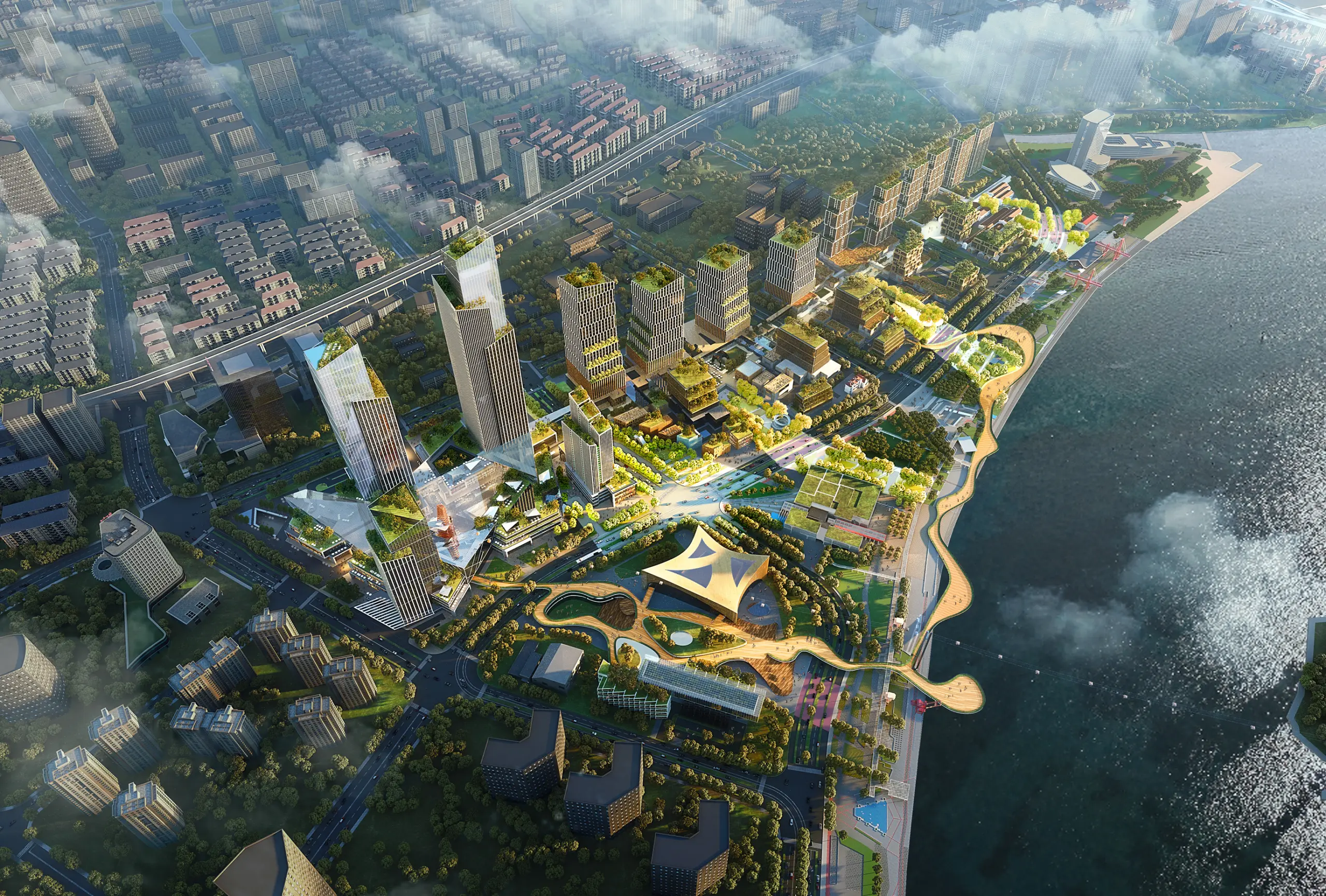
Shanghai’s West Bund, a dynamic 11-kilometre-long waterfront stretch in the southwestern Xuhui district, is defying China’s wider property sector malaise by drawing major multinational corporations and luxury retail brands to its growing commercial hub. Rapid development, strategic planning, and high-profile investment are transforming the zone into the city’s newest central business district (CBD), outpacing many other parts of the capital in terms of occupancy and appeal. Since redevelopment began in 2010, the West Bund has undergone a dramatic transformation into a modern urban district, blending premium office towers, luxury retail outlets, upscale residences, and cultural venues. Central to this revitalisation is Hongkong Land’s flagship Westbund Central project, a landmark mixed-use development that integrates office space, retail, hospitality, and residential units across more than 1 million square metres of gross floor area. The developer acquired the site for 31.1 billion yuan (US$4.3 billion) in 2020. The district has quickly captured the attention of global corporates. BMW and Adidas are among the latest multinationals to establish operations in the area, drawn by its modern infrastructure and seamless work-life environment. The West Bund is also home to the Shanghai Foundation Model Innovation Centre (SMC), a key government-backed artificial intelligence (AI) incubator launched in 2023. The facility has attracted more than 100 AI-focused start-ups, including Intel partner ModelBest, energy solutions provider DaMao AI, and image-generation platform LibLib. President Xi Jinping’s visit to the SMC in April underscored the strategic significance of the area to China’s AI ambitions. During the visit, he emphasised the nation’s strong outlook for AI innovation, citing abundant data resources and a robust industrial framework. The SMC offers technology firms a comprehensive support package that includes computing power, proprietary datasets, legal consulting, and funding sourced from a trio of major investment funds: the 60 billion yuan National AI Industry Fund, the 22.5 billion yuan Shanghai AI Fund-of-Funds, and the 20 billion yuan Xuhui Capital industrial investment fund. Market analysts note that the district’s success reflects deliberate urban planning and strategic sector alignment. “West Bund is well planned as each section has its own theme and industrial goal,” said Jimmy Chu, Senior Director at CBRE’s Eastern China office market division. He added that the location is becoming a rare bright spot in Shanghai’s broader commercial property landscape. The office component of the Westbund Central development, scheduled for delivery later this year, has already recorded strong pre-leasing activity and is expected to achieve full occupancy, despite challenging macroeconomic conditions. As of June, Shanghai’s overall office vacancy rate stood at 22.4 per cent, marginally up from 22.1 per cent at the end of 2024, according to CBRE. Joseph Wang, Head of Tenant Representation for Office Leasing at JLL Shanghai, observed that the West Bund’s positioning goes beyond traditional business districts by promoting lifestyle integration. “The West Bund is more than a CBD since it offers people work-life balance,” he said. “Developments in the area have driven up leasing deals in the city’s office market.” The district has also garnered international attention. Michal Bartek, Vice-Chairman of Slovakia’s National Council, expressed admiration for the innovation on display during a recent visit. “It is really important for my country to cooperate with China in this industry,” he said. “AI offers us great opportunities in industrial development.” Bartek’s remarks came during a diplomatic visit to China ahead of the Global Civilisations Dialogue Ministerial Meeting in Beijing, part of a wider effort to deepen global engagement in China’s technology and innovation ecosystem. Investor sentiment remains strong, with many viewing the district as a showcase for Shanghai’s modernisation and economic opening. “The Shanghai government has singled out the West Bund as a showcase of the city’s modernisation and opening up,” said Yin Ran, an angel investor based in the city. “The success of the riverfront area will attract more companies and investors in the coming two to three years and other central business districts will feel the pressure as they may lose tenants to the West Bund.” As other business districts contend with rising vacancy and weaker demand, the West Bund’s upward trajectory could offer a model for urban renewal and sector-specific economic clustering in China’s next chapter of development. -SCMP
BRC Asia Secures S$570 Million Contract for Changi Airport Terminal 5 Substructure
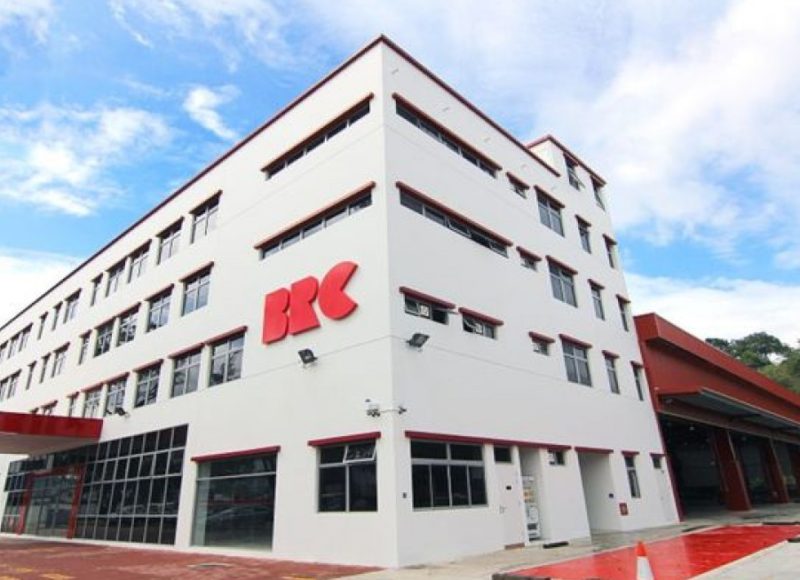
BRC Asia has secured a landmark contract valued at approximately S$570 million to supply steel reinforcement for the substructure of Changi Airport’s highly anticipated Terminal 5 development. The award was granted by the joint venture between the Singapore branch of China Communications Construction Company (CCCC) and Obayashi Singapore. This collaboration marks a significant step in the realisation of one of Singapore’s largest infrastructure projects to date. With the addition of this substantial contract, BRC Asia’s total orderbook has reached S$2 billion as of 14 July. The company noted that the latest win underscores its pivotal contribution to Singapore’s infrastructure sector and further cements its position as a trusted partner in complex, large-scale developments. Chief Executive Officer and Executive Director Seah Kiin Peng stated, “We are honoured to partner with CCCC and Obayashi on this transformative project. Changi Airport Terminal 5 is not just an infrastructure milestone for Singapore but a testament to our nation’s vision for sustainable growth.” He added, “BRC Asia is committed to delivering innovative, reliable solutions that meet the highest standards of quality and safety, ensuring Terminal 5’s substructure lays a robust foundation for future generations.” The Changi Terminal 5 project is poised to play a key role in meeting long-term aviation demand and strengthening Singapore’s position as a leading global air hub. -The Edge
Temasek Deepens Focus on India with Targeted High-Value Investments
Temasek Holdings Pte is refining its investment strategy in India, signalling a shift towards larger, more concentrated bets as it seeks to optimise returns on its expanding US$50 billion (RM212.7 billion) local portfolio. The Singapore-based sovereign wealth fund, a long-term investor in India, is adjusting its approach in response to improving market conditions and greater ease in exiting positions. “The market is getting bigger and bigger, so we need to concentrate,” said Ravi Lambah, head of India operations and strategic initiatives at Temasek. The fund, which has been investing in India for over two decades, recorded a US$13 billion or 35 percent increase in its Indian portfolio this year, driven by capital appreciation and fresh investments. India’s predictable regulatory environment, robust economic growth and strong stock market performance have attracted billions in capital from sovereign wealth and pension funds globally. With the country now the world’s most populous nation and home to a US$5 trillion stock market, international investors have increasingly realised substantial returns. Temasek, which holds a major stake in Bharti Airtel through its affiliate Singapore Telecommunications, is now zeroing in on a few focused themes in a market it considers a top performer over the past decade. Lambah highlighted areas such as consumption, financial services, healthcare, sustainability, transportation and industrials as key investment opportunities. He noted that India’s market now has the scale and liquidity to accommodate billion-dollar equity purchases without major price disruptions. In a move aligned with its long-term outlook, Temasek is also seeking deeper collaborations with India’s family-run enterprises. “When we partner with families, they have longevity of capital,” said Lambah. As Temasek’s funds do not operate on a fixed life cycle, this alignment of investment horizons presents a strategic fit. Recent activity reflects this approach. In March, Temasek acquired a minority stake in Haldiram Snacks Food Pvt Ltd. Its portfolio company Manipal Hospitals also expanded with the acquisition of Sahyadri Hospitals in Western India. Additionally, Temasek-backed Dr Agarwal’s Health Care, a prominent eye care chain, made its market debut in January. Retail participation has surged in India’s equity markets, with inflows into mutual funds reaching a record 272.7 billion rupees last month through systematic investment plans. A strong and liquid market landscape enhances Temasek’s confidence in timely and efficient exits. “When we want to exit, the market will give us opportunity,” Lambah affirmed. -Bloomberg