
Corporate Japan Faces Sharper Shareholder Scrutiny Amid Record Activism
Corporate Japan is experiencing a marked shift in investor dynamics, as a record number of shareholder proposals passed at annual general meetings this year. The trend signals growing assertiveness among investors and a waning tolerance for underperformance or complacent governance. According to Mitsubishi UFJ Trust & Banking Corp., seven companies saw shareholder proposals adopted at their AGMs, the highest number since the bank began collecting data nearly 30 years ago. These resolutions included board nominations and governance reforms, highlighting a departure from the historically passive stance of Japan’s shareholder base. The uptick in successful proposals reflects a broader wave of activism sweeping through Japanese boardrooms. Investors, particularly activists, have inundated companies with unprecedented volumes of resolutions, ranging from calls for real estate divestment to strategic realignment and capital returns via share buybacks. While overall shareholder support still leans towards incumbent management, the shift in voting patterns points to a gradual erosion of deference. This development coincides with increasing pressure from the Tokyo Stock Exchange and activist funds to improve capital efficiency and deliver higher shareholder returns. “Shareholder pressure is likely to increase given there is still much room left for improvement,” said Naoki Fujiwara, senior fund manager at Shinkin Asset Management. “The acceptance of activists’ proposals is a significant change from the past.” Alongside the rise in approved shareholder resolutions, there has also been a marked increase in the rejection of management-sponsored motions. According to Sumitomo Mitsui Trust Bank Ltd., 30 company proposals—primarily board director nominations—were voted down this year, a sharp rise from just six the year before. One of the most striking examples occurred at Tokyo Cosmos Electric Co., where all five board nominees put forward by the company were rejected. Shareholders replaced the entire board, including the chief executive officer, with individuals proposed by top investors. Similarly, at Taiyo Holdings Co., the CEO was voted out, reinforcing a trend of growing scrutiny towards executive performance. Data compiled by Goldman Sachs Group Inc. shows a decline in CEO confidence ratings, with the percentage of executives enjoying approval ratings above 80% falling by 1.1 percentage point year-on-year. As traditional cross-shareholding arrangements unwind, the resulting void is being filled by more vocal and independent shareholders, including global asset managers and hedge funds. Still, not every effort by activist investors has been successful. At Fuji Media Holdings Inc., shareholders rejected all 12 director candidates nominated by Dalton Investments. The broadcaster, already under public pressure due to a scandal, retained its management in the face of external challenges. Despite mixed results, the tone of shareholder engagement has undeniably evolved. Hisashi Arakawa, director and head of equities at abrdn Japan Ltd., observed that many firms are increasingly initiating dialogue ahead of AGMs. “We’ve seen companies pro-actively engage with us ahead of shareholder meetings,” he noted. “Whether these proposals pass is a separate matter.” This rising momentum of shareholder empowerment underscores a maturing market in Japan, where investor influence is no longer confined to the sidelines but is now reshaping corporate governance from within. -Bloomberg
Vietnam Sees Sharp Rise in Home Businesses Transitioning to Registered Enterprises
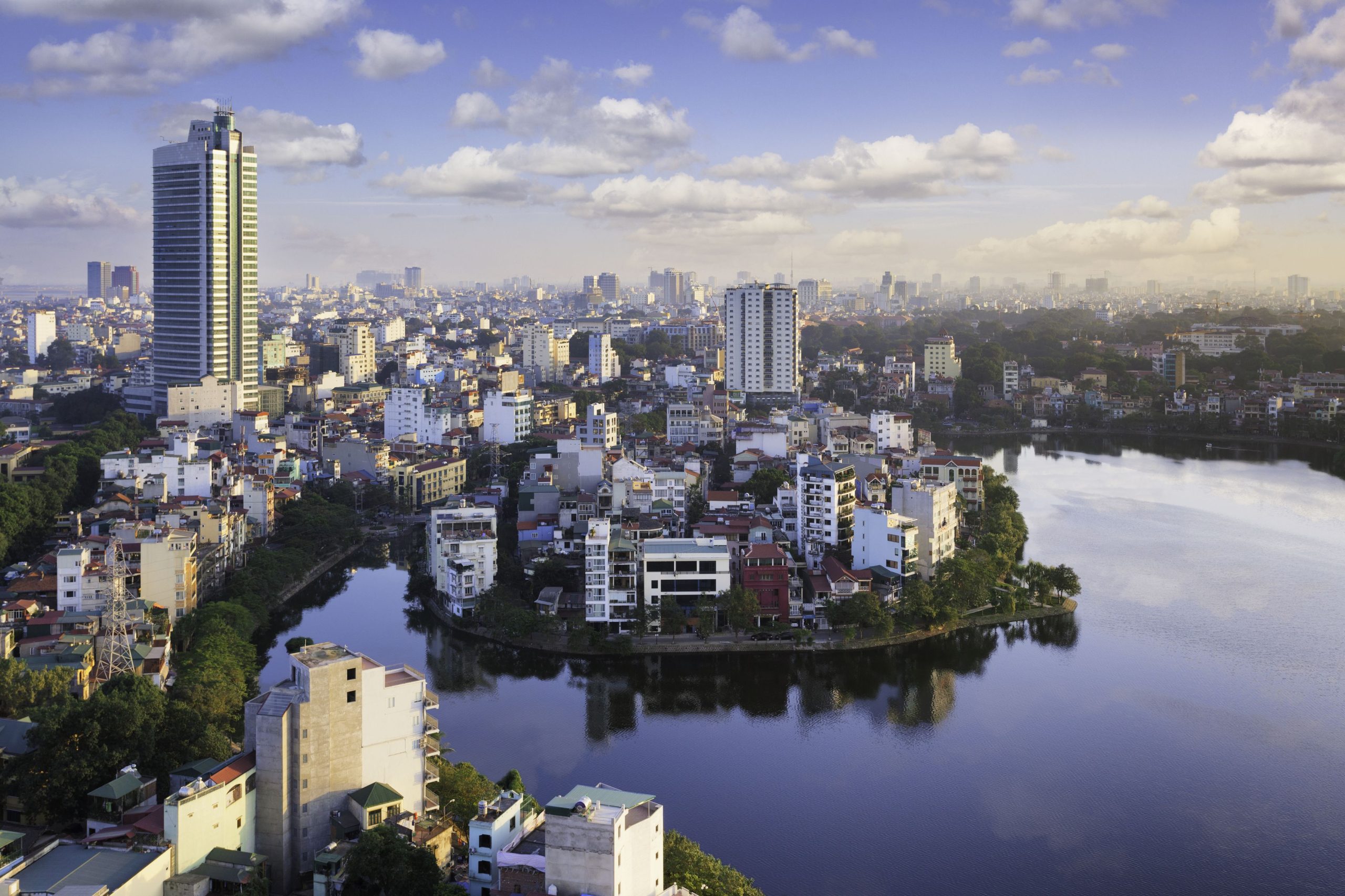
Vietnam is witnessing a significant shift in its business landscape, with nearly 1,500 household businesses officially converting into registered enterprises during the first half of 2025. Of these, 910 made the transition in June alone, accounting for nearly two-thirds of the total conversions. The data was disclosed by Mai Xuan Thanh, Director of the Department of Taxation under the Ministry of Finance, during a meeting held last Wednesday. This surge in formalisation reflects increasing momentum following the government’s issuance of Resolution 68 on 4 May 2025, which positions the private sector as a core pillar of the national economy. As of 30 June, more than 47,000 household businesses had registered for e-invoicing, surpassing the government’s projection by 125%. Under Decree 70, only 37,000 registrations were expected by March 2025. This strong uptake highlights the growing compliance and digital transformation among small businesses. The government’s revenue from eCommerce reached 98 trillion dong, marking a 58% year-on-year increase. Concurrently, tax debt management has shown signs of improvement, with total outstanding tax liabilities falling by 4.6% compared to the end of 2024. Tax collections also saw a notable rise, totalling over 43.1 trillion dong. Administrative reforms in the tax sector continue to accelerate, with plans underway to reduce procedures by more than 44%, cut processing times by 40%, and lower compliance costs by 45%. In a further push to enhance transparency and efficiency, field teams have been deployed to tax offices to observe citizen interactions and identify areas for improvement. As part of Project 06, 95% of tax identification numbers have now been standardised and synchronised with the national population database. From 1 July, companies have also been granted access to e-tax services via newly issued digital identity accounts. Thanh emphasised the critical role of technology and data integration in modernising tax administration, enhancing procedural clarity, and fostering trust between the government and taxpayers. -Viet Nam News
OCBC Eyes S$5 Billion in Lending for Serial Entrepreneurs by 2028
OCBC Bank is set to scale up its financing for serial entrepreneurs to S$5 billion by 2028, expanding a programme that originated in Singapore in 2019. This move reflects the bank’s ongoing commitment to supporting entrepreneurs with multiple ventures across the region. As reported by The Business Times, OCBC intends to channel an additional S$3.5 billion into key regional markets, building on the S$1.5 billion already disbursed to over 1,800 entrepreneurs managing more than 8,000 businesses in Singapore and Malaysia as of end-2024. Following a successful pilot in Malaysia, the programme was formally launched in the country earlier this month. OCBC also plans to introduce the initiative in Hong Kong by the end of 2025, with Indonesia to follow. The strategy signals a significant expansion of the bank’s regional presence in entrepreneurial banking. OCBC defines serial entrepreneurs as individuals who hold majority ownership in more than one business. The bank’s internal data reveals that one in three businesses in Singapore are founded by serial entrepreneurs, while in Malaysia, nearly half of OCBC’s small business clients fall into this category. Moreover, companies led by these entrepreneurs demonstrate a 30 percent lower non-performing loan rate compared to first-time founders, according to the bank’s analysis. A distinctive feature of the initiative is OCBC’s group-based lending model, which evaluates an entrepreneur’s ventures collectively rather than on an individual business basis. This consolidated approach allows the bank to take into account the entrepreneur’s broader track record when assessing financing eligibility. The model offers flexibility to new businesses under the same entrepreneur that may not yet have a proven profit history. Each participating entrepreneur is assigned a dedicated relationship manager, supported by specialists in cash management, corporate advisory, and wealth planning. This structure enables OCBC to deliver tailored financial solutions, bridging funding gaps that are often underserved by traditional banking models. In Malaysia, the programme has gained significant traction. During the pilot phase, approximately 300 companies secured loans totalling over RM850 million. According to OCBC Malaysia’s head of wholesale banking, around a third of entrepreneurs who were offered principal financing opted into the programme, underscoring robust demand in the market. The Malaysian version of the programme has been tailored to local needs, enabling newer businesses to qualify for funding without the conventional two-year operational track record. Entrepreneurs also benefit from the OCBC Velocity platform, which streamlines financial management across multiple ventures through a unified digital interface. This initiative forms part of OCBC’s broader regional strategy to serve the evolving needs of entrepreneurs leading multiple ventures, reinforcing its role as a long-term financial partner in their growth journeys. -Fintech News

Great Eastern to Resume Trading After Delisting Bid Falls Short
Great Eastern Holdings Ltd is set to resume trading on the Singapore Exchange following the failure of its delisting proposal, which lacked sufficient support from minority shareholders despite backing from majority owner Oversea-Chinese Banking Corporation (OCBC). According to a company filing issued after its Extraordinary General Meeting, approximately 63.5% of minority shareholders voted in favour of the proposal. However, this fell short of the required threshold to proceed with taking the insurer private. As a result, OCBC’s S$900 million (US$704 million) offer has lapsed, the lender confirmed in a separate statement. The outcome marks a significant setback for OCBC, Singapore’s second-largest bank, which has owned a majority stake in Great Eastern since 2004 and has made repeated attempts to acquire full ownership of the 117-year-old insurer. The bank had positioned full ownership as a strategic move to deepen the integration of its banking, wealth management, and insurance operations in order to enhance shareholder returns. OCBC’s most recent offer of S$30.15 per share—an increase of 17.8% from its previous bid—targeted the remaining 6.28% of Great Eastern shares not already held by the bank. Despite the improved terms, the bid still fell short of Great Eastern’s 2024 embedded value of S$38.08 per share, a figure cited by dissenting minority shareholders who had been advocating for a higher valuation. Great Eastern is among the largest insurers in both Singapore and Malaysia, managing more than S$100 billion in assets and serving over 16 million policyholders. Its shares had been suspended from trading since July 2024, following the failure of OCBC’s earlier attempt to reach the compulsory acquisition threshold. To comply with listing requirements, Great Eastern will now proceed with issuing new shares, which will reduce OCBC’s ownership from approximately 94% to around 88%. No timeline has been provided for the resumption of trading. Despite the failed delisting, analysts suggest that the impact on OCBC’s strategic position remains limited. “Whether OCBC owns 94% or 100%, it has a minimal impact on earnings or strategy as they are already in control,” said Jayden Vantarakis, Head of Equity Research for South-East Asia at Macquarie Capital. Over the past decade, Great Eastern has contributed an average of S$700 million annually to OCBC’s net profit, accounting for roughly 15% of the bank’s yearly earnings. Following the announcement, OCBC shares closed 0.8% higher, outperforming the Straits Times Index, which rose 0.4%. -Bloomberg
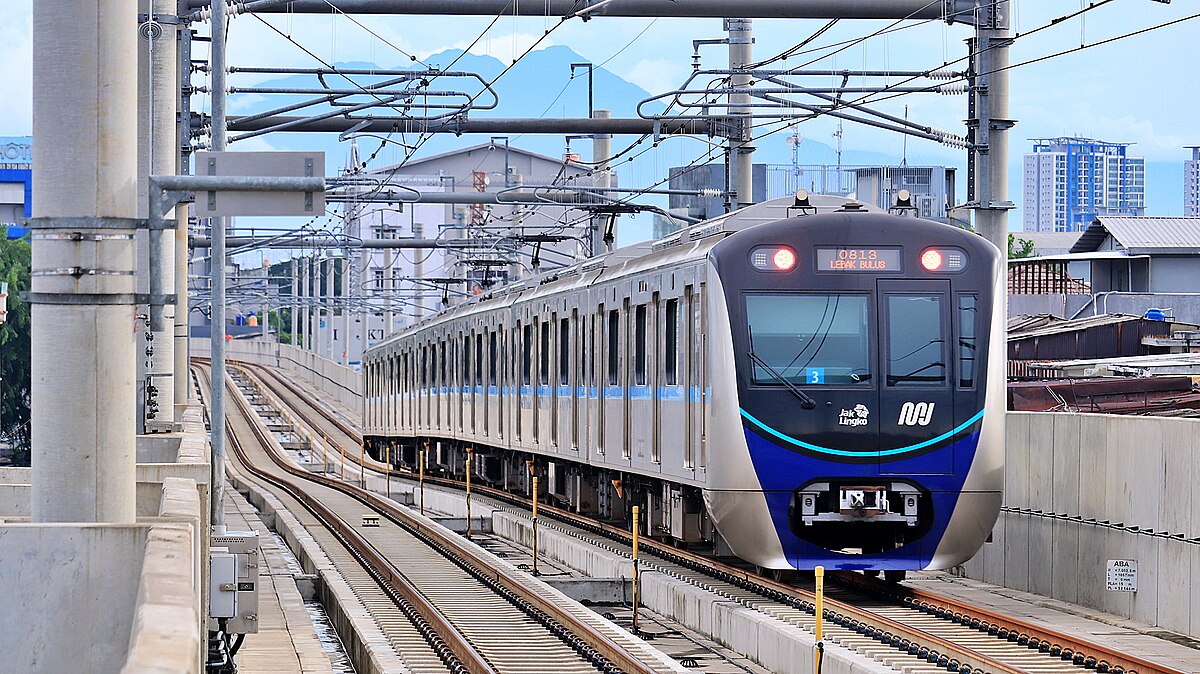
MRT Jakarta to Launch International Tender for US$3.1 Billion East-West Line
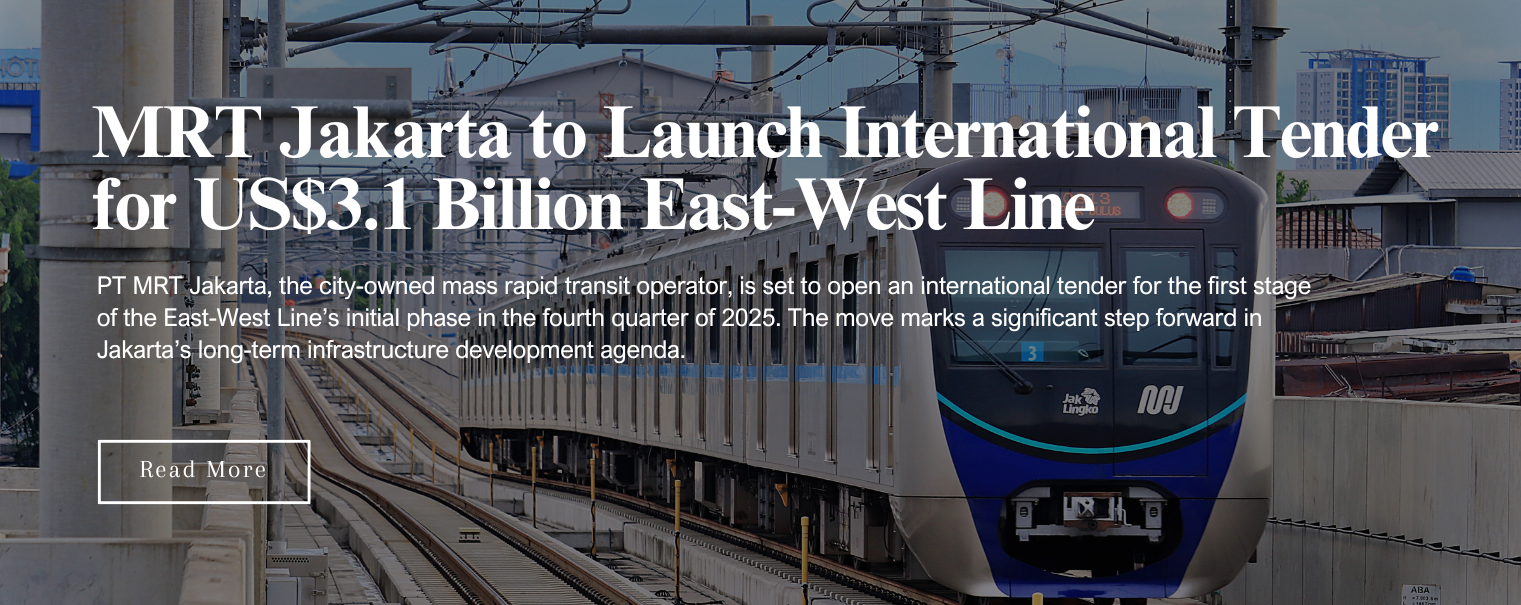
PT MRT Jakarta, the city-owned mass rapid transit operator, is set to open an international tender for the first stage of the East-West Line’s initial phase in the fourth quarter of 2025. The move marks a significant step forward in Jakarta’s long-term infrastructure development agenda. The 24.5-kilometre section, stretching from Tomang in West Jakarta to the Medan Satria district in Bekasi, West Java, represents over a quarter of the planned East-West corridor and is expected to require an investment of approximately 50 trillion rupiah (US$3.1 billion). Construction Director Weni Maulina confirmed that MRT Jakarta had entered into a consultancy agreement with the Japan Management Consultant Association (JMCA), which will oversee the tendering process. “God willing, by the fourth quarter, possibly October or November, we’ll announce the tender, and it will be international,” she said during a press forum, as reported by Kumparan. The tender will prioritise Japanese contractors, in line with the project’s financing structure, which includes support from the Japan International Cooperation Agency (JICA) and co-financing from the Asian Development Bank (ADB). Nonetheless, Indonesian companies will have the opportunity to participate via joint operations with selected Japanese firms. “Japan will take the lead but Indonesian firms can enter through joint operations,” Weni added. The signing of contracts is projected for 2026, with construction slated to commence shortly thereafter. Commercial operations are targeted for launch in 2032. Preliminary development activities have already commenced in 2025, including land acquisition and utility relocation. Weni emphasised the importance of completing these preparatory stages ahead of the start of physical works. Subsequent stages of phase one will include a 9.2-kilometre westward extension from Tomang to Kembangan. Phase two will consist of two key sections: a 29.9-kilometre segment from Balaraja in Banten to Kembangan, and a 20-kilometre stretch from Medan Satria to Cikarang in West Java. The complete East-West Line is planned to span 87 kilometres, connecting Balaraja in the west to Cikarang in the east. The route will feature 21 stations, a mix of elevated and underground, supported by a depot facility in Rorotan. Upon completion, the East-West Line is expected to complement the North-South Line, currently running 16 kilometres from Lebak Bulus to Hotel Indonesia and operational since 2019. The North-South corridor is undergoing a northward extension to Kota Tua, North Jakarta, which will expand the total line to 28 kilometres. Japan has reiterated its commitment to supporting the East-West Line’s development, although Tokyo has clarified there are no immediate plans to participate in further MRT expansion across Greater Jakarta. Japanese Ambassador to Indonesia Yasushi Masaki stated in June that the country’s current focus remains on the East-West corridor and completing the North-South extension. Additional funding is anticipated to support urban development around newly built stations. PT MRT Jakarta has also highlighted the necessity of expanding the MRT network to South Tangerang, emphasising its strategic value for enhancing regional connectivity. According to official reports, Jakarta’s MRT system has already prevented an estimated 2.2 trillion rupiah in environmental damage and delivered travel time savings valued at approximately 1.9 trillion rupiah, underscoring the network’s growing role in improving urban mobility across one of Southeast Asia’s most congested cities. -The Jakarta Post

Nvidia CEO to Hold Beijing Media Briefing as Tensions Surround China Market Strategy
Nvidia Chief Executive Officer Jensen Huang is scheduled to host a media briefing in Beijing on 16 July, according to a company official. This marks his second visit to China this year following an April trip in which he reaffirmed the strategic importance of the Chinese market to the company. The visit comes amid ongoing geopolitical tensions and regulatory pressure from the United States government, which since 2022 has placed restrictions on the export of Nvidia’s most advanced semiconductor technology to China, citing national security concerns related to potential military applications. Earlier this year, the US further tightened its controls by banning the sale of Nvidia’s H20 artificial intelligence chips to China. The H20 had been the most powerful AI chip that Nvidia was still authorised to sell in the Chinese market. Huang’s upcoming visit has attracted close scrutiny from policymakers in both the United States and China. On Friday, a bipartisan pair of US senators issued a letter to Huang urging him to avoid meetings with organisations linked to military or intelligence operations in the People’s Republic of China. The senators also advised against engaging with any entities listed on the US government’s restricted export list. Despite intensifying competition from domestic rivals such as Huawei and other local graphics processing unit (GPU) manufacturers, Chinese technology firms continue to express strong demand for Nvidia hardware. This is largely due to the company’s proprietary CUDA computing platform, which remains foundational for many AI development frameworks. According to Nvidia’s latest annual report, China contributed US$17 billion in revenue in the fiscal year ending 26 January, representing 13% of total company sales. Huang has repeatedly underscored the significance of the Chinese market in Nvidia’s long-term growth strategy. Nvidia’s position in the global semiconductor landscape has continued to strengthen. Last week, the company’s market capitalisation surpassed US$4 trillion for the first time, reaffirming its role as a leading force in the race to dominate artificial intelligence technology on Wall Street. -Reuters