international

News

Citigroup Names Akira Kiyota and Taiji Nagasaka as Co-Heads of Japan Investment Banking

Citigroup Inc has announced the appointment of Akira Kiyota, a seasoned investment banker formerly with Nomura Holdings Inc, and Taiji Nagasaka, a long-standing insider, as co-heads of investment banking for Japan. The appointments will take effect from 1 October. The dual leadership move highlights the US bank’s strategic intent to deepen its footprint in Japan, as international financial institutions seek to capitalise on a resurgence in mergers and acquisitions and a more favourable interest rate environment that is fuelling corporate deal-making. Kiyota brings over 20 years of experience from Nomura, Japan’s largest investment bank and brokerage, where he most recently served as senior managing director and global head of mergers and acquisitions. His appointment reflects Citigroup’s aim to strengthen its M&A advisory capabilities in a market showing significant momentum. Nagasaka, who currently serves as Citigroup’s Japan head of investment banking products and equity capital markets, will step into the co-head role alongside Kiyota, reinforcing the firm’s commitment to developing internal talent for leadership roles in key growth markets. In conjunction with these changes, Masuo Fukuda will take on an expanded mandate as vice chair for Japan and Asia North investment banking. He will retain his existing responsibilities as vice chair of Citi Japan. The appointments come amid renewed corporate activity in Japan. According to consultancy Bain & Company, Japan accounted for 30 per cent of all private equity deal value in the Asia-Pacific region last year, making it the region’s largest market for such transactions. Historically, Japan represented just 5 to 10 per cent of the region’s private equity deal value, underscoring the scale of the shift. This hiring strategy by Citigroup aligns with broader moves among global investment banks to boost senior presence in Tokyo, positioning themselves to capture new business opportunities in the world’s fourth-largest economy. -Reuters

News

Amazon Welcomes Canada’s Withdrawal of C$5.9 Billion Digital Services Tax

Amazon has commended the Canadian government’s decision to withdraw its proposed digital services tax, describing the move as a positive outcome for both the company’s customers and broader trade relations. The tax, introduced last year, was set to generate an estimated C$5.9 billion (US$4.2 billion) over a five-year period by targeting large US-based technology companies such as Amazon. With a payment deadline looming, tensions escalated between Ottawa and Washington, prompting the Canadian government to abandon the legislation on Sunday in a bid to revive trade negotiations. The decision was welcomed by Amazon, which has long opposed digital services taxes imposed by foreign jurisdictions. “Amazon applauds Canada’s decision to rescind the Canada Digital Services Tax Act,” a company spokesperson told AFP. “Digital services taxes are discriminatory, stifle innovation, and harm consumers, and we appreciate the US government’s work to address DSTs around the world.” The United States had previously criticised the tax under the Trump administration, which had suspended trade discussions with Canada in response. The Canadian government’s reversal is seen as a conciliatory gesture to ease bilateral tensions and resume progress on cross-border economic issues. Canada had been one of several major economies considering or implementing digital services taxes. Other countries, including Austria, Brazil, the United Kingdom, France, India, Italy, Spain and Turkey, have introduced similar levies aimed at ensuring that multinational technology firms pay tax in the markets where they operate, rather than relying on complex structures to minimise their liabilities. -AFP

News

Danantara Eyes Record-Breaking US$10 Billion Loan in Southeast Asia

Indonesia’s sovereign wealth fund, Danantara, is seeking to raise as much as US$10 billion (RM42.16 billion) through a multicurrency loan in what may become the largest such transaction in Southeast Asia to date, according to individuals familiar with the matter. Formally known as Daya Anagata Nusantara, the fund has circulated a request for proposals to both regional and international banks for a facility with a proposed tenor of approximately three to five years. Sources, who requested anonymity due to the confidential nature of the discussions, indicated that the loan will be unsecured and will not be backed by any government guarantees or letters of support. Banks have been asked to submit both underwritten and uncommitted proposals. The intended use of proceeds is for general corporate purposes. Danantara, which operates under the direct authority of President Prabowo Subianto, plays a central role in his administration’s strategic plan to drive economic growth to 8% over the course of his presidency. The fund oversees a substantial portfolio of state-owned enterprises, including major banks, oil and gas company PT Pertamina, and the government’s mining interests. Executive sources have projected the fund could eventually control more than US$1 trillion in assets. Despite its ambitious scope, details about the fund’s operational framework remain limited. This opacity is not unexpected given the fund’s early stage, though it complicates assessments of both risk and potential, said Nicolas Painvin, global head of international public finance at Fitch Ratings, in a May interview with Bloomberg News. Earlier in June, Danantara’s managing director Arief Budiman outlined plans to invest across eight strategic sectors, including renewable energy, digital infrastructure, and healthcare. The proposed borrowing would surpass Indonesia’s previous largest loan — a €3 billion (RM14.88 billion) sovereign facility raised in September 2023 — and exceed Southeast Asia’s current largest loan, a US$9.75 billion bridge facility supporting a Singapore consortium’s acquisition of Fraser & Neave in 2012, according to Bloomberg-compiled data. The International Financing Review (IFR) was first to report on Danantara’s funding initiative. -Bloomberg

News

Sony-Honda Electric Vehicle Venture Posts ¥52 Billion Loss Ahead of Afeela Launch

Sony Honda Mobility Inc, the electric vehicle joint venture between Sony Group Corporation and Honda Motor Company, has reported an operating loss of ¥52 billion (approximately US$362 million or RM1.5 billion) for the fiscal year ended March. This figure more than doubles the previous year’s loss of ¥20.5 billion, highlighting the mounting costs associated with bringing their inaugural EV, the Afeela, to market. The loss was disclosed in the company’s annual financial report released on Monday. The venture, which was formally launched in 2022, aims to penetrate the premium electric vehicle segment by leveraging Honda’s automotive engineering and manufacturing strengths in tandem with Sony’s expertise in imaging sensors and digital entertainment technologies. Despite the lack of revenue—attributable to the fact that no vehicles have yet been sold—both parent companies remain financially robust. Combined, Sony and Honda reported operating profits exceeding ¥2.6 trillion in the latest fiscal year, underscoring their capacity to absorb early-stage losses incurred by the venture. The Afeela, positioned as a high-end EV, is expected to hit the market later this year with a starting price of US$89,900. However, analysts caution that profitability may remain elusive, particularly in a market segment with inherently limited volumes and elevated R&D expenditure. “Although Sony Honda Mobility seems to be setting higher prices to recover costs, they may not be able to fully offset expenses,” said Tatsuo Yoshida, Senior Analyst at Bloomberg Intelligence. He noted the significant outlays required for prototype development and innovation, which are common challenges in new vehicle production. Sony Honda Mobility has yet to issue a public comment on the financial results. -Bloomberg

News

Adrian Cheng Steps Down from New World Development Board

Adrian Cheng has officially severed ties with New World Development Company Limited, stepping down from all roles at the embattled Hong Kong property giant. The move comes less than a year after he relinquished his position as chief executive officer. In a filing to the Hong Kong Stock Exchange on Monday, New World Development announced that Cheng resigned as non-executive director and non-executive vice-chairman with effect from 1 July. According to the statement, the departure was made “to devote more time on public services and other personal commitments” and was not the result of any disagreement with the board. Cheng’s full exit marks a rare development in Hong Kong’s traditionally dynastic property sector, where family succession plans are typically tightly managed. A Harvard graduate long viewed as the natural successor to his grandfather Cheng Yu-Tung, Adrian Cheng was elevated to the CEO role in 2020, four years after the elder Cheng’s passing. His father, Henry Cheng, remains a prominent figure at the helm of the family’s business empire. However, Cheng’s tenure coincided with mounting financial pressure at New World Development. The company has become one of Hong Kong’s most indebted property developers, culminating in its first annual loss in over two decades last year. As of the end of 2024, net debt had surged to 96 percent of shareholder equity, according to data from Bloomberg Intelligence. Cheng’s resignation came on the same day the company disclosed a landmark refinancing agreement. In a separate stock exchange filing, New World Development announced the successful completion of a record HK$88.2 billion refinancing transaction, the largest of its kind ever recorded in Hong Kong. The new term loan facility replaces a portion of the developer’s existing offshore unsecured financial obligations, including bank loans, providing crucial liquidity amid ongoing market headwinds. Cheng’s complete withdrawal from the board underscores the shifting landscape for Hong Kong’s major developers as they contend with financial restructuring, generational transition, and regulatory pressure. -Bloomberg

News

Emperor International Shares Slide After Disclosing Overdue Bank Loans

Shares of Hong Kong-listed property developer Emperor International Holdings Ltd recorded their steepest drop of the year on Monday following the company’s disclosure of overdue bank loans and ongoing discussions with lenders over a debt restructuring plan. In a stock exchange filing published late Friday, the group reported that as of 31 March, it had over HK$16.6 billion (approximately RM8.92 billion) in bank borrowings that were overdue or in breach of loan covenants. The company warned that, as a result, lenders may demand immediate repayment. The announcement triggered a sharp market reaction, with Emperor International’s shares falling as much as 16 percent in early trading on Monday, marking the largest intraday decline since August 2024. The stock later recouped some losses, trading at HK$0.21 per share. Emperor’s situation reflects wider pressures on Hong Kong’s real estate sector, which has been significantly impacted by the prolonged property downturn in mainland China. The crisis has affected developers of all sizes, from major players such as New World Development Co to smaller firms like Emperor International. Property values in Hong Kong have declined by approximately 30 percent over the past four years, reaching levels last seen nearly a decade ago. Concurrently, banks have become increasingly cautious with credit issuance. Adding to investor concerns, Emperor International also reported a net loss of HK$4.7 billion for the financial year ended 31 March, a deterioration from previous results. Bloomberg Intelligence analysts Patrick Wong and Francis Chan commented in a note on Monday that financially strained Hong Kong developers may pose growing risks to the banking sector if they fail to secure urgent liquidity or negotiate debt relief. They warned that further declines in property prices could compel banks to take write-downs on distressed loans, should delinquencies mount. -Bloomberg

Investment & Market Trends

NTT Targets US$812 Million in Singapore REIT IPO

Japan’s NTT Ltd is preparing to raise as much as US$812 million (approximately RM3.42 billion) through the initial public offering of its data centre real estate investment trust (REIT) in Singapore, potentially ending a prolonged IPO drought in the city-state. The REIT, to be listed as NTT DC REIT, is targeting a market capitalisation exceeding US$1 billion. Units are expected to be priced at US$1 each, according to terms of the offering reviewed by Bloomberg. Should the over-allotment option be exercised in full, total proceeds could climb to US$864 million. Seven cornerstone investors have pledged to subscribe for a combined US$172.8 million. Notably, Singapore’s sovereign wealth fund, GIC Pte Ltd, has committed to invest over US$100 million. Additional commitments have come from the wealth management clients of UBS Group AG, alongside institutional investors such as AM Squared Ltd and Viridian Asset Management Ltd. The proposed listing would be Singapore’s largest since NetLink NBN Trust’s IPO in 2017, which raised US$1.7 billion. It also represents a significant boost to the country’s lacklustre equity capital market, which has recorded only a single listing in 2025 to date—a modest US$4.5 million flotation by a car servicing company. In February, Singapore’s government introduced a package of market-stimulating incentives, including tax relief measures aimed at encouraging listings and spurring domestic fund investment in local equities. NTT’s global data centre platform, among the largest worldwide, operates across more than 20 countries. The assets being seeded into the REIT are collectively valued at around US$1.6 billion, according to its listing prospectus. The offering is being jointly managed by a consortium of global financial institutions, including DBS Group Holdings Ltd, Bank of America Corp, UBS, Mizuho Financial Group Inc, and Citigroup Inc. -Bloomberg

News

Asian Lenders Drive Over US$2 Billion Loan Surge for Middle East Borrowers

Middle Eastern borrowers are increasingly turning to Asia-Pacific’s syndicated loan market in a bid to broaden their funding base, as global bond issuance and domestic capital flows prove insufficient for their expansive economic transformation agendas. In recent weeks alone, more than US$2 billion worth of deals have been brought to market by Gulf-based borrowers, specifically targeting Asian bank liquidity. Among these, Saudi Electricity Company secured a US$1 billion loan, Banque Saudi Fransi obtained US$750 million, and Al Ahli Bank of Kuwait raised US$500 million. This strategic pivot comes amid growing fiscal pressures across the Gulf. Saudi Arabia, for example, continues to run a budget deficit, with crude oil prices sitting well below the US$92 per barrel threshold that the International Monetary Fund estimates is needed for the Kingdom to balance its books. The result is a sustained drive for capital to support Crown Prince Mohammed bin Salman’s Vision 2030 — a transformative programme valued at US$2 trillion. Qatar, Kuwait, and the United Arab Emirates are similarly pushing ahead with long-term economic diversification plans. These require substantial investment, much of which is being sourced beyond their traditional markets, as governments and corporates seek more competitive funding terms and expanded lender bases. “Middle Eastern borrowers, given the significant borrowing requirements, have been much more open to diversifying their lending relationships and willing to tap into the demand from Asia,” said Amit Lakhwani, global head of loan syndicate at Standard Chartered plc. He added that Asia offers unique advantages such as alternative currencies and maturities that may not be readily available in the regional loan market. Loan activity from Middle Eastern issuers in Asia-Pacific reached a six-year high of US$5.2 billion in 2024, according to Bloomberg data. The recent surge follows Qatar National Bank’s US$2 billion loan in March, which attracted nearly 30 lenders, many of them from China, Japan, and Taiwan. The appeal of such deals for Asian banks lies in both the scarcity of opportunities within their home markets and the comparative strength of Gulf-based borrowers. Year-to-date syndicated loan volumes in Asia-Pacific excluding Japan have dropped 30% to US$53 billion — the lowest in a decade — creating an incentive to pursue international deals that offer favourable risk-return profiles. “Not only do Middle Eastern companies often benefit from superior credit ratings, but the loans also deliver higher margins relative to similarly rated Asian borrowers,” said Aaron Chow, managing director for loan capital markets, Asia-Pacific at Sumitomo Mitsui Banking Corp. For instance, Saudi Electricity’s five-year loan, rated A+ by Fitch, priced at approximately 85 basis points over the secured overnight financing rate (SOFR). By comparison, Shinhan Card of South Korea, rated A, recently closed a near five-year facility at 80 basis points over SOFR. Nonetheless, capacity constraints may limit future activity, as banks must navigate internal exposure limits related to geography and sector concentration.

News

China Extends US$3.4 Billion in Commercial Loans to Support Pakistan’s Reserves

China has rolled over a total of US$3.4 billion in commercial loans to Pakistan, significantly reinforcing Islamabad’s foreign exchange reserves and helping meet International Monetary Fund (IMF) requirements, according to a source within Pakistan’s Ministry of Finance. The financing package includes the continuation of US$2.1 billion that has remained in Pakistan’s central bank reserves for the past three years, as well as the refinancing of a separate US$1.3 billion loan previously repaid by Islamabad two months ago. In addition to the Chinese support, Pakistan has secured US$1 billion from Middle Eastern commercial banks and a further US$500 million through multilateral financing channels. “These inflows have brought our reserves in line with the IMF target,” the official stated, confirming that the funds have pushed Pakistan’s foreign exchange reserves to US$14 billion, in line with the IMF’s year-end requirement. The financial assistance comes as Pakistan implements structural reforms under a US$7 billion IMF bailout programme. Officials assert that the economy has shown signs of stabilisation, underpinned by international financing and adherence to reform conditions. -Reuters

Investment & Market Trends

Kospi Set to Record Strongest First-Half Performance in Over Two Decades

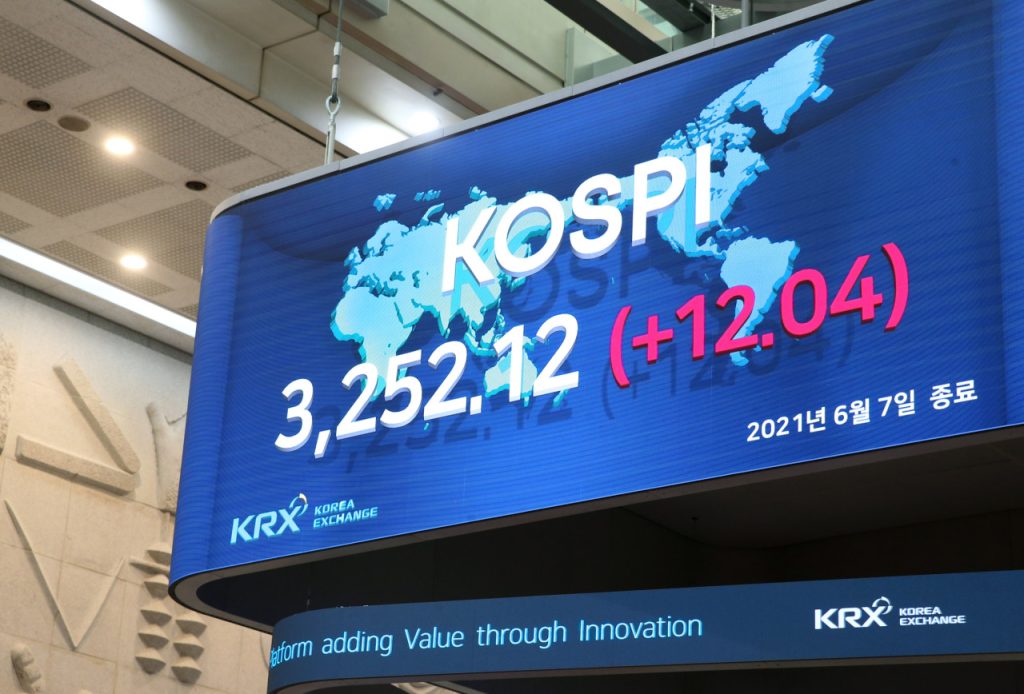
South Korea’s Kospi index is poised to deliver its largest first-half gain in 26 years, buoyed by a combination of renewed investor confidence and political clarity. The benchmark index has surged 27% in the first half of 2025, rising from 2,399.49 at the end of 2024 to 3,055.94 as of last Friday, according to data from the Korea Exchange. This marks the steepest first-half performance since 1999, when the Kospi soared 57% during the height of the dot-com rally. It also significantly outpaces the 5.4% increase recorded during the same period in 2024. Historic comparables include the 51% rise in the first half of 1987 and the 49% jump in 1986, both driven by favourable macroeconomic conditions such as a weak US dollar, low interest rates and declining oil prices. The Kospi has continued to rally into the final trading session of the half. Provided the index does not decline by more than 2.95% today, it will secure its best start to a year since 1999. A sharper fall would still mark the strongest first-half gain since 2009, when markets rebounded from the global financial crisis with a 23.6% rise. June has proven especially bullish, with the index gaining 13.2% in the month alone. The surge reflects optimism over newly elected President Lee Jae Myung’s market-friendly policy agenda. Pledging to revitalise capital markets and enhance corporate competitiveness, President Lee has set an ambitious goal of driving the Kospi to 5,000 points. However, concerns over market overheating are becoming increasingly pronounced. As of last Thursday, 10 stocks were labelled as an “investment risk” – the highest warning level under the Korea Exchange’s surveillance framework – compared to six at the same time last year. Designations of “investment alert” rose 55% to 175, while “investment caution” warnings climbed 27% to 1,176. In June alone, 30 stocks were tagged “short-term overheated”, up sharply from 11 in March. Analysts have cautioned that external pressures could further affect market dynamics. Washington recently extended a three-month grace period, until 9 July, on reciprocal tariffs targeting South Korean imports. This temporary reprieve is part of an effort to reach revised trade terms. Lee Kyoung-min, analyst at Daishin Securities, noted that the index’s proximity to record highs could amplify sensitivity to geopolitical and trade-related developments. “With the Kospi nearing an all-time high, upcoming noise from tariffs and political events could increase pressure for profit-taking,” he said. Lee Eun-taek, equity strategist at KB Securities, echoed similar concerns, warning that “tariff threats are highly likely to resurface, and while such risks are nothing new, the market is unlikely to remain unaffected – especially amid growing concerns over an economic slowdown”. The index breached the 3,000-point mark on 20 June for the first time in nearly three and a half years, and swiftly crossed 3,100 the following session. It is now approaching its record high of 3,305, reached in July 2021. Despite the mounting risks, market sentiment remains broadly positive. Many strategists anticipate further upside through the remainder of the year, particularly if corporate earnings momentum holds. Daishin Securities’ Lee Kyoung-min advised that in policy-driven sectors such as nuclear energy, finance and software, investors may benefit from waiting for a pullback. Conversely, undervalued sectors like semiconductors, autos and retail could offer opportunities amid ongoing capital rotation. Noh Dong-kil, strategist at Shinhan Securities, projected the Kospi could reach 3,400 by year-end, citing a potential valuation re-rating. “After the liquidity rally, earnings will become the key variable,” he said. “There’s a risk that third-quarter results may fall short of expectations due to weakening external demand. Only structurally growing stocks with low sensitivity to the economic cycle will be able to break through.” -ANN

Scroll to Top

Subscribe
FREE Newsletter