international

News

EnQuest Nears Completion of US$84 Million Vietnam Acquisition

UK-based energy company EnQuest is poised to finalise its US$84 million acquisition of Harbour Energy’s Vietnam business within the coming one to two months. The deal, which involves acquiring a majority stake of just over 53 per cent in the Chim Sao and Dua oilfields, marks a strategic step in EnQuest’s expansion beyond its core North Sea operations. Speaking to Reuters, Chief Executive Officer Amjad Bseisu highlighted the growth potential of the Vietnamese assets. “We were excited about the asset there as we see development opportunities, and we also see some in-fill opportunities,” Bseisu said. “So we’ll be looking, once we take over, to investing in the field and trying to increase its productivity.” In parallel, EnQuest is progressing with its offshore operations in Peninsular Malaysia, where it is on track to commence production of non-associated gas from the Seligi field in 2026. The company aims to boost daily output from the current 14,000–15,000 barrels of oil equivalent (boe) to 25,000 boe. The move is part of a broader regional strategy, as EnQuest joins other energy majors in investing in Southeast Asia to meet escalating energy demand, driven by population growth and the increasing energy requirements of data centres. “Asia is our biggest growth engine now for gas,” Bseisu commented. In Indonesia, EnQuest forms part of a consortium that secured a production-sharing contract in April for the Gaea and Gaea II blocks. These assets are located near BP’s Tangguh LNG plant. EnQuest’s strategy in the region focuses on identifying gas reserves in proximity to existing infrastructure. Bseisu noted that governments in the region are showing a preference for domestic gas production over liquefied natural gas (LNG), citing the economic benefits it brings through revenue generation, job creation, and broader industry development. -Reuters

News

CCCC Reiterates Long-Term Commitment to Malaysia’s Infrastructure Development

BEIJING : China Communications Construction Company Ltd (CCCC) has reaffirmed its long-term commitment to Malaysia’s infrastructure sector, underscoring the country’s strategic role in fostering regional connectivity and economic growth. During a meeting with a Malaysian media delegation at CCCC’s headquarters in Beijing, Cai Chuansheng, Executive General Manager of the company’s International Business Department, emphasised the group’s readiness to deepen its involvement in Malaysia through continued investments and new development projects. He highlighted the significance of the bilateral relationship, noting the close cooperation and frequent exchanges between China and Malaysia across socio-economic sectors. “China and Malaysia are good neighbours in Asia, and we have frequent communication at all levels and regular exchanges in socio-economic development. This gives us many opportunities to cooperate,” said Cai. Through its subsidiary, China Harbour Engineering Company Ltd (CHEC), CCCC has been active in Malaysia’s infrastructure landscape for over four decades. Cai revealed that the cumulative value of projects undertaken by CHEC in the country is approximately US$20 billion, reflecting the depth of its engagement in Malaysia’s long-term development. Malaysia remains a key strategic partner for CCCC, which continues to view the country’s infrastructure ambitions and stable economic outlook as strong incentives for foreign investment. Cai noted that CCCC is keen to explore further opportunities to expand its footprint and bring its technical expertise to more large-scale developments within Malaysia. CCCC ranks as the world’s fourth-largest construction firm and operates in more than 158 countries. It is globally recognised for its delivery of high-impact infrastructure projects, including the Mombasa–Nairobi Railway in Kenya, the Sukkur–Multan Highway in Pakistan, the China–Maldives Friendship Bridge, the China–Laos Railway, and Port City Colombo in Sri Lanka. In Malaysia, the company serves as the main contractor for the East Coast Rail Link (ECRL), currently the largest Belt and Road Initiative (BRI) project in the country. Scheduled for completion in December 2026, the ECRL spans 665 kilometres, linking the east coast states to the Klang Valley. As the engineering, procurement and construction (EPC) contractor, CCCC is responsible for the project’s design, financing support, and full execution. CCCC has also delivered numerous landmark projects across Malaysia, including the Penang Second Bridge, the LRT Ampang Line Extension, and the MRT Sentul West Underground Station. Beyond rail and bridge infrastructure, its portfolio in Malaysia extends to marine engineering, dredging, reclamation and highway construction. Reflecting on the company’s four-decade history in Malaysia, Cai expressed optimism for future collaborations. “The 40 years of doing business have left us with beautiful memories. Moving forward, we hope to strengthen our cooperation and undertake more projects – including major ones – in Malaysia, contributing CCCC’s professional capabilities to building an even more beautiful Malaysia,” he said. -Bernama

News

Sino-EU Green Tech Cooperation Strengthens as Electric Exports Surge 400%

BEIJING: Economic ties between China and the European Union are poised for further expansion, with robust momentum in green technology trade and investment underscoring their shared commitment to climate objectives and sustainable growth. Industry executives and analysts highlight that the deepening cooperation is underpinned by complementary strengths: China’s manufacturing capabilities and clean technology solutions are well-aligned with Europe’s strong regulatory frameworks, innovation ecosystems and growing market demand. A notable example of this synergy is Pinnacle Sports Products (Suzhou) Co Ltd, a producer of electric scooters based in Jiangsu province. The company recently exported 4,537 scooters to the Netherlands, reflecting the surging appetite across Europe for environmentally friendly urban transport solutions. According to company president Yuan Di, the firm shipped over 80,000 electric scooters to key markets including France, Sweden and the Netherlands in the first five months of 2025. Beyond trade, Chinese enterprises are also stepping up direct investment into Europe’s green sectors. From photovoltaic panels and energy storage systems to electric buses, China’s export portfolio in sustainable technology is expanding. Simultaneously, firms are establishing advanced manufacturing sites across Europe. Companies such as BYD Auto Co Ltd, Contemporary Amperex Technology Co and Hisense Group have built facilities in Hungary, Serbia, Portugal and Germany, producing batteries, electric vehicles and eco-friendly home appliances. “These strategic investments reflect China’s tangible support for Europe’s energy transition and sustainability goals,” said Wang Zhimin, a researcher at the Academy of China Open Economy Studies, part of the University of International Business and Economics in Beijing. One case in point is Minth Group, a leading automotive components manufacturer headquartered in Jiaxing, Zhejiang province. With a global workforce of more than 22,300, Minth has developed 16 production facilities in Serbia since 2019. The group specialises in manufacturing components for electric vehicles, including lightweight car bodies, battery housings and structural chassis parts. “Serbia has become not only a critical manufacturing base, but also a pilot zone for Sino-EU joint innovation in green technologies,” said Yu Ke, head of the foreign trade unit at Ningbo Minth Automotive Parts Research and Development Co, a Minth subsidiary. Ningbo Minth’s exports of automotive parts to Central and Eastern Europe reached 210 million yuan (approximately US$29.23 million) from January to May 2025, representing a year-on-year increase of 400%, according to data from Ningbo Customs. The benefits of these investments extend beyond environmental impact. Lin Meng, director of the modern supply chain research institute at the Chinese Academy of International Trade and Economic Cooperation, noted that Chinese green ventures in Europe are generating employment and enhancing the integration of upstream and downstream supply chains in host countries. This, she said, is fostering closer industrial and technological collaboration between Chinese and European businesses. European firms are also deepening their engagement with China’s green economy. French industrial conglomerate Schneider Electric is among those leveraging the country’s scale and policy support. According to Yin Zheng, executive vice-president for China and East Asia operations, the company is delivering digital solutions across industries such as food and beverage, bio-pharmaceuticals and electronics. “Our technologies help businesses enhance energy efficiency, reduce consumption and improve traceability and operational safety,” said Yin, emphasising Schneider Electric’s long-standing role in enabling low-carbon transformation across China’s core industrial sectors. As both regions pursue carbon neutrality and sustainable industrial growth, the Sino-EU green partnership is set to become an increasingly influential axis of global climate cooperation. -China Daily

Investment & Market Trends

Asian Markets Slip as Oil Prices Surge Amid Geopolitical Tensions

Equity markets in Asia opened the week on a softer note, while oil prices briefly surged to five-month highs, as investors braced for a potential response from Iran following reported US strikes on its nuclear facilities. The geopolitical uncertainty has reignited fears over global economic disruption and upward pressure on inflation. Despite the heightened tension, market reactions remained largely orderly. The US dollar saw only a marginal safe-haven bid, and there was no indication of broad-based risk aversion across financial markets. Brent crude rose 1.9% to trade at US$78.46 per barrel, while West Texas Intermediate advanced 2% to US$75.30, both pulling back from earlier highs. Gold inched up 0.2% to US$3,375 an ounce. Investor sentiment remains divided. Some are cautiously optimistic that Iran may step back from further escalation, especially as its nuclear ambitions face setbacks. Others speculate that a change in leadership could bring a less confrontational stance. However, JPMorgan analysts issued a stark reminder that historical instances of regime change in the region have often driven oil prices sharply higher—citing past episodes where prices spiked as much as 76% and averaged a 30% increase over time. Strategic concerns remain focused on the Strait of Hormuz, a critical chokepoint where approximately 20% of global daily oil flows. With the US now involved, the prospect of Iranian retaliation disrupting shipments has increased significantly. Analysts at ANZ suggested that oil prices in the range of US$90–US$95 per barrel could be a likely outcome if tensions escalate further. Equity markets showed relative resilience despite the geopolitical overhang. Futures on the S&P 500 eased 0.3%, while Nasdaq futures were down 0.5%, recovering from earlier losses of nearly 1%. Japanese Nikkei futures slipped marginally to 38,380, indicating a modestly weaker open. In currency markets, the US dollar firmed 0.2% against the Japanese yen to 146.36, while the euro dipped 0.3% to US$1.1485. The dollar index gained 0.25% to reach 99.008. There was no strong flight to fixed income assets, with US Treasury futures rising just a single tick. Interest rate futures also edged lower, as investors reassessed the inflationary implications of sustained high oil prices—particularly in light of recently implemented tariffs impacting US consumer prices. Despite recent dovish commentary from Federal Reserve Governor Christopher Waller advocating for a potential rate cut at the upcoming 30 July meeting, the market continues to price in a greater likelihood of easing in September. Fed Chair Jerome Powell and several other policymakers have maintained a more cautious tone. With at least 15 Federal Reserve officials scheduled to speak this week and Powell set for two days of congressional testimony, investors will be closely monitoring any signals regarding the Fed’s policy path, particularly in light of President Trump’s tariff measures and developments in the Middle East. The geopolitical backdrop is also expected to dominate discussions at the NATO leaders’ summit in The Hague, where increased defence spending is on the agenda. On the economic calendar, markets are awaiting US core inflation data, weekly jobless claims, and preliminary readings of global manufacturing activity for June. -Reuters

News

VNG Group Reaffirms US IPO Plans Despite Market Volatility

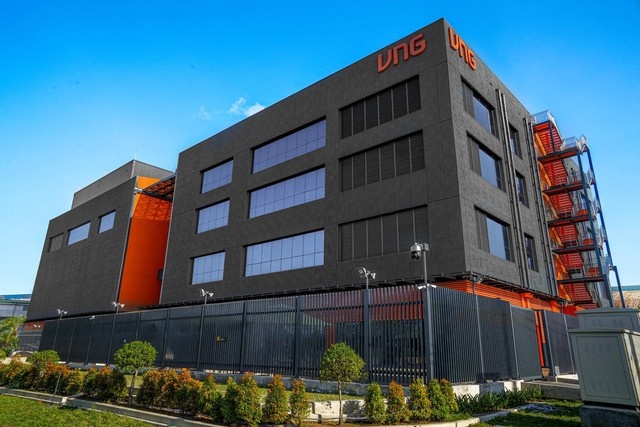
VNG Group, one of Vietnam’s leading technology firms, has reaffirmed its commitment to pursuing a listing on a US stock exchange, despite postponing its initial public offering (IPO) last year. Chief Executive Officer Kelly Wong confirmed the company’s continued interest in an American listing, although no timeline has been established. Speaking on the sidelines of the company’s annual shareholders meeting in Ho Chi Minh City, Wong cited macroeconomic headwinds and investor caution as key considerations. “The challenge for us is always going to be timing,” she said, referring to concerns over the US economy and the lingering impact of former President Donald Trump’s global tariff policies on market sentiment. VNG Ltd had initially filed in August 2023 to list nearly 22 million shares on the Nasdaq Global Select Market. However, it withdrew its registration in early 2024 amid unfavourable market conditions. The company has been contemplating a US listing since at least 2017. In parallel, VNG has evaluated the possibility of transferring its domestic listing from the Unlisted Public Company Market (UpCom) to the more prominent Ho Chi Minh City Stock Exchange, in a move that would enhance visibility and liquidity. The company’s stock declined by 0.6% at last Friday’s close, reaching its lowest level since 5 May. VNG continues to face regulatory scrutiny, with the company disclosing last September that it is under investigation by Ho Chi Minh City police. No further details have been provided. Co-founder Le Hong Minh temporarily stepped aside during this period but retained his role as Chief Executive Officer. The company has since announced that Kelly Wong now holds the position of full-time CEO, while Minh serves as Chairman. Founded in 2004 as Vinagame, VNG began as a game publisher and has since evolved into a diversified technology enterprise. It develops proprietary titles and localises international games for the Vietnamese market. In recent years, it has expanded into digital services, including messaging and mobile payments. Its flagship messaging platform, Zalo, commands approximately 78 million users. The company also operates Zalopay, a mobile payment application, which it plans to introduce to two overseas markets in 2025, targeting Vietnamese expatriates. Wong stated that VNG is actively seeking partners in Southeast Asia to integrate games and mini-games into e-wallet platforms, enhancing international reach. Wong highlighted increased demand for digital transformation across industries, noting that VNG is well-positioned to capitalise on this trend. The company forecasts revenue to rise to approximately 10.8 trillion dong (US$413.3 million) this year. It expects an after-tax loss of 620 billion dong, a significant improvement from the 1.2 trillion dong loss reported in 2024. -Bloomberg

News

Daruma Capital Eyes Singapore IPO to Drive Chizu Café’s Southeast Asian Growth

Daruma Capital Sdn Bhd, the operator behind the Japanese-inspired Chizu Café chain, has announced plans to pursue an initial public offering (IPO) on the Singapore Exchange (SGX), aiming to fuel its expansion across Southeast Asia. The proposed listing is a strategic move to leverage Singapore’s established capital markets, offering the company access to regional and global investors with growing interest in Southeast Asia’s fast-evolving consumer sector. Despite a subdued IPO landscape in Singapore, Daruma Capital founder and managing director Ong Leong Fuei remains optimistic. He views the SGX as an ideal gateway to international capital without compromising operational focus. “The timing is particularly favourable,” Ong stated. “Consumer spending across the region remains robust, and international investors are increasingly drawn to high-quality regional F&B brands with proven scalability.” Daruma Capital has appointed private equity firm MCI Capital Sdn Bhd as financial adviser for the IPO. MCI Capital will support the company’s overall capital markets strategy and listing preparedness. The statement did not disclose the offering’s size or timeline. Currently operating seven outlets in Malaysia’s Klang Valley under the “Meet Me at Chizu” concept, Daruma Capital plans to scale its footprint regionally. Its portfolio also includes Yaki Soul and Daruma, a pastry supply business. Chizu Café, originally established in Malaysia, is best known for its signature blend of milky cheese foam paired with artisanal beverages and premium buttery croissants. The company’s vertically integrated model, supported by a central kitchen, underpins its multi-brand platform and enhances operational scalability. MCI Capital chairman Datuk Cannis Chan expressed confidence in Daruma’s investor appeal. “We understand what international investors seek in Southeast Asian F&B companies, and Daruma Capital checks all the boxes — including proven leadership, scalability, solid financials, and a clear growth strategy,” he said. -The Edge

News

Philippines to Build on Malaysia’s ASEAN Chairmanship as It Prepares for 2026 Leadership

The Philippines has affirmed its commitment to building upon Malaysia’s current leadership of ASEAN as it prepares to assume the regional bloc’s chairmanship in 2026, with a focus on enhancing regional economic integration and fostering a unified stance on global issues. Philippine Ambassador to Malaysia Maria Angela A. Ponce underscored the significance of aligning closely with Malaysia to ensure continuity and sustained momentum in ASEAN initiatives. Speaking to Bernama at the recent celebration of the 127th Anniversary of the Philippines’ Independence, she praised Malaysia’s robust chairmanship and emphasised the importance of collaborative efforts in carrying forward its initiatives. “Malaysia’s chairmanship is very strong, and it is important to work closely with it to carry forward the initiatives it has put in place so that we are able to advance as we prepare for our own chairmanship,” said Ponce. She noted that the Philippines is currently in the process of developing a theme and strategic direction for its upcoming term, which will shape the focus of its engagements and initiatives during its leadership in 2026. “We are not working in a vacuum. What we want to do is build on the accomplishments and initiatives that Malaysia has undertaken during its chairmanship. If you start without that context and continuity, it is difficult to achieve much within just one year,” she said. Malaysia, which holds the ASEAN chairmanship in 2025 under the theme Inclusivity and Sustainability, has prioritised regional peace, security, stability and prosperity within a cohesive and sustainable framework. The Philippines intends to align its preparations with these goals to maintain progress and strengthen regional cooperation. Looking ahead, Ponce also confirmed the Philippines’ intent to participate actively in the ASEAN Foreign Ministers’ Meeting and Post-Ministerial Conference scheduled for the first two weeks of July. “These meetings are very important because they involve not only ASEAN member states but also its dialogue partners. We are looking forward to contributing actively to the discussions,” she added. Ponce further highlighted that the Philippines’ engagement in these upcoming meetings is guided by President Ferdinand R. Marcos Jr’s broader regional vision, which consistently advocates for a united ASEAN committed to peace and regional stability. -Bernama

News

Airbus Secures US$1.85 Billion Starlux Deal as AirAsia Talks Remain on Hold

Airbus received a significant boost at the Paris Airshow with a fresh order from Taiwan’s Starlux Airlines, securing 10 additional A350 long-haul aircraft. The latest commitment builds on Starlux’s 2019 order for 17 of the same model and, according to aircraft price estimates from Cirium Ascend, could be valued at approximately US$1.85 billion. The European aerospace group continued to project confidence, indicating the potential for higher dividends in the future as it steadily accumulated new business during the airshow. This momentum contrasted with a more subdued showing from rival Boeing, which scaled back its presence to prioritise the ongoing investigation into last week’s Air India Boeing 787 crash. Boeing had previously dominated the headlines with large orders secured during US President Donald Trump’s recent Middle East tour. Despite speculation that Airbus might conclude major deals with AirAsia before the end of the event, discussions appear to have stalled. Tony Fernandes, Chief Executive of Capital A Group—the parent company of AirAsia—confirmed that negotiations are ongoing for 50 to 70 A321XLR aircraft and up to 100 A220 or Embraer E2 regional jets. However, he played down expectations for a near-term agreement, stating that finalising the group’s financial restructuring remains the immediate priority. “I don’t think there’ll be an order at this air show. We’re still doing a lot of work with Airbus and other manufacturers. I think we’ll look to do something imminently, in the next 1–3 months,” Fernandes told Reuters. Industry sources suggest Airbus has presented an “aggressive” offer aimed at increasing A220 orders, potentially positioning AirAsia as the launch customer for a proposed 160-seat variant. A larger configuration, still under development, is also reportedly under consideration. However, financing remains a sticking point, contributing to the temporary impasse in negotiations. Elsewhere at the show, other manufacturers reported notable successes. Embraer confirmed a 60-aircraft order for its E175 regional jet from SkyWest Airlines, alongside purchase rights for an additional 50 units. Meanwhile, Airbus disclosed an order for two A350 freighters from MNG Airlines and revealed EgyptAir as the previously undisclosed customer behind an order for six A350-900s. Amid strong post-pandemic demand for fuel-efficient aircraft, manufacturers continue to contend with persistent supply chain issues, particularly concerning engine availability. Nonetheless, Airbus reported a 40% reduction in disruption from delayed components at its production sites since the beginning of 2025. On the defence front, US drone company Anduril and Germany’s Rheinmetall announced a partnership to develop aerial drones for European markets, underscoring efforts to strengthen European defence capabilities by leveraging American technologies. -Reuters

News

Citigroup Recruits JPMorgan’s Drago Rajkovic as Co-Head of Global M&A

Citigroup has appointed Drago Rajkovic as co-head of its global mergers and acquisitions (M&A) division, marking another high-profile hire under the leadership of Viswas Raghavan. Rajkovic joins from JPMorgan Chase, where he most recently held the position of Global Chairman of M&A. The appointment, outlined in an internal memo reviewed by Reuters, will see Rajkovic formally join Citigroup in September. He will co-lead the bank’s M&A operations alongside Kevin Cox, splitting his time between New York and San Francisco. With more than 30 years of experience advising on complex, high-value transactions, Rajkovic brings a formidable track record to the role. His recent mandates include advising Salesforce on its $8 billion acquisition of Informatica and Hewlett Packard Enterprise on its $14 billion purchase of Juniper Networks. Rajkovic’s hire reflects Raghavan’s ongoing strategy to strengthen Citigroup’s investment banking leadership since assuming his role as head of banking last year. Other notable additions include Achintya Mangla, another former JPMorgan executive, who joined the bank in September to lead its investment bank financing operations. Citigroup reported a significant boost in investment banking fees in the first quarter of 2025, driven by an 84% year-on-year increase in M&A revenues. Key transactions this year have included advising Charter Communications on its $21.9 billion merger with Cox Communications and working with Boeing on the $10.5 billion divestiture of its Jeppesen flight navigation division to private equity firm Thoma Bravo. “M&A continues to be super active – there’s a lot of dialogue, a lot of engagement,” Raghavan told investors earlier this month. “The debt market will be more a function of how the M&A market manifests itself, through acquisition financing.” -Reuters

Energy & Technology

Tesla to Develop First Grid-Scale Energy Storage Plant in Mainland China

Tesla has formally entered into an agreement to construct its inaugural grid-scale energy storage power station in mainland China, marking a significant milestone in the company’s global energy ambitions. Announced yesterday via the Chinese social media platform Weibo, Tesla confirmed the project will play a key role in enabling more flexible grid resource management and aims to “effectively resolve pressures relating to urban power supply”. Upon completion, Tesla stated, the facility is anticipated to become the largest grid-side energy storage installation in China. Grid-scale energy storage systems such as this are increasingly critical as renewable energy capacity expands. They provide essential stability to electricity networks, particularly given the rising adoption of variable sources such as solar and wind power. The announcement follows a formal signing ceremony held in Shanghai, attended by representatives from Tesla Shanghai, local municipal authorities, and China Kangfu International Leasing Co, as reported by Chinese financial media outlet Yicai. The investment involved in the project is valued at 4 billion yuan. This development comes amid ongoing geopolitical tensions between the United States and China, with a comprehensive bilateral trade agreement yet to materialise following a series of tariffs introduced by former US President Donald Trump. However, recent negotiations in London yielded a provisional “framework” deal after two days of high-level discussions. -AFP

Scroll to Top

Subscribe
FREE Newsletter