international

Energy & Technology

B.Grimm and Digital Edge to Invest US$1 Billion in Thai Hyperscale Data Centre

BANGKOK : Thai energy company B.Grimm Power Public Company Limited and regional data centre platform Digital Edge DC have announced a joint investment of approximately US$1 billion to develop a hyperscale data centre in Thailand, signalling robust confidence in the country’s digital infrastructure potential. The forthcoming facility, with a planned capacity of 100 megawatts (MW), will be strategically situated in Chon Buri province, approximately 100 kilometres east of Bangkok. Commercial operations are scheduled to commence in the fourth quarter of 2026, as confirmed by B.Grimm Power CEO Harald Link and Digital Edge CEO John Freeman at a joint press briefing held earlier today. The initiative underscores the accelerating demand across Southeast Asia for artificial intelligence (AI), cloud computing, and other digital services, positioning Thailand as a key regional player in the digital economy. Usa Nuetap, Head of Data Centre Development at B.Grimm Power, revealed the company is also evaluating an additional US$1.6 billion in future investments to expand its data centre footprint, potentially adding a further 200MW in capacity. Thailand has rapidly emerged as an attractive destination for hyperscale infrastructure development, drawing billions of dollars in commitments from global technology leaders including Amazon.com Inc., Alphabet Inc., ByteDance Ltd., and Alibaba Group Holding Ltd. The Thai government, under Prime Minister Paetongtarn Shinawatra, is actively encouraging foreign investment in digital infrastructure through a range of tax incentives and policy support, with the aim of establishing the country as a regional hub for AI and advanced digital services. “Thailand stands out as one of Asia’s most compelling markets for digital growth, with surging demand for AI and machine learning,” said Freeman. “Thailand’s promotion of renewable energy also makes it appealing for data centre investment,” he added, citing the alignment with Digital Edge’s sustainability objectives. Digital Edge, backed by private equity firm Stonepeak Partners, currently operates 24 data centres across six Asian markets including India, Indonesia, Japan, Malaysia, the Philippines, and South Korea. -Bloomberg
News, Property

Singapore, Johor Regent Agree Landmark 13-Hectare Land Swap at Holland Road

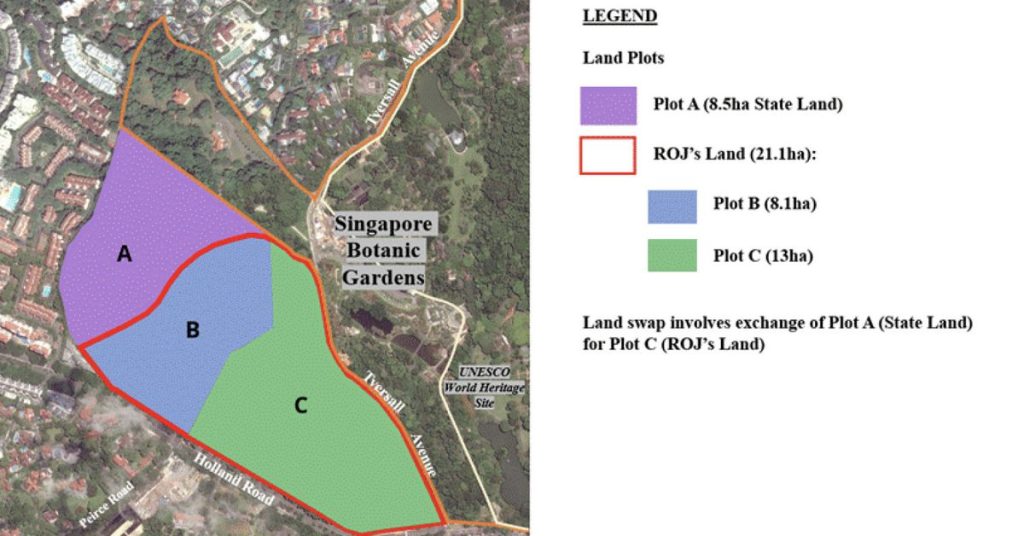
SINGAPORE: The Government of Singapore and the Regent of Johor, Tunku Mahkota Ismail Sultan Ibrahim, have formally agreed to a land exchange involving prime parcels along Holland Road. The agreement, outlined in a joint statement by the Singapore Land Authority (SLA) and the Urban Redevelopment Authority (URA), marks a mutually beneficial realignment of land ownership in a sensitive and strategically located part of the city. Under the agreement, Tunku Mahkota Ismail will transfer 13 hectares of land—situated in closer proximity to the Singapore Botanic Gardens, a designated UNESCO World Heritage Site—to the Singapore Government. In return, the Government will transfer 8.5 hectares of state land to the Johor Regent. According to the joint statement, the exchanged parcels are of comparable value, underscoring the equity and mutual benefit of the transaction. The land currently under Tunku Mahkota Ismail’s ownership totals 21.1 hectares and has been in the private possession of the Johor royal family for generations. Following the land swap, the Regent plans to proceed with development of the retained and newly acquired areas, which are deemed suitable for low-rise, low-density residential use. The intention behind the land exchange is to ensure that future development is positioned further from the environmentally sensitive Botanic Gardens area. The SLA and URA emphasised that all future development plans will be subject to prevailing regulatory procedures. These include comprehensive assessments by the URA and relevant agencies to ensure that any proposed development aligns with the surrounding site context and maintains environmental integrity. Prior to the commencement of any development activity, environmental studies will be required to assess and mitigate potential ecological impacts. Meanwhile, the land acquired by the Government from Tunku Mahkota Ismail will remain undeveloped in the near term, with the remainder of the site reserved for future urban planning considerations. -Bernama

News

Yeo Han-koo Appointed as South Korea’s New Trade Minister

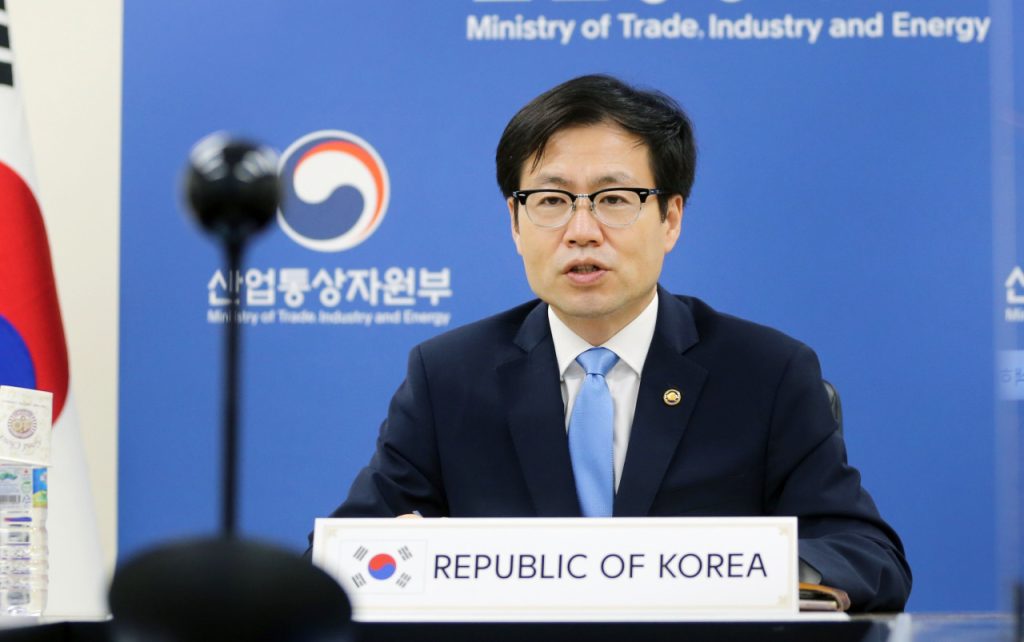
South Korea has appointed former trade envoy Yeo Han-koo as its new Minister for Trade, the Office of the President announced on Tuesday. The move signals the administration’s urgency to resume negotiations with Washington over suspended US tariffs, which have cast a shadow over key South Korean export sectors. Yeo, a seasoned trade strategist, steps into the role as President Lee Jae-myung prioritises tariff reductions in the wake of delays caused by a leadership vacuum. The United States imposed 25% tariffs on South Korean imports, among the highest applied to any American ally, on 2 April. While those levies are currently suspended, the relief expires in early July, leaving a narrow window for diplomatic progress. South Korea’s automotive, aluminium, and steel industries have borne the brunt of these tariffs, with negotiations to ease them now elevated to a national priority. Yeo’s appointment is widely viewed as a strategic measure to accelerate these efforts ahead of the looming deadline. Yeo previously served as South Korea’s trade minister from August 2021 to early 2022 under former President Moon Jae-in and played a key role in negotiations with the United States during the first Trump administration. His diplomatic experience includes his tenure as commercial attaché at the Korean Embassy in Washington, where he was actively involved in revising the Korea-US Free Trade Agreement and navigating Section 232 steel negotiations in 2017. Over the past two years, Yeo has been a senior fellow at the Peterson Institute for International Economics in Washington, further deepening his expertise in global trade dynamics. In a parallel appointment, Lee Hyoung-il, head of the national statistics agency, has been named first vice finance minister. He will temporarily lead the Ministry of Economy and Finance until a permanent finance minister is appointed, according to presidential spokesperson Kang Yu-jung. Both appointments are seen as critical to strengthening South Korea’s economic leadership at a time of intensifying global trade pressures. -Reuters

Energy & Technology

New Relic Report Shows OpenAI’s ChatGPT Dominates Among AI Developers

SINGAPORE: New Relic, the Intelligent Observability company, today released its inaugural AI Unwrapped: 2025 AI Impact Report, offering a front-row view into how developer choices are fundamentally transforming the AI ecosystem. Drawing from comprehensive aggregated and de-identified usage data from 85,000 active New Relic customers over a year, the report reveals that developers are overwhelmingly embracing the largest general-purpose models, led by OpenAI’s ChatGPT, which accounted for more than 86% of all LLM tokens processed by New Relic customers.   “AI is rapidly moving from innovation labs and pilot programs into the core of business operations,” said New Relic Chief Technical Strategist Nic Benders. “The data from our 2025 AI Impact Report shows that while ChatGPT is the undisputed dominant model, developers are also moving at the ‘speed of AI,’ and rapidly testing the waters with the latest models as soon as they come out. In tandem, we’re seeing robust growth of our AI monitoring solution. This underscores that as AI is ingrained in their businesses, our customers are realising they need to ensure model reliability, accuracy, compliance, and cost efficiency.”  Developers Rapidly Shift to the Latest ChatGPT models  Enterprises are closely monitoring and adopting the latest innovations from OpenAI. The data shows ChatGPT-4o has been dominating more recently, followed by ChatGPT-4o mini. However, adoption of ChatGPT from version-to-version is occurring seemingly overnight as developers pivot toward newer, better, faster, and cheaper models. New Relic users have been rapidly shifting from ChatGPT-3.5 Turbo to ChatGPT-4.1 mini since it was announced in April. This shows that developers value cutting-edge performance and features more than savings.  Developers Start to Experiment with Unique AI Models Across Apps   In a countervailing trend, the findings also highlight increased model diversification as developers explore open-source alternatives, specialised domain solutions, and task-specific models, although at a smaller scale. Meta’s Llama emerged as the model that saw the second largest amount of LLM tokens processed by New Relic customers. In fact, New Relic saw a 92% increase in the number of unique models used across AI apps in the first quarter of 2025.   AI Monitoring Adoption Grows Steadily    Organisations need a unified AI monitoring solution that is easy to set up, configure over time, and provides an intuitive experience for any user—from DevOps to executives. Since its launch last year, enterprises have been adopting New Relic AI Monitoring at a steady 30% growth in usage quarter-over-quarter in the previous 12 months, giving them a solution to ensure AI model reliability, accuracy, compliance, and cost efficiency.   Python Dominates, but Java is Growing Quickly  With the most momentum, support, and tooling, the data shows Python continues to dominate AI applications, with customer adoption growing nearly 45% since last quarter. In terms of both the scale of requests and customer adoption, Node.js followed Python. However, Java usage has grown rapidly at 34% since last quarter, signaling more production-grade, Java-based LLM applications are to come from large enterprises.   The AI Unwrapped: 2025 AI Impact Report is available today. Read the full report.

News

Vietnamese Banks Embrace National Data to Drive Digital Lending Growth

Banks across Vietnam are rapidly embracing digital transformation, streamlining lending processes by offering customers the ability to apply for and receive loans entirely through online platforms. This move not only enhances customer convenience but also significantly reduces operational costs for financial institutions.   The cornerstone of this transformation is Vietnam’s integrated national population database, which is now synchronised with databases from 18 ministries and sectors, four state-owned corporations, and the administrative systems of all 63 provinces and cities. This seamless connectivity has enabled richer, cleaner, and more comprehensive datasets, providing a robust foundation for banks to expand their digital service offerings. At a recent conference focused on digital transformation in banking, Nguyen Thi Ngoan, Chief Financial Officer of Misa Joint Stock Company, highlighted the strategic potential of this data. In response, the company launched Misa Lending, a platform designed to connect micro and small enterprises with banks and credit institutions. The service facilitates lending based on real-time enterprise data and has already disbursed loans amounting to 22.5 trillion dong, approximately US$863.3 million. The platform has significantly improved access to finance, with 30% of businesses successfully securing credit—ten times higher than traditional models—while maintaining risk levels within acceptable thresholds. Vu Hong Phu, Executive Board Member of MB Bank, emphasised that enterprises with consistent cash flows, timely payroll disbursements, and full tax compliance are now eligible for credit approval, often without the need for collateral. In 2023, MB Bank issued unsecured loans based on data to over 4,000 businesses, cutting loan processing times by 80%. “A total of 14,500 disbursement orders were executed automatically within minutes,” said Phu. “What used to take two hours now only takes between five and 15 minutes. This level of automation saved the bank 36,000 labour hours last year, equivalent to 4,500 workdays.” VietinBank has also made strides in digital lending through its eFAST platform, which now facilitates online disbursement for corporate clients. According to Deputy Chief Executive Tran Cong Quynh Lan, the bank has processed more than 87,000 online disbursement transactions, valued at over 270 trillion dong. Presently, 36% of the bank’s corporate loans are disbursed online. Meanwhile, MSB, formerly Vietnam Maritime Commercial Joint Stock Bank, has fully digitised its credit approval process by leveraging national data systems, including tax and invoice records alongside the national population database. Thousands of enterprises have secured loans via digital channels, with approvals delivered within minutes. -Vietnam News

News

Japanese Pension Funds Appoint First CIOs to Oversee $400 Billion in Assets

Japanese pension funds, which collectively manage more than $400 billion in assets, are embracing a notable shift in strategy by appointing chief investment officers (CIOs) for the first time. The move is part of a broader effort to enhance returns in a market defined by volatility and structural reforms. One prominent example is the Organization for Small & Medium Enterprises and Regional Innovation Japan, or SME Support Japan, a state agency supporting smaller firms. In April, it created a CIO-equivalent position and appointed Takashi Yamashita, a seasoned strategist who previously contributed to the portfolio design of the Government Pension Investment Fund (GPIF), one of the world’s largest retirement funds. Yamashita is now responsible for overseeing ¥12 trillion ($83 billion) in assets aimed at supporting small businesses. In addition to SME Support Japan, two other public-sector pension funds have introduced similar investment leadership roles. Collectively, the three executives now manage over $400 billion in assets. These appointments closely follow the Japanese government’s 2023 declaration of investment principles, a policy initiative to strengthen asset owners’ risk management and improve investment execution. “These CIO appointments signify a growing awareness of the need to enhance investment capabilities,” said Hironari Nozaki, a finance professor at Toyo University. He emphasised the importance of selecting individuals with genuine investment expertise, rather than assigning such responsibilities to traditional administrative executives, and advocated granting them broad decision-making authority. Historically, Japanese pension fund investment decisions have been managed by senior administrators with limited exposure to financial markets. The introduction of CIO roles marks a decisive break from that model, driven by concerns around continued market instability. Uncertainty over future interest rate hikes by the Bank of Japan and global market disruptions linked to former US President Donald Trump’s tariff policies have added to the urgency of reform. While global peers began appointing CIOs as early as the 1990s to improve performance, Japanese funds are only now catching up. GPIF was an early adopter by local standards, having created its CIO role over a decade ago. The fund shifted from its traditional reliance on domestic bonds and achieved cumulative investment returns of over ¥164 trillion as of the fiscal year ending March 2025, with an annualised gain of 4.4%. By contrast, SME Support Japan has reported an average annual return of just 2% over the past decade. Approximately 80% of its portfolio is allocated to domestic bonds under direct management. Under Yamashita’s leadership, the fund is currently reviewing its asset allocation strategy. Meanwhile, two more major funds have taken similar steps. The Federation of National Public Service Personnel Mutual Aid Associations, known as KKR, with assets of around ¥10 trillion, appointed Akihiro Konishi as its CIO. Konishi previously led the organisation’s fund management division and worked at DBJ Asset Management. The Pension Fund Association of Local Government Officials, or Chikyoren, which oversees ¥36 trillion, strengthened its oversight with dual appointments: a CIO-equivalent position and an independent risk officer. Tatsuya Morishita, a former investment team member and ex-employee of what is now Sumitomo Mitsui Trust, was named to the CIO role. Chikyoren and KKR have worked with GPIF to develop model portfolios, each targeting a 25% allocation to both domestic and foreign stocks and bonds. Their CIOs are now tasked with enhancing returns while maintaining tight risk controls. According to Bank of Japan data, public and corporate pension funds in Japan held a combined ¥513 trillion in assets as of December 2024, roughly equivalent to India’s annual economic output. While public entities such as GPIF, KKR and Chikyoren have led the way in adopting the CIO structure, uptake in the private sector remains limited. As of the end of May, 14 public pensions and 140 corporate pension funds had signed on to the government’s investment principles, a foundational step towards more dynamic capital allocation. However, due to the lack of standardised job titles in Japan’s pension industry, the exact number of CIOs remains unclear. Market participants believe it is still a small cohort. Toshiki Umeuchi of NLI Research Institute noted that while CIO-led institutions must operate within broad portfolio guidelines, variations in investment execution will ultimately drive performance differences. -Bloomberg

Property

China Leverages US$1.5 Trillion Provident Fund to Shore Up Property Market

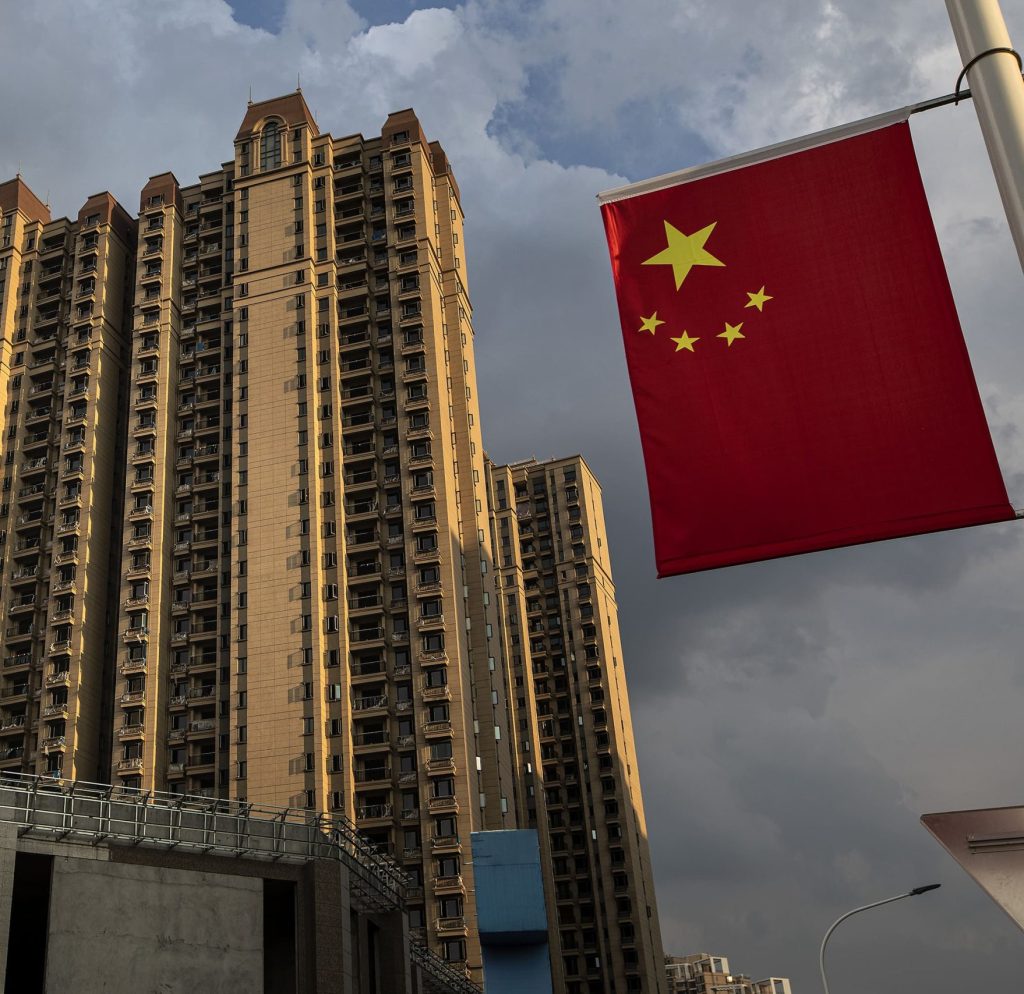
China is drawing on a substantial government-run savings scheme totalling 10.9 trillion yuan (US$1.5 trillion or RM6.43 trillion) in an effort to stabilise its struggling housing sector, providing citizens with a financing alternative amid a tightening banking landscape. The Housing Provident Fund — a policy originally modelled after Singapore’s system more than three decades ago — has grown in significance as commercial banks grapple with squeezed margins, slowing profits and increasing non-performing loans. The fund, which requires monthly contributions from both employees and employers, offers mortgage loans often at lower rates than commercial institutions. In 2023, outstanding mortgages through the fund reached 8.1 trillion yuan, outpacing lending by banks. “It’s a frontrunner among policies used to support the housing market,” said Chen Wenjing, Research Director at China Index Holdings Ltd. “The housing market has seen lingering pressure, and many local governments have leveraged this policy to reduce the mortgage burden.” President Xi Jinping has reaffirmed his administration’s commitment to revive the property sector and mitigate the impact of external economic shocks, a topic that gained renewed attention after recent US-China tensions over trade commitments resurfaced. As confidence in the housing market remains weak, easing access to affordable mortgage financing has become critical. According to Bloomberg Intelligence analyst Kristy Hung, the top 100 Chinese developers are projected to experience a further 10% drop in contracted sales this year, totalling just 3.4 trillion yuan — less than a third of the 2020 peak. Residential sales continued their downward trajectory in May, with a 28% month-on-month decline in sales reported by the embattled Country Garden Holdings Co, highlighting persistent buyer caution across the sector. Previously underutilised due to strict conditions, the Housing Provident Fund has seen growing uptake following a wave of regulatory relaxations. Traditionally, borrowers would combine a larger, higher-interest bank loan with a smaller, cheaper loan from the fund. However, the scope of access to provident fund loans was constrained by variables such as deposit levels and marital status, and downpayment usage was often restricted. Since 2023, at least 50 cities and municipalities have relaxed these limitations, including raising withdrawal limits and expanding eligible usage. Shenzhen, one of China’s most expensive housing markets, recently permitted residents to tap into their provident fund accounts for downpayments. This follows major reforms in March which nearly doubled the city’s mortgage loan quotas compared to 2023. In Beijing, the fund financed 33% of residential mortgages in 2023, up from 29.4% in 2020, indicating a steady shift in borrower preference. The People’s Bank of China has also reduced interest rates for provident fund mortgages, making them 0.9 percentage points cheaper than those offered by banks. While the resulting 3% decrease in borrowing costs may offer limited short-term impact on overall sales volumes, it underscores continued government intervention. “It signals the government’s efforts,” said Liu Jieqi, a property analyst at UOB Kay Hian in Hong Kong. “But in the end, a broad property recovery hinges on effective implementation and an improved economic outlook.” Data show that outstanding home loans through the fund grew by 3.4% in 2024, even as commercial bank lending declined by 1.3%. With 180 million contributing employers and employees nationwide, the fund is well-capitalised to expand its role further. Its 10.9 trillion yuan balance significantly exceeds its outstanding mortgage loan commitments. For buyers such as Eli Zhang, a 30-year-old computer science researcher in Beijing, the programme offers much-needed relief. Zhang purchased a 700-square-foot suburban property in 2023 and now uses the fund to help manage her 4 million yuan (US$550,000 or RM2.33 million) mortgage. “The housing provident loans are getting cheaper and cheaper,” she noted, paying a competitive 2.85% interest rate. “With its help, my mortgage is quite affordable.” -Bloomberg

News

Hong Kong Tourism Sees Strong Revival with 10 Percent Rise in Mainland Visitors

Hong Kong is experiencing a notable resurgence in tourism, with Financial Secretary Paul Chan reporting a significant increase in both mainland Chinese and overseas visitors for the first five months of 2025. The city welcomed an estimated 20 million tourists between January and May, of which approximately 75 per cent originated from mainland China—a 10 per cent year-on-year rise. Overseas arrivals climbed by 18 per cent over the same period. Writing in his official blog on Sunday, Chan attributed the growth to Hong Kong’s dynamic events calendar, featuring a diverse range of high-profile concerts, sporting tournaments and cultural exhibitions. These activities, he noted, have played a critical role in revitalising the city’s tourism sector following years of economic uncertainty fuelled by the COVID-19 pandemic. Events held in the first half of 2025 are projected to draw around 840,000 visitors and generate HK$3.3 billion (approximately US$420 million) in spending, with a corresponding economic contribution of HK$1.5 billion. Chan emphasised the widespread enthusiasm among fans eager to see international and regional stars perform live, describing recent months as a period of exceptional vibrancy for the city. Kai Tak Sports Park has been at the centre of this cultural revival, playing host to an array of globally recognised artists. British rock band Coldplay, Cantopop icon Nicholas Tse, Taiwanese group Mayday, and Singaporean singer JJ Lin have all recently performed to sold-out crowds. The venue is expected to continue drawing significant audiences in the coming months with a packed schedule of concerts and sports matches. Other flagship events, such as the Hong Kong Sevens rugby tournament and a football exhibition match featuring Manchester United, have further enhanced the city’s appeal among local and international sports fans. Beyond entertainment, the city’s cultural calendar has also contributed to this tourism uplift. March saw the return of Art Basel Hong Kong, a key date in the global art world, while April welcomed the launch of the Hong Kong Pop Culture Festival. These events, Chan said, attracted visitors from across the Greater Bay Area, home to over 80 million people, as well as from mainland China and across Asia. Looking ahead, Hong Kong plans to maintain its momentum with a robust line-up of international events scheduled throughout the second half of 2025. Chan expressed confidence that the combination of world-class programming, new attractions, and the city’s unique blend of urban and natural experiences would continue to drive tourism growth. To further support these efforts, the Hong Kong government has earmarked more than HK$1.2 billion in its current budget to strengthen tourism marketing. The initiative is aimed particularly at attracting affluent travellers from Southeast Asia and the Middle East, with an emphasis on religious and cultural inclusivity, including the availability of halal food and access to religious sites. However, the evolving expectations and behaviours of mainland Chinese tourists remain a challenge for local businesses, which continue to adapt in order to capture this key demographic more effectively. In a separate development, Chinese lifestyle platform Xiaohongshu, also known as RedNote, has established its first office outside mainland China, choosing Hong Kong as its inaugural overseas location. The move is seen as a strategic step in expanding cross-border services for brands and users, according to the Hong Kong government. Speaking at the office’s opening ceremony on Saturday, Chan underlined the platform’s strategic value to Hong Kong. Xiaohongshu currently boasts over 300 million monthly active users, including roughly 2 million in Hong Kong. The app’s influence has already been felt locally, with increased traffic to restaurants and retail outlets featured in user-generated content. Chan acknowledged, however, that user complaints about service standards—particularly in the food and transport sectors—have at times damaged the city’s image. He suggested that by leveraging Hong Kong’s status as an international financial hub, Xiaohongshu could both expand its global footprint and support the promotion of Chinese culture and products to a wider audience. Chan concluded by affirming the government’s commitment to deepening collaboration with Xiaohongshu, with a view to enhancing the visitor experience and increasing international visibility for Hong Kong’s tourism, retail, and creative industries. -CNA

News

Vietnamese EV Maker VinFast Reports US$712 Million Loss in First Quarter

HANOI: Vietnamese electric vehicle (EV) manufacturer VinFast announced a net loss of US$712 million for the first quarter of 2025, despite a sharp increase in vehicle deliveries and revenue. The company, which aims to position itself as a serious contender in the global EV market alongside established players such as Tesla, has faced ongoing challenges in penetrating international markets. During the first three months of the year, VinFast delivered 36,330 electric vehicles, marking a substantial year-on-year increase of 296 per cent. Total revenue for the quarter reached US$656.5 million, reflecting a rise of nearly 150 per cent compared to the same period in 2024. VinFast Chairwoman Thuy Le described the uptick in deliveries as “an encouraging start to 2025 amid ongoing global uncertainties.” In 2024, the company reported a net loss exceeding US$3 billion, despite having almost tripled its delivery volume over the year. The continued losses underscore the financial pressures facing emerging EV manufacturers navigating complex global trade dynamics and intense competition. VinFast’s parent company, Vingroup, remains a dominant force in Vietnam’s economy, with diversified interests spanning healthcare, real estate, education and technology. The company’s performance comes against the backdrop of escalating trade tensions, with global commerce disrupted by a wave of tariffs initiated by US President Donald Trump in April. Last week, Vietnamese authorities indicated that discussions with Washington were progressing, as they seek to avoid a proposed 46 per cent levy that could significantly impact the country’s export-driven economy. -AFP

News

Nomura to Close Zhejiang Office as Part of China Wealth Strategy Shift

Nomura Holdings Inc is set to close one of its four branches in China as the Japanese financial services group continues to scale back its wealth management operations on the mainland. The decision marks a significant retreat from a key growth initiative launched in recent years. According to individuals familiar with the matter, the company’s brokerage subsidiary, Nomura Orient International Securities, plans to shutter its branch in Zhejiang province by the end of 2025. The individuals requested anonymity due to the private nature of the discussions. A spokesperson for the Tokyo-based firm declined to comment on the development. The Zhejiang branch was established in late 2021 as part of Nomura’s broader push to expand in affluent Chinese regions. At the time, the firm viewed wealth management as a strategic priority for its growth ambitions in China. However, that plan has been challenged by a confluence of factors including China’s slowing economy, intensifying competition, and regulatory pressures linked to President Xi Jinping’s “common prosperity” initiative. Since its inception in 2019, Nomura Orient International Securities has consistently posted losses. In the year ending 31 December, the joint venture reported a net loss of 128.7 million yuan (approximately USD 18 million), representing a 30 percent improvement from the previous year and marking the second consecutive year of reduced losses. In April, it was reported that Nomura is realigning its focus in China, shifting emphasis away from wealth management in favour of expanding its brokerage and asset management capabilities. This strategic pivot reflects a broader recalibration by global banks in China’s USD 69 trillion financial services sector. Initial enthusiasm following China’s market liberalisation five years ago has been tempered by geopolitical tensions and economic headwinds. Major firms including JPMorgan Chase and UBS have since moderated their expansion plans. Zhejiang, located on China’s eastern coast, is considered one of the country’s most affluent provinces. It hosts major commercial centres such as Yiwu, a global manufacturing and export hub, and is the home of tech conglomerate Alibaba. In addition to Zhejiang, Nomura’s majority-owned joint venture with Oriental International and Shanghai Huangpu Investment Holding currently operates branches in Shanghai, Beijing and Shenzhen. -Bloomberg

Scroll to Top

Subscribe
FREE Newsletter