international

News

Nissan in Talks to Manufacture Vehicles for Honda in the US, Reports Nikkei

Nissan Motor Co. is reportedly in advanced discussions to manufacture vehicles for Honda Motor Co. in the United States, according to the Nikkei, as the carmaker seeks to optimise operations at its under-utilised production facility in Mississippi. The Canton plant, located in Mississippi and currently responsible for models such as the Nissan Frontier, is being considered for the production of Honda pickup trucks, the report stated. The potential collaboration marks a shift in strategic direction for the two Japanese automakers, particularly following the collapse of earlier merger talks aimed at creating the world’s third-largest car manufacturer. Despite the breakdown of merger discussions earlier this year, both companies have reiterated their commitment to continuing cooperation in key areas, including electric vehicle (EV) development. In a brief statement issued on Friday, Nissan confirmed that it had no further updates at this time but emphasised that joint projects with Honda remain ongoing. The company declined to comment on what it characterised as market speculation. Honda representatives were not immediately available for comment. Nissan’s drive to streamline its global operations comes amid significant financial challenges. The company reported a net loss of US$4.5 billion for the financial year ending in March. With declining sales and an ageing product portfolio, Nissan faces mounting pressures, including a maturing debt portfolio of approximately ¥700 billion (US$4.8 billion) due this year. Its credit ratings have been downgraded to junk status by all three major agencies. Under the leadership of newly appointed CEO Ivan Espinosa, Nissan has initiated a comprehensive restructuring plan that includes the closure of seven manufacturing plants and a 15% reduction in its global workforce. The proposed manufacturing agreement with Honda, if finalised, could provide much-needed operational efficiency for Nissan while giving Honda added production capacity in the US market. Both companies continue to contend with growing competition from Chinese manufacturers and trade uncertainties surrounding US-Japan negotiations on automotive tariffs. -Reuters

News

Volkswagen Ceases Production at Chinese Facility

Volkswagen Group has confirmed the closure of one of its manufacturing plants in China, underscoring its accelerating shift towards electric mobility in the world’s largest automotive market. A spokesperson for the German automaker said production had ceased at a facility in Nanjing, operated jointly with Chinese partner SAIC. The decision, initially reported by Handelsblatt, reflects both the declining demand for internal combustion engine vehicles and broader strategic objectives tied to electrification. “Volkswagen Group and its joint venture partners are accelerating the transformation towards electric, intelligent, connected vehicles,” the spokesperson said. “Many SAIC Volkswagen sites are currently being converted or have already been converted for electric vehicle production.” According to a company source, the Nanjing plant’s location within a dense urban setting complicated the retrofitting process for electric vehicle production and limited potential expansion opportunities. Electric vehicle sales continue to gain traction across China, placing mounting pressure on traditional European manufacturers. Volkswagen, long dominant in the Chinese market with its petrol and diesel offerings, has seen its position challenged in recent years by agile local competitors such as BYD. As part of its “In China, for China” initiative, Volkswagen is leaning more heavily on domestic expertise to realign its operations with local market demands. The company confirmed that its production network is undergoing optimisation in line with this renewed strategic focus. Volkswagen also disclosed a 2.1% decline in vehicle deliveries in China for the first half of 2025. While the drop reflects ongoing competitive pressures, it marks an improvement over the 7.4% year-on-year fall reported during the same period in 2024. -AFP

Energy & Technology, News

Huawei Pursues AI Chip Exports to Middle East and Asia

Huawei Technologies Co is attempting to expand its artificial intelligence (AI) chip business beyond China, targeting prospective customers in the Middle East and Southeast Asia despite facing significant manufacturing constraints. According to individuals familiar with the matter, the Chinese technology giant has approached potential buyers in the United Arab Emirates, Saudi Arabia and Thailand to promote its Ascend 910B processors — a previous-generation chip — in limited volumes. These efforts reflect Huawei’s ambition to compete in AI hardware markets where US-based Nvidia Corporation currently holds a dominant position. Sources indicate that Huawei is offering shipments of the 910B chip in the low thousands, although the precise figures for each proposal remain unclear. In tandem, the company is seeking to attract interest by providing remote access to CloudMatrix 384, a China-based AI system built using the more advanced Ascend 910C chip. However, Huawei is not offering to export the 910C due to supply limitations and has instead prioritised Chinese clients who lack access to high-end US semiconductors. Despite these efforts, Huawei has yet to secure any firm deals. Its overtures are part of a broader strategy to increase international awareness of its AI capabilities while attempting to scale up domestic production. Nvidia, which has referred to Huawei as a formidable rival, continues to lead the global AI chip market by at least one generation, according to both US officials and Huawei’s own internal assessments. Among the potential clients, the Mohamed bin Zayed University of Artificial Intelligence in the UAE has reportedly shown no interest. The status of Huawei’s discussions in Thailand remains uncertain, while Malaysian negotiations over a proposed delivery of approximately 3,000 Ascend chips, previously reported by Bloomberg News, appear to be unresolved. In Saudi Arabia, however, conversations are understood to be at a more advanced stage, involving entities such as the Saudi Data & AI Authority (SDAIA). A spokesperson for SDAIA stated that the matter currently falls outside the organisation’s scope, and the Saudi government did not respond to requests for comment. Huawei’s AI chip output is severely constrained. A former Trump administration official noted that the firm is only capable of manufacturing approximately 200,000 AI chips this year, most of which will be distributed within China to meet domestic demand that exceeds one million units. This figure excludes a reserve of 2.9 million Ascend 910B dies previously sourced from Taiwan Semiconductor Manufacturing Co. The US government is closely monitoring AI infrastructure developments in regions including the Gulf and Southeast Asia, citing concerns about China’s expanding technological footprint. While many governments in these areas are seeking to maintain a neutral stance in the escalating US-China tech competition, Washington has exerted growing pressure. This includes encouraging AI projects to adopt US-made chips while discouraging the use of Huawei hardware. Despite a May policy shift under President Donald Trump to tighten controls, US officials remain divided on the national security implications of selling Nvidia and AMD chips to nations such as the UAE and Saudi Arabia. A draft rule from the Department of Commerce proposes extending licensing requirements to Malaysia and Thailand, though this has yet to be finalised and does not fully replace the earlier Biden-era framework. As of now, approvals for chip shipments tied to multi-billion-dollar AI deals announced during President Trump’s May visit to the Gulf remain pending. Exports of AI processors to Gulf states have required US government licences since 2023. Neither Nvidia nor AMD commented on the current situation, and the Department of Commerce declined to respond. Officials aligned with the Trump administration argue that swift action is needed to prevent Huawei from securing long-term customers, which could lead to larger-scale exports in the future. Others caution that expanding US chip exports may ultimately benefit Beijing and believe Washington’s leverage over Nvidia should be used to enforce stricter safeguards on overseas data infrastructure. In Saudi Arabia, where a state-backed AI investment fund has previously stated its willingness to divest from Chinese technology if requested by the US, the government has maintained long-standing AI collaborations with Huawei. It remains unclear, however, whether SDAIA will move forward with any deal involving the Ascend 910B or how Washington might respond. Earlier this year, the Department of Commerce declared that using Huawei’s Ascend chips anywhere globally could breach US trade controls, given the American technology embedded in their production. Following criticism from Beijing, the department revised this guidance, removing references to global applicability. Nonetheless, the current rules continue to warn that unauthorised use of the Ascend 910B, 910C or the forthcoming 910D model could trigger US penalties. Huawei declined to comment on this article, which is based on interviews with individuals close to the matter who requested anonymity due to the sensitivity of the discussions. The company previously stated that it had not shipped any Ascend chips to Malaysia, a claim echoed by the Malaysian government, which distanced itself from that project. -Bloomberg

News

TSMC Half-Year Revenue Jumps 40% on Soaring AI Demand

Taiwan Semiconductor Manufacturing Company (TSMC) has reported a 40% increase in revenue for the first half of the year, driven by strong global demand for artificial intelligence technologies. The world’s leading contract chip manufacturer recorded NT$1.77 trillion in revenue, compared to the same period last year, underscoring its strategic position in the rapidly evolving semiconductor market. The company, whose clientele includes global technology leaders such as Nvidia and Apple, attributed the robust performance to sustained momentum in AI-driven innovation. Chairman and Chief Executive Officer CC Wei recently stated that TSMC anticipates record earnings for the full year, citing continued strength in AI-related demand. TSMC has also benefited from a recent acceleration in sales, a trend partly attributed to geopolitical trade tensions. Specifically, former US President Donald Trump’s tariff measures prompted many firms to increase inventory levels amid concerns over potential future levies. During a shareholder meeting in June, Wei acknowledged that escalating tariffs could influence pricing and downstream demand, but reaffirmed confidence in the company’s outlook, stating, “Our business will still be very good.” Meanwhile, Taiwan’s government has confirmed it has not yet received official communication regarding US tariff measures, as discussions remain ongoing in Washington. In contrast, neighbouring countries including Japan and South Korea are among over 20 nations that have been formally notified of potential “reciprocal” tariffs set to take effect from 1 August. In an effort to mitigate potential trade impacts, Taipei has sought to strengthen its economic and strategic ties with the United States. This includes commitments to increased investment in US markets, greater purchases of American energy, and enhanced defence spending. -AFP

Energy & Technology

Oracle Advances Indonesia Cloud Strategy with DayOne Partnership

Oracle Corporation is proceeding with plans to expand its cloud infrastructure footprint in Southeast Asia through a strategic partnership with DayOne Data Centers Singapore Pte Ltd, according to individuals familiar with the matter. The initiative marks the establishment of Oracle’s first cloud services centre in Indonesia and strengthens its collaboration with a regional operator whose largest client is ByteDance Ltd, the parent company of TikTok. The Texas-headquartered technology company is set to lease data centre facilities operated by DayOne at Nongsa Digital Park, located on the Indonesian island of Batam. Sources indicate Oracle will become the exclusive tenant of specific plots within the park, with the capacity to support infrastructure totalling at least 120 megawatts of power. A data centre of this scale typically entails capital expenditure of no less than US$1.2 billion, depending on factors such as site location, build specifications and whether it is configured for hyperscale AI workloads. This development corroborates an earlier Bloomberg News report detailing Oracle’s interest in launching a cloud hub in Indonesia. Oracle declined to comment on the matter when approached. DayOne, the international division of China-based GDS Holdings Ltd, also did not respond to enquiries. Research by SemiAnalysis identifies ByteDance as DayOne’s largest customer by a significant margin, with Oracle ranking as its second most prominent client. Located in a free-trade zone and positioned strategically close to both Malaysia and Singapore, Nongsa Digital Park has emerged as a growing data centre hub. Its appeal has been further amplified by regional demand for cloud and AI services. Oracle already operates two cloud regions in Singapore and, in 2023, announced a US$6.5 billion investment to develop similar capabilities in Malaysia. The move comes as major US technology companies, including Meta Platforms Inc and Google, increase their investment across Asia to support the anticipated surge in artificial intelligence-driven services. Much of this capital is being directed to markets such as Malaysia and Singapore, which benefit from mature digital infrastructure and favourable investment climates. Salesforce Inc, for instance, recently unveiled a US$1 billion investment in Singapore. According to Bain & Company, the global market for AI-related technologies is projected to reach US$990 billion by 2027, underscoring the transformative potential of AI across industries and geographies. Oracle is also a key infrastructure partner in OpenAI’s Stargate project, which aims to invest up to US$500 billion in AI-related data centre infrastructure both in the United States and internationally. This includes Oracle’s provision of significant compute capacity for OpenAI’s next-generation models. -Bloomberg

News

Fast Retailing Warns of Tariff Impact, Confirms Plans to Raise Prices

Fast Retailing, the Japanese parent company of global apparel brand Uniqlo, has warned that higher US tariffs will significantly affect its American operations from later this year. In response, the company plans to implement selective price increases to offset rising import costs. Concerns over a resurgence in inflation and broader economic instability have been heightened by US President Donald Trump’s unpredictable tariff measures. These actions have already dampened consumer sentiment across major retail markets, including the United States. Earlier this week, President Trump announced a new deadline of 1 August for the implementation of “reciprocal” tariff rates, which are expected to apply broadly to nearly all US trading partners. “It is unavoidable that we will be significantly affected from autumn and winter,” said Takeshi Okazaki, Chief Financial Officer of Fast Retailing, during the company’s quarterly earnings briefing. “It will be difficult to absorb all costs. Our approach will be to raise prices where possible and not where it isn’t possible, while ultimately focusing on creating a sustainable business that securely generates profits.” A large proportion of Uniqlo’s US inventory is sourced from manufacturing hubs in Southeast and South Asia. In a formal notification on Wednesday, President Trump confirmed that Sri Lanka—an important apparel exporter to the US—would face a 30 per cent tariff beginning 1 August. Vietnam, another key supplier, will be subject to a 20 per cent tariff, although products trans-shipped through Vietnam from third countries will be subject to a steeper 40 per cent levy. For the current financial year ending August, Fast Retailing maintained its operating profit forecast at ¥545 billion, citing the benefit of early product shipments to the US market. “FY2025 impact likely to be limited, whatever the tariff rate,” the company stated in its earnings release, noting that a substantial portion of merchandise had already been delivered to the United States. In the three months to 31 May, operating profit rose 1.4 per cent to ¥146.7 billion (approximately US$1.0 billion), falling short of the ¥153.8 billion consensus estimate from five analysts polled by LSEG. Founded with a single store in Hiroshima four decades ago, Uniqlo has expanded to more than 2,500 locations worldwide. Its business model—selling affordable fleece and cotton garments primarily made in China and other Asian markets—has come under pressure from shifting geopolitical trade dynamics and weakening consumer demand in key regions. Sales in China, Uniqlo’s largest overseas market with over 900 stores, have declined amid broader economic uncertainty. The company anticipates lower revenue and profits in China for the fourth quarter, citing subdued demand for apparel. With growth slowing in China, Fast Retailing has shifted focus towards expansion in North America and Europe. However, shares in the company have struggled, falling approximately 8 per cent in the first half of 2025—ranking it the fourth-worst performer among Asia-Pacific large-cap stocks, according to LSEG data. Shares closed down 0.9 per cent ahead of the earnings release.

News

Garuda Indonesia Expands Boeing Aircraft Order to 79 Units

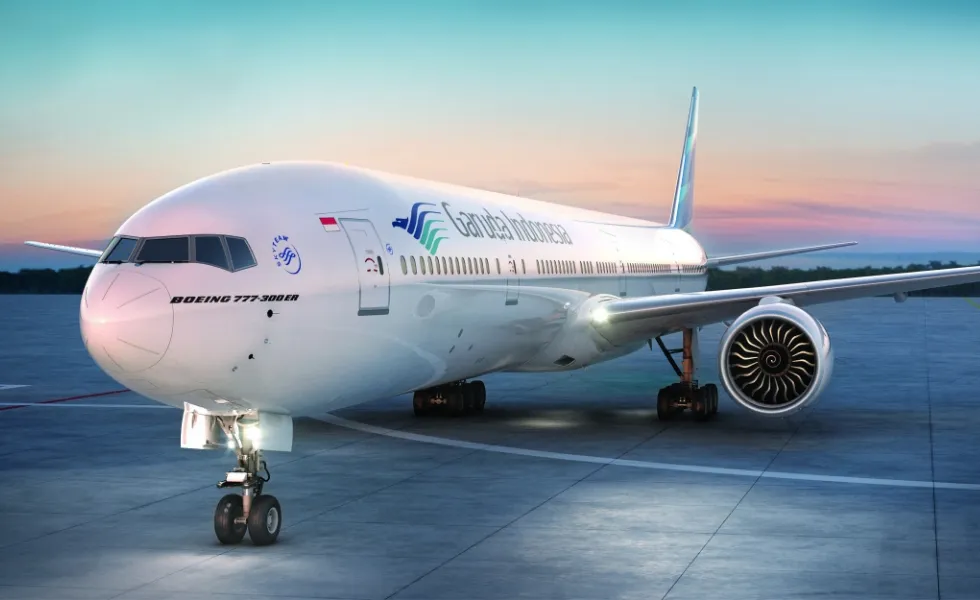
Indonesia’s national carrier, Garuda Indonesia, will increase its planned aircraft order from Boeing to 79 planes, according to State-Owned Enterprises Minister Erick Thohir. The announcement forms part of a broader trade strategy involving ongoing negotiations with the United States over impending import tariffs. Speaking at the legislative complex in Senayan, South Jakarta, on Tuesday, Minister Thohir stated the new agreement replaces a previously cancelled deal that was annulled during Garuda’s court-supervised debt restructuring process (PKPU). “The new total is 79 aircraft,” he said, as reported by Kumparan. The revised order marginally exceeds earlier projections of 50 to 75 planes, which had been disclosed by Garuda Indonesia’s President Director, Wamildan Tsani Pandjaitan, earlier this month. While discussions with Boeing remain at a preliminary stage, Wamildan noted that the airline is likely to acquire the 737 Max and 787 Max models. The agreement is part of Indonesia’s wider diplomatic effort to respond to a 32% import tariff imposed by the US on Indonesian goods. Although US President Donald Trump has delayed implementation, he warned President Prabowo Subianto in a recent letter that the tariff would take effect from 1 August unless a new agreement is reached. Minister Thohir underscored that the aircraft deal aligns with the government’s broader objectives of reducing trade imbalances and boosting energy security. He noted that both Garuda Indonesia and state-owned energy firm Pertamina are supporting the trade discussions with Washington. “This is also about strengthening our energy self-sufficiency through overseas investment via Danantara, and addressing our aircraft shortage,” he said. As part of Indonesia’s counter-proposal, the government has committed to up to US$34 billion in US imports, focusing largely on crude oil and aircraft. Pertamina is expected to be the major contributor to this import figure. Garuda Indonesia is also set to receive 6.65 trillion rupiah in funding from the state asset management agency Danantara. A substantial portion of this capital will be directed towards its low-cost subsidiary, Citilink Indonesia. The Ministry of Energy and Mineral Resources has confirmed that plans are progressing to import oil and gas from the United States. Deputy Energy Minister Yuliot Tanjung stated that the government awaits the outcome of negotiations led by Coordinating Minister for Economic Affairs Airlangga Hartarto, who is currently in Washington. “We’ve achieved a trade balance of around US$15 billion on the energy side. We will wait for Pak Airlangga to conclude negotiations with the United States,” said Yuliot, during an oil and gas forum on Tuesday, as reported by Bloomberg Technoz. Indonesia has proposed a series of concessions in the ongoing bilateral talks aimed at averting the tariff. However, analysts have warned that a comprehensive agreement may prove challenging to secure. “The government will maximise all available opportunities to safeguard national interests,” said Haryo Limanseto, spokesperson for the Ministry of Energy and Mineral Resources. -The Jakarta Post

Investment & Market Trends

Food Empire Commits US$37 Million to Expand Coffee Manufacturing in India

Food Empire Holdings has announced plans to invest US$37 million to significantly expand its spray-dried soluble coffee manufacturing facility in Andhra Pradesh, India. The development, aimed at increasing production capacity by approximately 60%, is scheduled to commence in the fourth quarter of 2025 and reach completion by the end of 2027. In addition to its existing spray-dried coffee facility, the group operates a freeze-dried soluble coffee manufacturing plant in India. Food Empire has also previously disclosed intentions to establish a new freeze-dried soluble coffee facility in Binh Dinh, Vietnam, which is slated for completion in 2028. These capacity expansion projects are part of the company’s broader vertical integration strategy, designed to enhance control over the entire coffee processing value chain. This initiative supports the long-term growth of Food Empire’s branded consumer business and reinforces the group’s market-leading position in key regions. “Food Empire has enjoyed four consecutive years of record revenue growth driven by the stellar performance of our core branded consumer business,” said Sudeep Nair, Group CEO and Executive Director. “This has given us the confidence to expand our ingredients manufacturing business, which will not only position us strongly as a leading player in soluble coffee in Asia, but more importantly, serve as a vital link to support the growth of our branded consumer business as we continue to invest in brand-building activities across our markets.” Food Empire shares closed at S$1.90 on 9 July, reflecting a 2.15% increase. -The Edge

Investment & Market Trends

Nvidia Approaches $4 Trillion Valuation Amid AI Market Leadership

Nvidia briefly touched a market capitalisation of $4 trillion on Wednesday, becoming the first company globally to reach the milestone, underscoring its dominant position in the artificial intelligence sector and reinforcing its status as one of Wall Street’s most sought-after equities. The California-based chipmaker’s shares climbed as much as 2.8% during the session, reaching a record intraday high of $164.42, before closing up 1.80%, valuing the company at approximately $3.97 trillion. The rally continues to reflect surging investor confidence in the future of AI, a sector where Nvidia’s high-performance semiconductors are regarded as foundational infrastructure. “This highlights the reality that capital expenditure across industries is increasingly shifting towards artificial intelligence. It is clearly the direction in which technology is heading,” said Robert Pavlik, Senior Portfolio Manager at Dakota Wealth in New York. Nvidia’s ascent has been rapid. After achieving a $1 trillion market valuation in June 2023, the company has effectively tripled its worth within a year—outpacing the trajectory of both Apple and Microsoft, the only other US-listed firms with valuations exceeding $3 trillion. Microsoft currently holds the position of the second-most valuable company in the United States, with a market capitalisation of $3.74 trillion. Its shares closed 1.4% higher at $503.51. Despite a subdued start to the year, prompted by market concerns over a low-cost AI model developed by China’s DeepSeek, Nvidia has rebounded strongly—up approximately 74% from its April lows. That recovery coincided with renewed optimism around trade negotiations involving the United States, contributing to record highs in the broader S&P 500 Index. Nvidia now comprises 7.3% of the benchmark index, ahead of Apple and Microsoft, which account for approximately 7% and 6%, respectively. Nvidia’s current valuation surpasses the combined worth of all publicly listed companies in both Canada and Mexico, and exceeds the entire UK equities market, according to LSEG data. The company’s 12-month forward price-to-earnings ratio recently stood at 32—below its three-year average of 37—indicating continued appetite from investors despite its substantial growth. However, while Nvidia remains the dominant supplier of AI chips, major clients such as Amazon, Microsoft, and Alphabet are under increasing investor pressure to curtail expenditure on AI infrastructure. Meanwhile, competitors including Advanced Micro Devices are seeking to capture market share through more cost-effective alternatives. Nvidia posted first-quarter revenue of $44.1 billion, representing a 69% year-on-year increase. The company has guided for second-quarter revenue of approximately $45 billion, plus or minus 2%, and will release those figures on 27 August. Year-to-date, Nvidia shares have risen around 22%, outperforming the Philadelphia Semiconductor Index, which is up nearly 15%. -Reuters

Property

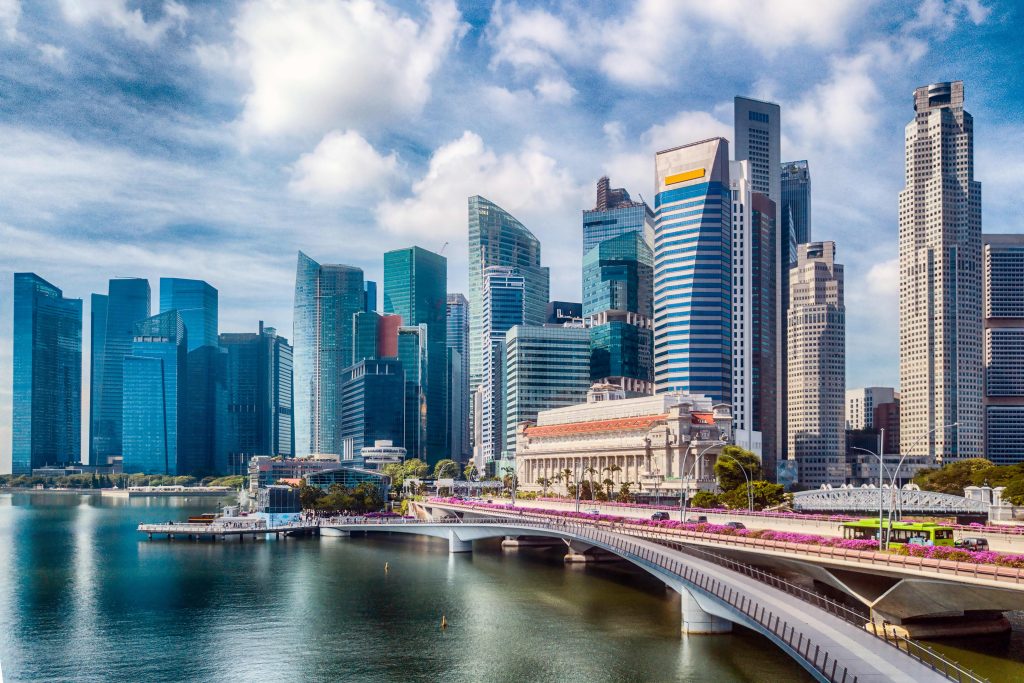
Singapore to Add 80,000 New Homes as Housing Demand Accelerates

Singapore is poised to see sustained housing demand in the coming years, propelled by a confluence of demographic shifts, lifestyle changes, and population growth. According to the Urban Redevelopment Authority (URA) and Housing and Development Board (HDB), these trends underpin the Draft Master Plan 2025, unveiled last month, which outlines the development of at least 80,000 new public and private homes over the next 10 to 15 years. In response to media queries, URA and HDB emphasised that housing strategies are shaped by multiple considerations, including managing near-term demand, ensuring a stable property market through consistent supply, and responding to long-term demographic and lifestyle trends. “We remain focused on ensuring that housing remains accessible in the long term for current and future generations,” the agencies stated. “We also account for a range of possible future scenarios, including socioeconomic changes and shifts in the global environment.” Demographic patterns are evolving significantly. Rising life expectancy is resulting in homes being occupied for longer periods, while an increasing number of young couples and single individuals are choosing to live independently rather than with extended families. This has led to a marked decline in household sizes, from 3.96 persons in 1995 to 3.09 in 2024. Additionally, the maturing cohort of “echo boomers” — individuals born in the late 1980s to 1990s — is reaching the age of home ownership, further fuelling demand. The government intends to phase in the new housing projects gradually and monitor market conditions closely to adjust supply as necessary. Population Growth Drives Demand Despite a declining birth rate, experts affirm that housing demand remains high due to broader demographic changes. A notable trend is the shift towards smaller and single-person households, reflecting changing social norms and preferences. Singapore’s total population reached 6.04 million in June 2024, representing a 2 per cent increase from the previous year. This marks the first time the population has exceeded six million, largely driven by a 5 per cent rise in the non-resident population. While much of this growth stems from foreign workers and expatriates, it contributes to increased demand for both owner-occupied and rental housing. Dr Woo Jun Jie, Senior Lecturer at the Lee Kuan Yew School of Public Policy, noted that Singapore’s housing strategy must adapt to accommodate a larger foreign workforce, necessary to offset the impact of declining fertility and an ageing population. Associate Professor of Economics Walter Theseira from the Singapore University of Social Sciences remarked that while the government has refrained from setting a formal population target since the controversial 2013 Population White Paper, the implications are clear. “Without immigration, the Singapore resident population and workforce will inevitably decline,” he said. He added that the government’s housing plans suggest preparations for continued inflows of both permanent and temporary migrants. Although the 2013 White Paper projected a population of between 6.5 million and 6.9 million by 2030, the government has since clarified that this figure was intended as a planning parameter, not a definitive goal. Strategic Locations for Future Housing New housing precincts under the Draft Master Plan 2025 are planned in areas including Newton, Paterson, Dover-Medway along Dover Road, the former Singapore Racecourse site in Kranji, and the Paya Lebar Air Base and Sembawang Shipyard. The type of housing in each area is determined by factors such as land value, permissible density, and land availability. For instance, high-value districts like Newton and Paterson are earmarked for private developments, reflecting both development costs and market demand for premium residences. Conversely, locations such as Dover-Medway, situated near the Greater One-North commercial and academic cluster, are expected to feature a mix of public and private housing to support a diverse residential base. Public housing projects, explained Assoc Prof Theseira, are typically large-scale and high-density to support necessary infrastructure investments, such as transport links, healthcare facilities, and retail centres. These projects are usually sited on land with relatively lower value to ensure affordability after subsidies. Private housing, on the other hand, tends to be allocated to areas where the development of public housing would not be viable due to cost or density constraints. Beyond residential considerations, the new housing areas are also integrated into broader urban strategies. Professor Qian Wenlan from the National University of Singapore’s business school highlighted that the government’s decentralisation efforts aim to create employment hubs outside the central business district, thereby reducing commuting needs and enhancing liveability. For example, Bishan town centre is set to be transformed into a mixed-use business district featuring 200,000 square metres of new office space, along with an integrated hawker centre, polyclinic, transport interchange, and retail facilities. Developments in neighbourhoods such as Newton and Paterson are expected to include a blend of residential, retail and dining options, maximising land-use efficiency through vertical integration. Even as new homes are added in less dense zones such as Kranji and Sembawang, denser areas like Bishan will see moderate increases in residential capacity through redevelopment and Build-to-Order (BTO) projects. However, Dr Woo noted that greater density does not necessarily equate to congestion. Thoughtful urban design, including green spaces and recreational amenities, will be crucial in maintaining a high quality of life and mitigating perceptions of overcrowding. -CNA

Scroll to Top

Subscribe
FREE Newsletter