international

Investment & Market Trends, News

Samsung Projects 39% Q2 Profit Decline as AI Chip Supply to Nvidia Faces Delays

Samsung Electronics is expected to report a 39% year-on-year fall in second-quarter operating profit, as ongoing delays in the supply of advanced memory chips to Nvidia weigh heavily on its performance. According to LSEG SmartEstimate, the South Korean technology conglomerate is projected to post an operating profit of 6.3 trillion won (£3.6 billion) for the April–June period, marking its weakest quarterly result in a year and a half. The anticipated drop reflects growing investor unease regarding Samsung’s ability to keep pace with rivals in the rapidly expanding market for high-bandwidth memory (HBM) chips, which are crucial for artificial intelligence data centres. While competitors such as SK Hynix and Micron have benefitted from strong demand for AI-optimised memory, Samsung’s progress has been hindered by its dependence on the Chinese market, where access to advanced semiconductor technology remains restricted by U.S. export controls. Samsung’s efforts to secure certification for its HBM3E 12-layer chips from Nvidia have also been slower than anticipated. Analysts noted that these chips have yet to make meaningful inroads into Nvidia’s supply chain. “HBM revenue likely remained flat in the second quarter, as China sales restrictions persist and Samsung has yet to begin supplying its HBM3E 12-high chips to Nvidia,” said Ryu Young-ho, Senior Analyst at NH Investment & Securities. He added that shipments to Nvidia are unlikely to be significant within this calendar year. Although Samsung had initially indicated that progress in HBM development could be expected as early as June, it declined to confirm whether its latest chips had passed Nvidia’s qualification tests. However, AMD disclosed in June that it had commenced receiving shipments of Samsung’s HBM3E chips. Despite the softness in its semiconductor division, Samsung’s smartphone segment is expected to deliver stable performance, supported by inventory demand ahead of potential U.S. tariffs on imported devices. Broader uncertainty persists, however, across its core businesses—including semiconductors, smartphones, and consumer electronics—due to evolving U.S. trade policies. The Biden administration is reviewing measures that could revoke export authorisations for chipmakers operating in China, including Samsung, potentially limiting their access to critical U.S. technologies. Additionally, the prospect of a 25% tariff on foreign-manufactured smartphones and a looming 9 July deadline for reciprocal tariffs are contributing to market uncertainty. While Samsung’s share price has risen approximately 19% year-to-date, it continues to lag behind the broader KOSPI index, which has climbed 27.3% over the same period. The company remains the weakest performer among major memory chipmakers in 2025 thus far. -Reuters
News

EG Industries and China’s CIG Expand Strategic Manufacturing Partnership in Penang

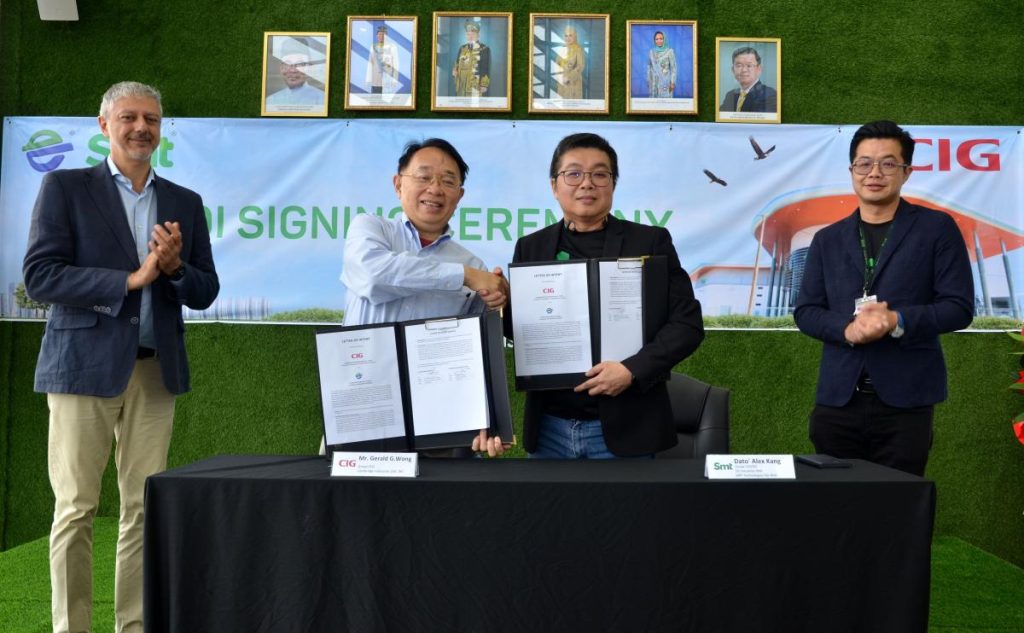
EG Industries Bhd has signed a third letter of intent (LOI) with China’s Cambridge Industries Group (CIG), a Shanghai-based specialist in optical and broadband technologies, to further scale up manufacturing operations in Batu Kawan, Penang. The initiative marks a significant step in the continued collaboration between the two companies and complements EG Industries’ existing facility in Sungai Petani, Kedah. In a corporate statement, EG Industries outlined plans to significantly enhance production capabilities at the Batu Kawan facility. The expansion will include the installation of new high-speed surface mount technology (SMT) lines, the upgrade of cleanroom environments from 1K to 10K standards specifically for optical modules, and a wider deployment of automation across testing and packaging processes. These enhancements align with CIG’s broader innovation roadmap and are designed to strengthen its strategic partnership with EG Industries, ensuring greater responsiveness to global customer demands. The latest LOI follows two earlier agreements. In April 2024, EG Industries secured a second LOI to manufacture 1.6-terabit optical signal transmitters and receivers for next-generation 5G wireless networks. This built on the groundwork laid in 2022 under the first LOI, which covered the production of 100G, 200G, and 400G optical components. Chief Executive Officer Datuk Alex Kang said the expanded Batu Kawan facility would serve as a cornerstone in the development of advanced connectivity solutions, including the roll-out of 5G and 5G Advanced (Release 18) technologies for global deployment. “This expanded collaboration also reinforces regional supply chain resilience and enhances delivery efficiency across CIG’s global customer base,” he added. Shares in EG Industries closed one sen higher at RM1.20 on Friday, representing a 0.84% gain and valuing the company at RM1.12 billion. Despite this uptick, the stock has declined 4% year-to-date. -The Edge

Energy & Technology

United States to Restrict AI Chip Exports to Malaysia and Thailand

The administration of former President Donald Trump is preparing new restrictions on the export of artificial intelligence chips to Malaysia and Thailand, in a move aimed at curbing the illicit flow of advanced semiconductors to China. According to individuals familiar with the matter, the US Commerce Department has drafted a rule that would prohibit the shipment of advanced AI processors—such as those produced by Nvidia Corporation—to the two Southeast Asian nations. The proposal forms part of a broader strategy to block Chinese access to cutting-edge US technology through third-country intermediaries. Although the regulation remains in draft form and could be revised prior to implementation, sources have indicated that it would be the first formal step in Trump’s promised overhaul of President Joe Biden’s AI diffusion policy. The Biden-era framework, introduced near the end of his term, drew significant criticism from both international allies and leading technology firms, including Nvidia. The proposed changes will include a formal repeal of the global AI diffusion rule while retaining and reinforcing existing restrictions. Measures targeting China, imposed in 2022 and expanded in 2023 to over 40 jurisdictions, are expected to remain in place. These rules were designed to prevent smuggling and enhance oversight of key markets. Despite the shift in regulatory approach, insiders suggest that the draft rule is not yet a comprehensive replacement for the previous framework. It notably does not address lingering questions regarding the security protocols surrounding US chip usage in overseas data centres—an issue with significant implications for the Middle East. It is also unclear whether additional countries could be included under the Trump administration’s revised export controls at a later stage. The US Commerce Department has not commented publicly on the draft rule. However, Secretary Howard Lutnick told Congress in June that the administration intends to permit AI chip exports to allies, provided the chips are operated by “an approved American data centre operator” and within “an approved American cloud infrastructure”. Nvidia, the global leader in AI chip manufacturing, declined to comment. Likewise, officials from the Thai and Malaysian governments have yet to respond. Nvidia CEO Jensen Huang has previously stated that there is “no evidence” of AI chip diversion, although his remarks were not directed at any specific country. Earlier this year, Malaysia’s Ministry of Investment, Trade and Industry stressed the importance of “clear and consistent policies” for the technology sector, while Thai officials said they were awaiting further details on the proposed restrictions. Washington’s longstanding concern has centred around the possibility that AI chips exported abroad might find their way into Chinese hands, either physically or through remote access to data centres located outside mainland China. Southeast Asia has emerged as a focal point in this regard. Malaysia, in particular, has seen a surge in semiconductor imports, with major corporations such as Oracle Corporation investing heavily in regional data centre infrastructure. Malaysian authorities have pledged to tighten scrutiny of these shipments under growing pressure from the United States. However, the new rule suggests lingering concerns in Washington. The spotlight has also turned to Singapore, where prosecutors have charged three individuals in connection with a scheme to deceive clients about the final destination of AI servers. These servers were reportedly shipped from Singapore to Malaysia and may have included advanced Nvidia chips. Nvidia is not implicated in the investigation and has not been accused of wrongdoing. To mitigate disruptions to businesses operating in the region, the draft regulation is expected to include transitional measures. According to individuals briefed on the plan, companies headquartered in the US or allied nations may be permitted to continue shipments to Malaysia and Thailand without a licence for a limited period following the rule’s publication. The rule is also likely to retain certain licensing exemptions to prevent supply chain disruptions. Many US semiconductor firms rely on Southeast Asia for critical manufacturing steps, such as chip packaging. As the global competition over AI intensifies, Washington’s evolving regulatory landscape underscores the balancing act between maintaining technological supremacy and safeguarding strategic interests. -Bloomberg

Investment & Market Trends

STI Surges to Record High of 4,019.57, Sustains Momentum Above 4,000 Points

The Straits Times Index (STI) climbed to a new peak of 4,019.57 points just before the market closed on 3 July, marking the second consecutive session in which the benchmark set fresh highs. Building on the momentum from 2 July—when it closed above the 4,000-point threshold for the first time at 4,010.77—the STI remained firmly above this psychological level throughout Wednesday’s trading. It reached an intraday low of 4,001.84 around 2pm before rallying further in the late session. The index ended the day at 4,019.57, up 0.22% from its opening level of 4,009.33. Among the 30 constituent stocks, DFI Retail Group led gains with a 4.98% increase. City Developments and Hongkong Land followed, advancing by 2.23% and 1.74% respectively. Conversely, UOL Group—previously the top performer—fell 1.19%. Keppel DC REIT and Singtel also registered declines of 0.86% and 0.77% respectively. The STI began the week at 3,970.09 points on 30 June. The latest milestone surpasses the previous record of 4,005.18 points, which was achieved on 28 March. That day also marked the index’s first historic breach of the 4,000-point level, although it subsequently closed lower at 3,972.43. The STI later faced significant volatility, dropping to a 2025 low of 3,372.38 on 9 April following concerns over former US President Donald Trump’s proposed “Liberation Day” tariffs. Although these tariffs were later deferred by 90 days to 9 July, the announcement initially triggered investor caution. Market sentiment has since rebounded, with analysts forecasting further upside. In remarks made during a media briefing on 27 June, OCBC Investment Research’s Singapore strategist Carmen Lee stated that the STI has a “slightly good chance” of reclaiming the 4,000-point mark in the second half of 2025. Lee has set a 12-month target range of 4,060 to 4,280 for the index. -The Edge

News

Panin Bank Stake Sale Stalls Amid Valuation Gap, But CIMB Remains Engaged

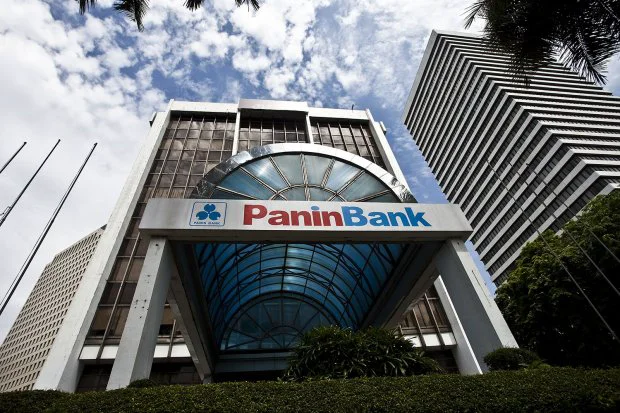
The proposed sale of a controlling stake in Indonesia’s Bank Pan Indonesia Tbk (Panin Bank) has encountered a setback, with discussions between the sellers and potential buyers faltering due to a divergence in valuation expectations, according to three individuals familiar with the matter. The stake, jointly owned by Australia and New Zealand Banking Group (ANZ) and Indonesia’s Gunawan family, comprises approximately 86% of the Jakarta-listed lender. Based on Panin Bank’s share price of 1,140 rupiah as of Friday, the combined holding is valued at roughly USD 1.45 billion. The Gunawan family, which holds around 46.5% of the bank, is reportedly open to divesting part of its interest. ANZ controls a 39.2% stake. Both parties launched a formal sale process last year, seeking to offload their joint holdings as part of ANZ’s broader strategic retreat from low-return operations across Asia, including retail and wealth segments. Panin Bank, founded by Mu’min Ali Gunawan in 1971 and listed in 1982, operates across consumer finance and private wealth services. Earlier in 2025, regional banking giants such as CIMB Group and DBS Group expressed preliminary interest in acquiring the stake. However, neither party submitted binding offers, with the valuation mismatch proving a major impediment, sources said. One of the sources indicated that the sellers were targeting a valuation exceeding twice Panin Bank’s current price-to-book ratio. As of the first quarter ending March 2025, the bank traded at approximately 0.75 times book value, according to LSEG data. The process, managed by Citigroup, may be revived if both sides can bridge the pricing gap. Notably, CIMB remains open to further discussions, one of the individuals added. Representatives from ANZ, Citi, and DBS declined to comment on the matter. A spokesperson for Panin Bank, President Director Herwidayatmo, clarified that management is not involved in the sale and referred enquiries to the shareholders. The Gunawan family could not be reached for comment. CIMB has yet to respond to a request for comment. -Reuters

Investment & Market Trends

Vietnam’s Economy Grows 7.52% in H1 2025

Vietnam’s economy recorded robust growth of 7.52% in the first half of 2025, its highest mid-year performance in more than a decade, according to the General Statistics Office (GSO). The announcement comes shortly after Hanoi successfully negotiated a reduction in threatened US tariffs on Vietnamese exports, mitigating potential headwinds to its export-driven economy. The second quarter of 2025 saw a year-on-year GDP expansion of 7.96%, representing the strongest second-quarter growth since 2022, when the figure peaked at 8.56%. The government has set a full-year growth target of no less than 8%. “The country’s socio-economic performance in the second quarter and the first six months of 2025 achieved very positive results, approaching the set target in the context of many uncertainties in the world and regional economy,” the GSO noted in its official release. The latest growth data follows a bilateral trade agreement with the United States announced earlier this week. Under the deal, Vietnam secured a significant reduction in prospective US tariffs, lowering them from a proposed 46% to a minimum rate of 20%, in exchange for expanded market access for American goods. Vietnam currently holds the third-largest trade surplus with the United States, following China and Mexico. The high surplus had placed the country among the primary targets of the US administration’s tariff initiatives. -AFP

News

China’s First Legoland Resort Officially Opens in Shanghai

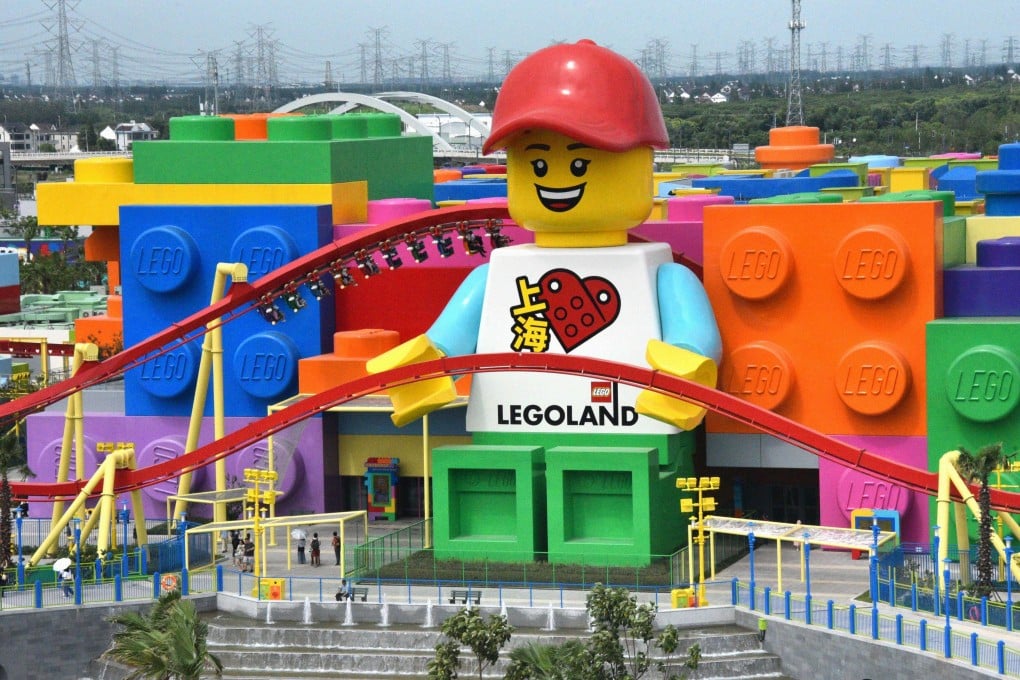
Shanghai has become home to China’s first-ever Legoland Resort, marking a significant milestone for the Lego Group and Merlin Entertainments as they expand their global footprint in one of the world’s most dynamic family entertainment markets. The resort officially opened its doors on Saturday with the unveiling of Dada, a striking 26-metre Lego figure that now serves as the park’s towering greeter. Constructed with an extraordinary 85 million Lego bricks, the Shanghai Legoland Resort joins a network of 11 parks worldwide. The development represents a strategic collaboration between Merlin Entertainments, the Lego Group and the Shanghai government, aligning with the city’s ambition to strengthen its cultural and tourism offerings. A key highlight of the park is Miniland, an immersive attraction that recreates famous landmarks from around the globe entirely in Lego form. Chinese cultural icons such as Beijing’s Temple of Heaven and Shanghai’s iconic Bund waterfront feature prominently, alongside a boat tour that navigates a meticulously crafted Lego version of a historic Chinese water town. “My first impression is it is a good recreation, like a real fairyland of Lego,” said Ji Yujia, a Lego enthusiast who attended the grand opening. The resort’s launch not only enhances the regional leisure landscape but also signals a strong commitment to China’s growing demand for high-quality family entertainment destinations. -AP

News

SK Telecom Ordered to Waive Termination Fees Following Major SIM Data Breach

SK Telecom (SKT) has been directed to waive early termination fees for customers who have cancelled or will cancel their contracts between 19 April and 14 July, following a significant SIM hacking incident. The directive comes as part of the South Korean government’s final determination after a months-long investigation into the breach, which compromised data linked to nearly 27 million subscriber identification numbers (IMSIs). The Ministry of Science and ICT announced on Friday that SKT bore responsibility for the incident, citing operational negligence and failure to uphold its contractual duty to provide secure communication services. In its final report, the Ministry concluded that SKT’s failures constituted a breach of service terms, entitling affected customers to financial relief. Scope of the Breach The breach, which began in August 2021, was only confirmed in April this year. Investigators found that hackers accessed SKT’s core network infrastructure, compromising 9.82 gigabytes of SIM data. This included 25 categories of information such as phone numbers and IMSIs, amounting to approximately 26.96 million records — effectively the entirety of SKT’s subscriber base. An extensive inspection of SKT’s systems revealed 33 malware types, including 27 variants of BPFDoor — a sophisticated remote access tool designed to bypass standard authentication and monitoring protocols. The malware was discovered on 28 servers, an increase from earlier findings which identified 23 malware types on 23 servers. Authorities believe the probability of further immediate damage remains low. Science Ministry Second Vice Minister Ryu Je-myung stated during a briefing that no additional harm, including SIM cloning, has been detected. He also confirmed that no leaks were identified among the 290,000 IMEIs stored within the customer management system during the log-covered period. However, due to missing log data covering two and a half years, the possibility of undetected breaches cannot be fully excluded. Security Failures and Regulatory Breach The investigation found that SKT failed to encrypt critical credentials and authentication keys, including those stored on its core voice authentication server (HSS). Hackers initially gained entry through a misconfigured server on a management network exposed to the internet. This server contained unencrypted credentials, enabling the attackers to access the HSS system directly. These findings highlighted significant lapses in SKT’s security practices. Unlike its domestic competitors KT and LG U+, which encrypt SIM-related data in accordance with GSM Association guidelines, SKT stored sensitive authentication keys in plain text. The government’s report also criticised SKT for its inadequate response to earlier signs of a breach. In February 2022, an abnormal reboot of an infected server was internally addressed without notification to authorities — a clear violation of the Information and Communications Network Act, which from 2024 will mandate breach reporting within 24 hours. Furthermore, SKT’s review of only one of six critical logs during this period resulted in a missed opportunity to detect the infiltration earlier. “Had SKT examined the remaining logs, it could have confirmed that the HSS server had been compromised with BPFDoor malware,” Ryu said. Company Response and Government Oversight In response to the government’s findings, SKT convened an emergency board meeting. Chief Executive Ryu Young-sang confirmed the company would fully comply with the directive and waive early termination charges for affected customers. The Science Ministry has ordered SKT to submit a comprehensive plan to prevent future incidents by the end of July. Authorities will conduct a follow-up review of the implementation measures in November or December. -Korea JoongAng Daily

Energy & Technology

KAIST and King Saud University Forge Strategic AI Collaboration

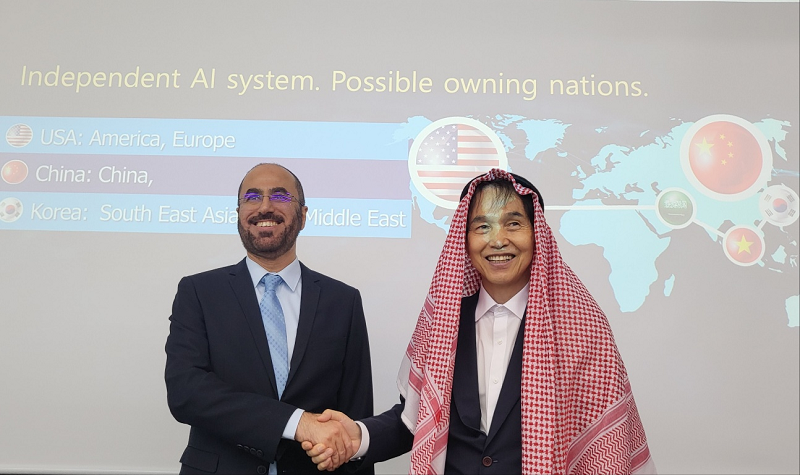
KAIST and King Saud University have agreed to deepen their collaboration in artificial intelligence, seeking to establish themselves as key players in a domain currently dominated by the United States and China. The two institutions are in talks to launch a joint degree programme and co-develop an independent, open-source AI model. The agreement was reached during a high-level meeting between KAIST President Lee Kwang-hyung and Abdullah Al-Salman, President of King Saud University, held earlier this week. According to a KAIST statement released Friday, both leaders committed to forming a strategic partnership aimed at long-term AI innovation. Central to this initiative is the establishment of a joint AI research centre, which will serve as the hub for collaborative development of an open AI model that is not dependent on the existing US or Chinese frameworks. “With Saudi Arabia’s investment capabilities and KAIST’s technological innovation, alongside the remarkable talent present in both nations, we have a real opportunity to diversify the global AI ecosystem,” said KAIST President Lee. “Through joint research and the development of an independent AI model, we can establish our own competitive edge in a digital landscape currently led by major powers and expand our reach into markets such as the Middle East, North America, and ASEAN.” In addition to research, both institutions discussed launching a joint degree programme, with a focus on increasing academic exchange and collaboration in science and engineering. This would include enhanced opportunities for student and faculty mobility, as well as shared research initiatives. The universities plan to formalise the agreement through a memorandum of understanding in the near future. This will include the establishment of the AI research centre and the rollout of joint programmes designed to nurture globally competitive talent in AI and emerging technologies. “Under our Vision 2030 framework, Saudi Arabia is focused on achieving technological transformation through open policy and strategic investment,” said King Saud University President Abdullah Al-Salman. “Our partnership with KAIST will serve as a practical cornerstone for building a regional AI ecosystem and enhancing our digital competitiveness.” -Korea JoongAng Daily

Energy & Technology

CATL and Geely Expand Strategic EV Alliance to Strengthen Global Competitiveness

China’s Contemporary Amperex Technology Co. Limited (CATL), a global leader in battery manufacturing, has entered into a new strategic agreement with Geely Auto, one of the country’s foremost automotive groups, to deepen their collaboration in the electric vehicle (EV) sector. This enhanced partnership is designed to drive innovation in power battery technology, strengthen product platform integration and optimise supply chain systems. The initiative is part of a broader strategy to meet the rapidly growing demand for EVs both domestically and in international markets. By aligning their respective strengths, CATL and Geely intend to bolster their competitive position in the global automotive landscape. The collaboration is expected to accelerate the development of advanced EV technologies and improve the efficiency of production, supporting the continued evolution of the electric mobility sector. As demand surges for cleaner, more sustainable transportation solutions, both companies are positioning themselves to lead the transition through technological synergy and supply chain agility. -TechInAsia

Scroll to Top

Subscribe
FREE Newsletter