More

The Executives

Compliance or Chaos? How Fintechs Can Stay Ahead in APAC

In a recent interview with The Exchange Asia, Damien Gough, Head of Asia Pacific at Thredd, highlighted the challenges fintech companies face in staying compliant across APAC’s diverse regulatory landscape. The region’s financial regulations are evolving rapidly, yet unlike the European Economic Area’s (EEA) “Passporting” arrangement, APAC lacks a unified framework. This forces fintechs to adapt to varying financial laws, data privacy regulations, and Know Your Customer (KYC) requirements in each market. One of the biggest hurdles fintech companies face is compliance with anti-money laundering (AML) and fraud prevention measures. Authorities in markets like Singapore have ramped up enforcement, issuing hefty fines for non-compliance. Cross-border payments also add complexity, as many fintechs still rely on outdated infrastructure while navigating country-specific regulations. Despite the rise of real-time payment systems, the industry continues to grapple with inefficiencies, making compliance a moving target. “Fintechs need to adopt newer technologies and regulatory tools that ensure compliance while delivering efficient services across jurisdictions,” says Gough. Recognising these challenges, Thredd has developed a suite of compliance and risk tools designed to support fintechs in meeting regulatory requirements efficiently. The platform incorporates fraud and scam transaction monitoring powered by AI, helping businesses detect suspicious activities in real-time while minimising reputational risks. Automation tools further simplify compliance tasks, reducing the need for excessive manual oversight. Additionally, Thredd streamlines dispute and chargeback management, ensuring fintechs remain compliant while operating seamlessly across different jurisdictions. For fintechs expanding in APAC, flexibility and adaptability are essential. “Partnering with companies like Thredd, which provide next-gen compliance tools, allows fintechs to automate compliance tasks and stay ahead of regulatory changes,” Gough explains. Establishing strong relationships with regulators and industry stakeholders is equally crucial. Thredd’s existing connections with local BIN Sponsors in key APAC markets help fintechs partner with licensed issuers, reducing market entry timelines by over a year in some cases. Cloud-based platforms and modular microservices tailored to local regulations further facilitate market integration, allowing fintechs to scale efficiently. While regulation can be perceived as a hurdle, it also presents an opportunity. “Regulation can be both a hurdle and an opportunity,” Gough notes. “Fintechs that embrace regulation early on can avoid the pitfalls of global scandals like FTX and Wirecard, where lack of oversight led to significant losses and reputational damage. Compliance-first fintechs position themselves as trustworthy partners, enhancing customer retention and growth.” A strong compliance framework builds trust among customers, regulators, and partners, positioning fintechs for long-term success. Regulators across APAC are increasingly embracing AI and automation as critical tools for fraud prevention and compliance. Markets like Singapore and Hong Kong recognise AI’s potential to enhance transaction monitoring, a key aspect of AML and KYC compliance. However, authorities also stress the importance of transparency in AI decision-making to prevent bias and ensure accountability. “Regulators in markets like Singapore and Hong Kong view AI as a valuable compliance tool, but they also stress the need for transparency in decision-making to mitigate bias and prevent ‘black-box’ models that are difficult to audit,” says Gough. The rise in financial fraud and scams has led to new regulatory measures, including Singapore’s Shared Responsibility Framework (SRF) and Australia’s Scams Prevention Framework Act 2025, which emphasise real-time monitoring and accountability. The tightening of regulations in APAC has been influenced by global financial scandals, prompting authorities to strengthen oversight. In response to cases like Wirecard and FTX, regulatory bodies in Singapore and Hong Kong have ramped up AML enforcement and introduced stricter digital asset frameworks to maintain financial stability. “In Singapore, enforcement actions against AML breaches have increased, and regulators in Hong Kong and Singapore are strengthening their frameworks for digital assets to ensure financial stability,” Gough highlights. Despite growing regulatory pressures, many fintech startups still make the mistake of neglecting compliance early on. Some underestimate the complexity of financial regulations, leading to costly penalties and operational setbacks. “Investing in robust compliance tools and legal expertise early on can help fintechs avoid these pitfalls,” Gough advises. Additionally, failing to update systems in line with evolving regulations can leave fintechs vulnerable to compliance risks. “Working with a trusted payments partner, like Thredd, ensures fintechs stay compliant with the latest standards and requirements.” Thredd plays a vital role in helping fintechs navigate these challenges by offering fraud monitoring, scam transaction detection, and 3D Secure solutions that simplify compliance across multiple jurisdictions. “Our solutions are integrated with our platform to ensure full compliance across multiple jurisdictions. We also offer scalable, cloud-based services tailored to local regulatory requirements, allowing fintechs to expand efficiently while remaining compliant,” Gough explains. APAC’s fintech industry has undergone a significant transformation over the past two decades, evolving from expanding banking access to driving innovation in payments, lending, insurance, and wealth management. The future of fintech in the region will revolve around digital assets, blockchain, and AI integration. “The future of fintech in APAC will revolve around digital assets, blockchain, and AI integration. These technologies will facilitate low-cost cross-border payments and real-time settlements as regulatory frameworks mature,” Gough predicts. For fintechs looking to scale while staying compliant, the key is to integrate regulatory adherence into business operations from day one. “My advice is simple: invest in the right technology and integrate compliance into your business from day one,” Gough emphasises. “Fintechs that establish scalable, compliant systems early on are the ones that succeed. Automated fraud detection, real-time monitoring, and regulatory reporting infrastructure will make regulatory navigation much smoother.” Embedding compliance into a company’s DNA not only ensures regulatory adherence but also strengthens its position in an increasingly competitive fintech landscape.

News

Japan’s Nikkei Soars Nearly 8% as Trump Suspends Tariffs

TOKYO: Japan’s Nikkei 225 surged 7.9% to close at 34,226.17 on Thursday, buoyed by investor relief following US President Donald Trump’s surprise announcement of a 90-day suspension on newly imposed tariffs. The broader Topix index also climbed 7.2% to 2,518.26, as nearly all sectors rebounded sharply. The rally marks a dramatic turnaround after a week of heightened market volatility. On Monday, the Nikkei plunged 7.8% to a one-and-a-half-year low, before rebounding 6% on Tuesday, then falling another 4% on Wednesday. Thursday’s recovery was fueled by a strong overnight performance on Wall Street, where the S&P 500 posted a 9.5% gain — its biggest single-day increase since 2008. Market analysts attributed the rebound to investor optimism that the tariff pause could soften geopolitical tensions and reduce headwinds for global trade. “Investors were quick to buy back into the market, likely regretting the heavy selling earlier in the week,” said Seiichi Suzuki, Chief Equity Market Analyst at Tokai Tokyo Intelligence Laboratory. “The sharp rebound also shows the market had overreacted to the initial tariff announcement.” Fast Retailing, the parent company of Uniqlo, rose 7.2%, providing a strong lift to the benchmark index. Chip-related stocks also posted outsized gains, with Tokyo Electron jumping 11.77% and Advantest surging 13.66%, buoyed by renewed investor confidence in the tech sector. All 33 industry sub-indexes on the Tokyo Stock Exchange gained, with the nonferrous metals sector leading the rally with a 12.65% increase. The banking sector, which had been heavily sold off amid recession concerns, bounced back with a 9.2% gain. Morgan Stanley analysts said the tariff suspension is particularly bullish for Asian markets, with Japan standing out due to its strong reflationary fundamentals. “Japan had come closest to pricing in a recession among major Asian markets,” the investment bank noted in a research update. “This policy reversal unlocks significant upside potential.” Of the 225 constituents on the Nikkei, all but one registered gains. On the Tokyo Stock Exchange’s Prime Market, 99% of stocks advanced, underscoring broad-based investor confidence and renewed momentum in Japanese equities.

Investment & Market Trends, News

Trump Pauses Global Tariffs for 90 Days, Slaps 125% Tariff on China

WASHINGTON: US President Donald Trump has announced a 90-day pause on new tariff hikes for most countries, in an apparent response to recent market volatility. However, he intensified his trade offensive against China, imposing a steep 125% tariff citing a “lack of respect” from Beijing. The surprise move came after a turbulent week on Wall Street, with markets reeling from the president’s earlier announcement of sweeping global tariffs. Following the pause, stocks rebounded dramatically, with the S&P 500 surging 9.5% to close at 5,456.90—snapping a week-long losing streak. Despite the pause for most nations, Trump doubled down on China, saying the country’s leadership “doesn’t quite know how to go about” negotiating a deal. “A deal’s going to be made with China. A deal’s going to be made with every one of them,” Trump said, while hosting motor racing champions at the White House. Responding to criticism that he had backtracked on his aggressive trade stance, Trump insisted he was simply being “flexible.” “People were getting a little yippy, a little afraid,” he said, referring to market jitters. “I saw last night where people were getting a little queasy.” The move follows mounting pressure from investors and global leaders after the US imposed a baseline 10% tariff on all imports last Saturday, with elevated rates for key trading partners—including China and the European Union—taking effect Wednesday. Trump revealed on Truth Social that over 75 countries had reached out to negotiate and refrained from retaliatory action, prompting him to issue the 90-day tariff suspension, though the baseline 10% remains in effect. China, however, struck back earlier Wednesday by raising tariffs on US imports to 84%, retaliating against Trump’s escalation of duties on Chinese goods to 104%. In response to the latest move, Beijing’s finance minister remarked, “The United States simply piles mistakes on top of mistakes.” Meanwhile, the European Union announced retaliatory tariffs targeting over €20 billion worth of US goods—including soybeans, motorcycles, and beauty products. However, the EU has not responded to the separate “Liberation Day” tariffs of 20% that took effect Wednesday. Despite heightened tensions, Trump remains confident that his strategy will revive American manufacturing by compelling companies to relocate operations back to the US. “I’m telling you, these countries are calling us up kissing my ass,” he told fellow Republicans at a private dinner, referring to nations eager to secure favourable trade deals. In addition to economic tensions, diplomatic strains are escalating. China issued a travel advisory warning its citizens to assess risks before visiting the US. Meanwhile, US Defence Secretary Pete Hegseth, speaking from Panama, accused Beijing of issuing “threats” as tensions continue to build around control of the Panama Canal. As Trump presses forward with his trade vision, the world’s two largest economies appear locked in an increasingly hostile standoff. — AFP

Investment & Market Trends, News

Yuan Hits New Lows as US Tariffs on China Take Effect

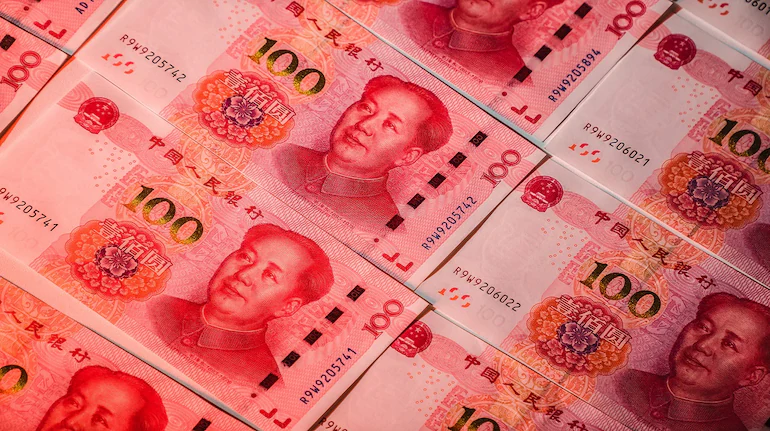
HONG KONG: The Chinese yuan fell to a fresh 19-month low against the US dollar today, following a record-low drop in its offshore counterpart overnight, as tensions from the escalating Sino-US trade war continue to weigh on investor sentiment. In afternoon trading, the yuan weakened by 0.2%, hitting 7.3498 per US dollar, after briefly dipping to 7.3505 earlier, the lowest level since September 2023. Meanwhile, the offshore yuan pared some losses, rising 0.62% to 7.3812 per dollar after dropping over 1% in the previous session and reaching a record low of 7.4288 per dollar. The declines come amid growing concerns as the trade war between the world’s two largest economies intensifies. These concerns were exacerbated by China’s central bank loosening its control over the yuan in an effort to mitigate the negative impact on exports. US President Donald Trump’s “reciprocal” tariffs on numerous countries took effect today, including hefty duties of 104% on Chinese goods, even as the US prepares for further trade negotiations. Carol Kong, a currency strategist at Commonwealth Bank of Australia, noted that the recent shift in the dollar was significant, influenced by the decision to proceed with additional tariffs on Chinese goods. She predicts the offshore yuan could fall to 7.7 per dollar by the end of Q3, though this could happen sooner if further tariff hikes are imposed by both countries. To stabilise the market, China’s central bank set the onshore yuan’s midpoint rate at 7.2066 per dollar, the weakest since September 2023. The yuan is permitted to trade within a 2% band of this rate, with a lower limit of 7.3507, which is just above the September 2023 low. Despite this, the central bank’s fixing was slightly firmer than expected, indicating a reluctance to allow the yuan to depreciate drastically. Chinese state-owned banks were observed selling dollars in the onshore market early this morning to slow the yuan’s decline. Lei Zhu, head of Asian fixed income at Fidelity International in Hong Kong, commented that Chinese regulators are likely focused on stabilising the market, deeming this a priority over sending dramatic signals to the market. Both the onshore and offshore yuan have fallen by more than 1% against the dollar this month, continuing the downward trend since the start of the year, largely due to concerns over the impact of the tariffs. Economists noted that while a weaker yuan could make Chinese exports more competitive and ease pressure on the economy, a sharp decline could also lead to unwanted capital outflows, posing risks to financial stability.

Upcoming Events

Japan Expo Malaysia 2025

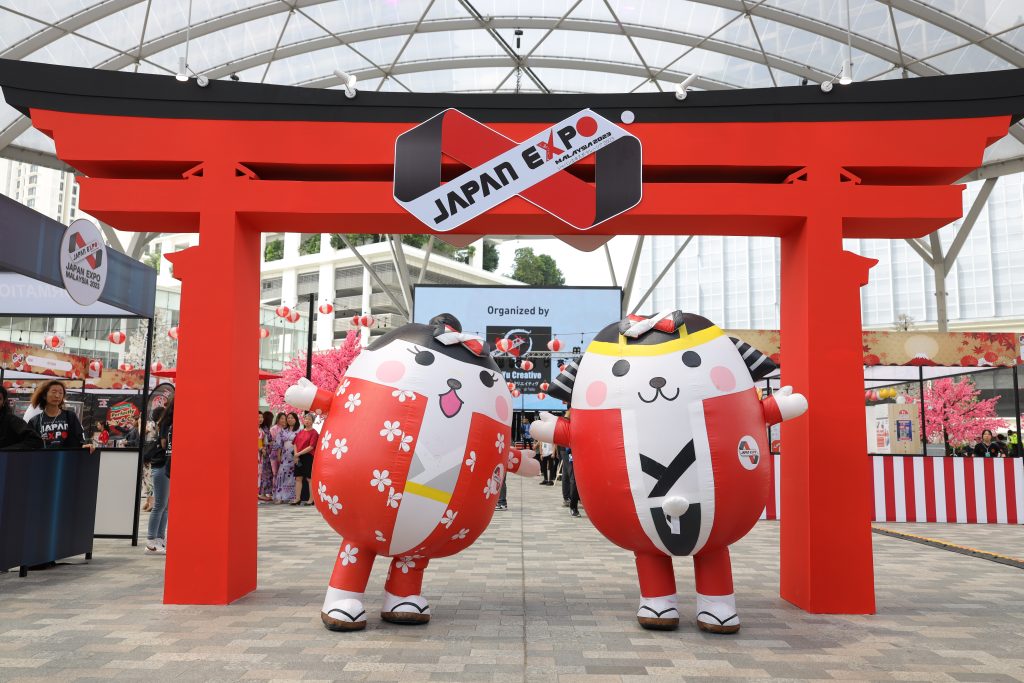
Japan Expo Malaysia 2025 (JEMY 2025) returns for its 6th edition from 18 to 20 July at the Kuala Lumpur Convention Centre (KLCC), promising a vibrant showcase of Japanese culture, innovation, and business.  Organised by Siam Connection Sdn Bhd and G-Yu Creative Co. Ltd, Japan Expo Malaysia this year is poised to be bigger and better and expected to attract over 70,000 visitors and 80 exhibitors.  The expo spans across various thematic zones – Taste of Japan, Travel, Education, Lifestyle, Anime & Cosplay, and Service Zone, offering an immersive experience of Japan’s excellence in culture, technology, sustainability, and creativity. This multifaceted approach reinforces its position as one of the region’s leading cultural and business expos. Beyond the cultural celebration, JEMY continues to be a strategic platform for both Japanese and Malaysian companies. Businesses can explore new markets, test products, and forge valuable B2B and B2C connections. “We invite Japanese companies and Malaysian importers of Japanese products and services to join JEMY 2025,” said Wong Wai Jo, Managing Director of Siam Connection. “The expo offers unmatched opportunities to grow your presence, launch products, and connect with key partners and customers from Malaysia, Japan, and the broader ASEAN region.” Japan Expo Malaysia also plays a vital role in fostering trade ties between Japan and Malaysia. As of 2023, Japan remained Malaysia’s fourth-largest trading partner for the ninth consecutive year, reflecting a robust and growing economic relationship. The Ambassador of Japan to Malaysia, H.E. SHIKATA Noriyuki, has expressed his support for Japan Expo Malaysia 2025, emphasizing the importance of the event in strengthening the cultural and economic ties between Japan and Malaysia. “I am pleased to extend my sincere support for Japan Expo Malaysia 2025,” said Ambassador SHIKATA. “The event is instrumental in promoting Japan’s cultural heritage and enhancing business and cultural exchange. I hope both Japanese and Malaysian companies will actively participate in this dynamic platform.” A key highlight this year is the launch of the Japan Expo Malaysia Award, a new initiative to honour individuals, organizations, and groups that have significantly promoted Japanese culture, innovation, and business in Malaysia. The award will recognise outstanding contributions in areas such as marketing, creative initiatives, and community engagement. “We are excited to introduce the Japan Expo Malaysia Award,” Wong added. “This award acknowledges the hard work and passion of individuals and companies who have helped elevate Japan’s presence and influence in Malaysia. We look forward to celebrating those who have played a pivotal role in promoting Japanese culture and innovation.” JEMY 2025 will also highlight sustainability and environmental, social, and governance (ESG) practices. As Japan leads globally in sustainability efforts, the expo will serve as a platform for companies to share insights and promote sustainable business practices. The content will cater to both Japanese and Malaysian industries, aiming to inspire dialogue and action around responsible corporate strategies. Another key highlight of JEMY is the stage dedicated to showcasing Japanese music across all genres, including J-Pop, idol performances, traditional music and more. This year, the stage will also showcase Malaysian bands influenced by Japanese styles, celebrating the musical synergy between the two cultures. Japan Expo Malaysia 2025 is proudly supported by the Embassy of Japan in Malaysia, Japan National Tourism Organization (JNTO), Japan External Trade Organization (JETRO), The Japan Foundation Kuala Lumpur, Tourism Malaysia (Visit Malaysia 2026), and the Malaysia Convention & Exhibition Bureau (MyCEB). Their continued support underscores JEMY’s role as a cornerstone of cultural and business exchange between Japan and Malaysia. With its diverse offerings and strong focus on cultural exchange and business opportunities, JEMY 2025 promises to be an exciting event for all. Businesses interested in exhibiting or participating in the expo can register now, and tickets for the public will be available soon.  For more information about the event, ticket sales, or to register as an exhibitor, please visit the website www.japanexpomalaysia.com, Japan Expo Malaysia Facebook and Instagram pages for more updates.  

Investment & Market Trends, News

Oil Suffers Worst Five-Day Drop Since 2022

SINGAPORE: Oil prices slumped to their lowest level in over four years today, marking their steepest five-day decline since March 2022, as fears of a global recession deepened amid escalating trade tensions between the United States and China. The sell-off also rippled across commodity markets, dragging down base metals and agricultural goods. The drop follows U.S. President Donald Trump’s announcement on April 2 of sharply higher tariffs on key trading partners, which has wiped nearly 20% off oil prices since. The latest round of tariffs, including a staggering 104% duty on Chinese imports, has rattled financial markets and clouded the global economic outlook. “Crude oil extended losses amid signs of escalation in the trade war,” analysts at ANZ said in a note, highlighting that copper prices have also plunged nearly 10% since the announcement of the new tariffs. The U.S. confirmed that the increased tariffs on Chinese goods will come into effect shortly after midnight, while also initiating talks with other affected trading partners. Market sentiment soured further as China announced retaliatory tariffs of 34% on all U.S. goods, effective April 10. The move severely dims hopes for a quick resolution between the world’s two largest economies. “The aggressive retaliation by China lowers the chances of a swift trade deal and raises the risk of a global economic slowdown,” said Ye Lin, Vice-President of Oil Commodity Markets at Rystad Energy. She warned that China’s projected oil demand growth of up to 100,000 barrels per day could be undermined if the trade war drags on. However, she noted that Beijing’s potential stimulus measures to boost domestic consumption may offset some of the downside. Commodities Under Pressure In China, base metal prices extended losses. Copper futures on the Shanghai Futures Exchange slid to an eight-month low, while iron ore on the Dalian Commodity Exchange dropped 3%. Benchmark copper on the London Metal Exchange declined 1%, recording its largest five-day loss since March 2020. Gold prices also edged lower as U.S. Treasury yields climbed, while nervous investors weighed the intensifying trade conflict. In the agricultural sector, Malaysian palm oil futures fell over 1%, and rubber prices sank to their lowest level in more than a year. Meanwhile, Chicago soybean futures rose for a third consecutive session, rebounding from four-month lows earlier this week, supported by rising prices in Brazil and a softer U.S. dollar.–REUTERS

News

South Korea Launches Emergency Measures to Counter US Auto Tariffs

SEOUL: South Korea has announced emergency support measures for its auto industry in response to the United States’ imposition of a 25% tariff on imported cars and light trucks, set to begin Thursday under President Donald Trump’s directive. Key measures include: Increased policy financing: Raised to 15 trillion won (US$10.18 billion) for 2025, up from 13 trillion won. Tax cuts: Auto purchase tax reduced from 5% to 3.5% until June 2025. Expanded EV subsidies: Boosted to cover 30%-80% of price discounts (up from 20%-40%), extended through year-end. Export diversification: Efforts to support market expansion in the “Global South.” Negotiation with the US: Aimed at avoiding disadvantageous treatment compared to other allies. South Korea’s auto exports to the US totalled US$34.7 billion in 2024, nearly half its global auto export volume. Automakers like Hyundai are trying to buffer the impact—pledging to maintain current US vehicle prices for at least two months, following a US$21 billion investment announcement last month. Industry leaders welcomed the support but expressed concerns that more domestic stimulus may be needed. Analysts caution that while tariffs may be a negotiation tactic, they could raise costs—particularly in the EV segment, which relies heavily on Chinese parts.

News

China advises Shein against shifting supply chain

Fast-fashion retailer Shein is facing opposition from the Chinese government regarding its plans to shift some production outside of China, Bloomberg News reported on Tuesday, citing sources familiar with the matter. China’s Ministry of Commerce has reached out to Shein and other companies, advising them against diversifying their supply chains by sourcing from other countries. The exact identity of the other companies contacted was not immediately clear. The ministry’s requests came in the context of US President Donald Trump’s announcement on reciprocal tariffs, which has led many firms to seek alternative strategies to avoid additional import levies. Shein did not immediately respond to a Reuters request for comment regarding the report. Trump’s unexpectedly harsh tariffs have caused significant disruptions in global markets, wiping out trillions of dollars in asset value and prompting China to retaliate with a 34% tariff on all US goods.

Investment & Market Trends, News

BYD Forecasts Record Q1 Net Profit

BEIJING: Chinese electric vehicle (EV) giant BYD is forecasting record net profit for the first quarter of 2025, driven by robust sales growth that saw the company ship more than one million vehicles between January and March. According to preliminary results released today, the Shenzhen-based automaker expects net profit to come in between ¥8.5 billion (US$1.2 billion) and ¥10 billion – nearly doubling from ¥4.6 billion in the same period last year. This marks a year-on-year growth of between 86% and 119%. “The company achieved record new energy vehicle (NEV) sales for Q1,” BYD stated in a filing to the Hong Kong Stock Exchange. In the first quarter alone, sales of pure electric passenger vehicles surged by 39% to 416,388 units. BYD had earlier announced that its total vehicle sales during this period had surpassed the one million mark for the first time. The company, whose slogan is “Build Your Dreams”, has experienced a strong sales trajectory in recent months. Its annual revenue in 2024 climbed to ¥777.1 billion, surpassing that of US rival Tesla. In addition to domestic success, BYD noted “substantial growth” in international NEV sales. However, geopolitical headwinds could challenge the company’s global ambitions. The escalating China-US trade tensions and broader friction between Beijing and Western capitals pose significant risks. Former US President Donald Trump has imposed 25% tariffs on all imported vehicles, alongside sweeping levies on Chinese goods. These come on top of earlier measures by predecessor Joe Biden, which restrict the use of Chinese technology in smart vehicles. In Europe, BYD faces scrutiny as well. The European Union is reportedly investigating whether the Chinese government provided unfair subsidies for BYD’s upcoming factory in Hungary, which is set to begin electric car production later this year.-AFP

News

China, Japan, South Korea Meet in Kuala Lumpur. Likely to discuss US Tariffs, Countermeasures

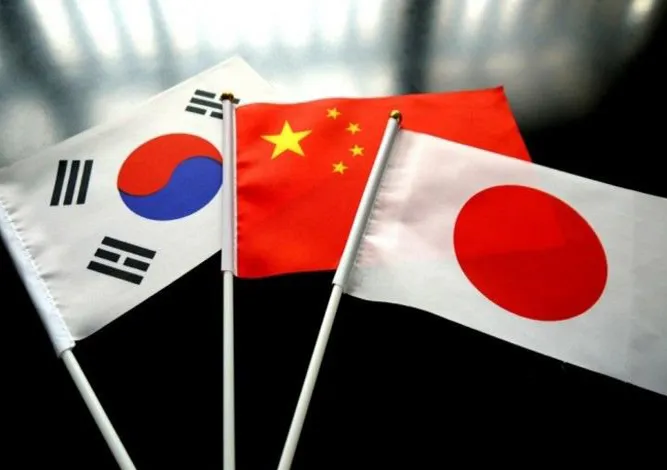
KUALA LUMPUR: China, Japan and South Korea, which have signalled alliances since the announcement of sweeping US tariffs, held their second trilateral meeting in just eight days after their first engagement this year, reflecting the urgency as Washington’s move has caused ripple effects globally. The meeting between the three economic powerhouses on March 30 came under the spotlight after the US President announced a baseline tariff of 10 per cent on all countries, with higher duties for some, including China, which now faces a 34 per cent tariff on imports, and Japan, hit with a 24 per cent duty. As for South Korea, it is bidding to lower the 25 per cent tariff rate. It is understood the meeting raised concerns over global and their respective economic outlooks, as tariff policies such as this hurt trade, business and consumer confidence, and ultimately strain diplomatic ties. Global markets took a route on Monday, reportedly wiping out more than US$10 Trillion from major markets. The Malaysian bourse reportedly lost RM93.15 Billion in market capitalisation. The trilateral meeting, held on the sidelines of the 12th ASEAN Finance Ministers’ and Central Bank Governors’ Meeting (AFMGM), saw the attendance of China Vice Minister of Finance, Liao Min; Japan’s Vice Minister of Finance, Atsushi Mimura; and South Korea’s Deputy Minister for International Affairs, Ministry of Economy and Finance, Choi Jiyoung. The three leaders are also likely to attend two  sessions of the ASEAN +3 Finance and Central Bank Deputies Meeting (AFCDM+3) today. This latest US move is expected to raise the total duties on Chinese goods to %$ per cent this year, while for South Korea, the Trump administration’s global reciprocal tariffs chart shows a 25 per cent rate. In response, China has fired back with retaliatory tariffs of 34 per cent on all US imports, effective April 10, according to international media reports. The +3 economies had previously convened in late March and hinted at a joint response to the escalating tariff tensions. The meeting marked the first economic dialogue in five years among the three Asian export powerhouses, who are seeking to bolster regional trade amid mounting US protectionism. At the March 30 meeting in Seoul, China, Japan and South Korea reaffirmed their commitment to trilateral economic and trade cooperation to tackle “emerging challenges”— a partnership now seen as increasingly vital in light of the US measures that have sparked fears of a global trade war. The three nations also agreed to accelerate negotiations on a trilateral free trade agreement, though concrete progress remains elusive. — BERNAMA

Scroll to Top

Subscribe
FREE Newsletter