Author name: theexchangeasia admin

Investment & Market Trends

Anwar Orders Full Felda Report On Proposed Hotel Sale At A Loss

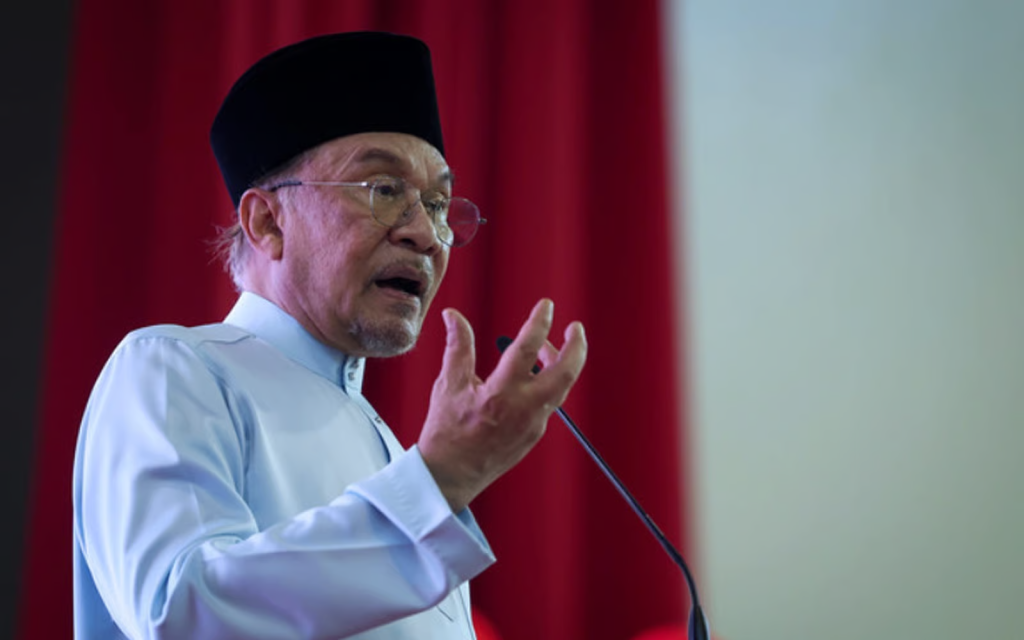
Prime Minister Anwar Ibrahim has instructed the management of the Federal Land Development Authority (Felda) to prepare a comprehensive report on a proposed sale of a Felda-owned hotel that would reportedly result in a significant loss. Anwar, who is also the Finance Minister, said he had refused to approve the proposed transaction after discovering that the hotel was being considered for sale at £100 million (about RM550 million), despite having been purchased by Felda’s previous management for £160 million. He said the proposed sale raised concerns, particularly as Felda settlers continue to face financial difficulties and require greater support to improve their living conditions and basic facilities. “Felda is under my watch. Two months ago, the Felda management came and asked me to sign for the sale of this hotel,” Anwar said during his speech at the Semarak Kenegaraan Programme with the armed forces at Terendak Camp. “I said, wait a moment, what kind of business is this? Selling at a price lower than when it was bought. So I did not sign. I said, find out who did this and submit a report,” he added. Anwar questioned the rationale behind the proposed disposal, noting that many Felda settlers continue to struggle with inadequate income and basic infrastructure needs. He said settlers had raised concerns during his visits, including requests for improvements to air-conditioning facilities, school repairs and better income opportunities. “Felda settlers are struggling. When I visited the settlers, they said they wanted air conditioning, schools to be repaired, and their income is insufficient. But Felda itself is just casually losing money,” he said. The Prime Minister said the decision to request a full report was intended to ensure greater accountability and protect Felda’s role as an important national institution. He stressed that government agencies, particularly those established to support the country’s communities, must be managed responsibly and their resources protected. “If we don’t do something, no matter how long, our agencies — including Malay agencies that we take pride in and want to defend — this is what will become of them. So we must correct that,” he said. Also present at the event were Religious Affairs Minister Zulkifli Hasan, Deputy Defence Minister Adly Zahari, Chief Secretary to the Government Shamsul Azri Abu Bakar and Army Chief Gen Azhan Othman.


Investment & Market Trends

PUNB Invests RM80mil To Help 220 Bumiputera Businesses Grow

Perbadanan Usahawan Nasional Bhd (PUNB) has allocated RM80 million through three enhanced financing programmes to help 220 Bumiputera entrepreneurs gain faster access to funding and improve their business cash flow. The three programmes — Prosper Grow Biz Express, Prosper Grow Fuel Up and Prosper Grow Auto Biz — offer financing rates starting from 3.5% per annum on a flat-rate basis for selected financing products. Perbadanan Usahawan Nasional Bhd (PUNB) chief executive officer Izwan Zainuddin. Under Prosper Grow Biz Express, eligible entrepreneurs can apply for financing between RM100,000 and RM300,000, with funds potentially being released within 12 working days, subject to complete documentation and credit assessment. The programme is open to sole proprietorships, partnerships and limited liability partnerships operating in the retail, distributive trade and manufacturing sectors. PUNB Chief Executive Officer Izwan Zainuddin said timely access to financing is important for businesses looking to take advantage of growth opportunities and expand their operations. He said entrepreneurs need not only sufficient financing but also a faster application process and repayment structures that match their business needs. Meanwhile, Prosper Grow Fuel Up provides working capital financing of up to 100% for inventory purchases by Bumiputera petrol station operators. Financing ranges from RM100,000 to RM1 million, with repayment periods of up to seven years. Prosper Grow Auto Biz, meanwhile, is designed for automotive service centres operating under strategic partners such as PETRONAS AutoExpert. The programme provides financing of between RM100,000 and RM1 million for fixed assets and working capital, also with repayment tenures of up to seven years. PUNB also provides a principal repayment grace period of up to six months, subject to assessment. This allows entrepreneurs additional time to stabilise their businesses before beginning principal repayments. Izwan said the programmes reflect PUNB’s broader role as a business development partner, rather than simply a financing provider. The initiative is aimed at helping Bumiputera entrepreneurs build stronger, more resilient and competitive businesses while supporting the government’s Bumiputera economic development agenda and Ekonomi MADANI framework. By improving access to capital, PUNB expects the programmes to encourage greater participation by Bumiputera businesses across key economic sectors and support their long-term growth.

News

Oriental Kopi Expands Overseas To Indonesia, Mauritius

Malaysian food and beverage (F&B) café chain operator Oriental Kopi Holdings Bhd is expanding its international footprint into Indonesia and Mauritius, marking another step in its strategy to grow the Oriental Kopi brand across regional markets. The company said its wholly owned subsidiary, Oriental Coffee International Sdn Bhd, has entered into a strategic joint venture with PT Era Boga Nusantara (EBN) to establish and operate Oriental Kopi cafés in Indonesia. EBN, also known as Erajaya Food & Nourishment, is part of Indonesian retail conglomerate PT Erajaya Swasembada Tbk, providing Oriental Kopi with an established local partner to support its expansion into one of Southeast Asia’s largest consumer markets. Under the joint venture, EBN will hold a 60% stake in PT Era Oriental Kopi, while Oriental Coffee International will own the remaining 40%. The new company will be responsible for developing and operating Oriental Kopi outlets across Indonesia, with its initial expansion focused on the Greater Jakarta area, also known as Jabodetabek. The first Oriental Kopi outlet in Indonesia is targeted to open by the end of 2026 at Central Park Mall in West Jakarta. The mall is one of Jakarta’s prominent shopping and lifestyle destinations and forms part of the wider Podomoro City development. Beyond Indonesia, Oriental Coffee International has also signed a Territory Franchise Agreement with Coffee Time Ltd, an integrated F&B operator based in Mauritius, to introduce and develop the Oriental Kopi brand in the island nation. The move gives Oriental Kopi an opportunity to establish its presence in another international market while working with local partners who understand the respective consumer and F&B landscapes. The overseas expansion comes after the group previously entered the Singapore market, reflecting its broader strategy of taking its Malaysian café concept beyond the domestic market and building a stronger regional presence. With Indonesia, Mauritius and Singapore forming part of its international expansion plans, Oriental Kopi is positioning itself to grow its network of cafés while bringing its Malaysian-inspired food and beverage offering to a wider customer base across different markets.

Investment & Market Trends

Jelawang Capital And Dana Perintis Invest RM588 Million In Malaysian Startups in 2025

Khazanah Nasional Bhd’s (Khazanah) Jelawang Capital and Retirement Fund Inc’s (KWAP) Dana Perintis invested a combined RM588 million into Malaysian startups in 2025, supporting businesses across sectors including consumer, digital, agritech and education technology (edtech). The Ministry of Finance (MoF) said the initiative, carried out under the Government-Linked Enterprises Activation and Reform Programme (GEAR-uP), has supported more than 130 Malaysian startups, including nearly 30 Bumiputera startups, between 2020 and June 2026. The ministry said both platforms work with fund managers through targeted investment strategies, helping expand Malaysia’s venture capital ecosystem while attracting additional private sector funding. In July 2024, Khazanah consolidated two government venture capital entities — Malaysia Venture Capital Management Bhd (MAVCAP) and Penjana Kapital Sdn Bhd) — before launching Jelawang Capital in October 2024 as Malaysia’s national fund-of-funds. The initiative received an initial allocation of RM1 billion for 2024 to 2028 under Dana Impak. Meanwhile, KWAP’s Dana Perintis operates as a RM500 million early-stage investment fund for the same period, supporting promising Malaysian startups with growth capital and funding continuity. MoF said Jelawang Capital channels investments to emerging and regional fund managers, who then raise additional private capital and invest in local startups. In 2025, the platform helped mobilise RM290 million into emerging domestic and regional fund managers. Together, Jelawang Capital and Dana Perintis aim to strengthen Malaysia’s startup ecosystem by improving access to funding, supporting business expansion and encouraging greater private investment participation. The ministry also highlighted other investment initiatives under GEAR-uP, including Khazanah’s Dana Impak, which has committed RM1 billion between 2024 and 2028 to support the growth of Malaysian mid-tier companies (MTCs). Through partnerships with private equity firms such as Creador, Navis Capital and Granite Asia, Dana Impak aims to provide growth capital and strategic support for local businesses. KWAP’s Dana Pemacu also contributes growth-stage private equity investments through its co-investment approach. For Bumiputera mid-tier companies, Ekuinas continues to provide private equity and private credit support, having generated RM7.1 billion in Bumiputera equity value since 2009. This is further complemented by Khazanah’s upcoming Dana Ciptawan, a planned RM200 million initiative aimed at supporting Bumiputera enterprises and other Malaysian mid-tier companies.

Investment & Market Trends

KWAP’s Dana Pemacu invests RM51 million to support local nutraceutical industry

Retirement Fund Inc (KWAP) has invested RM51 million through its Dana Pemacu initiative to support the growth of a Malaysian nutraceutical products supplier and brand owner, as part of efforts to strengthen the country’s private markets ecosystem and healthcare sector. According to the Ministry of Finance’s (MoF) GEAR-uP Progress Report released today, the investment was made in Bio-Science Nutraceutical Holdings Sdn Bhd through local general partner Mekar Capital and global general partner Navis Capital. The ministry said the investment demonstrates how institutional capital can help develop high-value healthcare and wellness businesses by enhancing Malaysia’s capabilities in nutraceutical innovation, product commercialisation and premium brand development. The report also highlighted another Dana Pemacu initiative involving the development of centralised labour quarters through Foster Capital as the local general partner and Castleforge as the global general partner. Under the first phase of the project, KWAP has committed RM210 million to develop accommodation for 9,000 workers. The initiative forms part of a larger development comprising four projects that will provide 28,800 beds with a combined gross development value of approximately RM600 million. The Ministry of Finance said the project aims to improve living conditions for workers while supporting Malaysia’s long-term economic growth. Launched in May 2024, Dana Pemacu is designed to accelerate Malaysia’s economic transformation by deploying commercially viable investments that create long-term value while enhancing the impact of government-linked investment companies (GLICs). The report also outlined the progress of Khazanah Nasional’s Dana Impak initiative. As of June 2026, the programme had supported 32 mid-tier companies through the Mid-Tier Companies Growth Innovation Programme and another 21 companies under the ELEVATE 2.0 Programme. MoF added that GLICs continue to play a key role as cornerstone investors in quality listings on Bursa Malaysia, helping to strengthen the country’s capital markets by providing funding that can be reinvested into future high-growth businesses. The ministry said achieving the Capital Market Master Plan 2026–2030 target of RM5.8 trillion to RM6.3 trillion in market capitalisation by 2030 will depend on a steady pipeline of new listings supported by institutional investors. Meanwhile, GLICs actively managed a portfolio of 37 government-linked companies (GLCs) with a targeted annual return of 7.5% between 2024 and 2028. In 2025, the portfolio exceeded expectations by delivering an 8.0% shareholder return, with the potential to generate up to RM100 billion in value. MoF noted that as GLCs account for around 27% of Bursa Malaysia’s Main Market capitalisation, the returns generated ultimately benefit Malaysians through institutions such as the Employees Provident Fund (EPF), KWAP, Permodalan Nasional Bhd (PNB) and Lembaga Tabung Haji. The ministry added that GLICs continue to create long-term value by driving shareholder returns, strengthening corporate governance and supporting Malaysia’s strategic national development priorities.

Investment & Market Trends

Cambodia To Develop First Large-Scale Dairy Farm Under US$68 Million Project

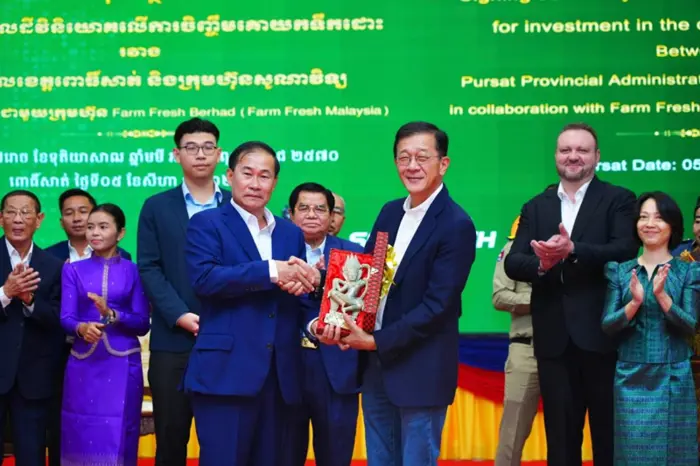
Cambodia is set to develop its first large-scale fresh milk production and processing facility through a US$68 million investment in Pursat province, a move aimed at strengthening the country’s dairy industry, reducing milk imports and meeting growing domestic demand. The project, known as Farm Fresh Pursat, will be developed in Veal Veng district across approximately 1,000 hectares. It will feature international-standard dairy farms and a local milk processing plant, creating a fully integrated dairy production ecosystem capable of supplying both the domestic market and future export opportunities. Celebrating a landmark partnership for sustainable dairy development: Rida (left) and Loi (right) shaking hands following the land lease signing ceremony for the Farm Fresh Pursat project. The investment follows a land lease agreement signed on Aug 5 between the Pursat Provincial Administration, Sonavith Co Ltd, Malaysia’s Farm Fresh Group and Cambodia’s Alpha Group. The project builds on a memorandum of understanding signed by Farm Fresh and Alpha Group during the 47th ASEAN Summit in October 2025 to establish Cambodia’s first large-scale fresh milk production and processing facility. Pursat Governor Khoy Rida described the project as a historic milestone that will establish the country’s largest dairy farm while creating significant employment opportunities for local communities and supporting the province’s economic development. Farm Fresh Group Managing Director and Chief Executive Officer Loi Tuan Ee said the company is honoured to invest in Pursat and welcomed the strong support and incentives provided by the Cambodian government. He added that the investment would not only strengthen Cambodia’s dairy industry but also raise Pursat’s profile across Southeast Asia and internationally. The project comes as Cambodia seeks to improve its food security following supply disruptions caused by last year’s border conflict with Thailand. Thailand previously supplied more than 76% of Cambodia’s dairy imports, and the disruption led to widespread fresh milk shortages, affecting supermarkets, cafés and restaurants. With the new facility, Cambodia aims to expand local fresh milk production, reduce dependence on imports and build a more resilient and sustainable dairy supply chain for the future.

ESG

Ditrolic Energy Receives Singapore Approval For 600MW Green Power Export

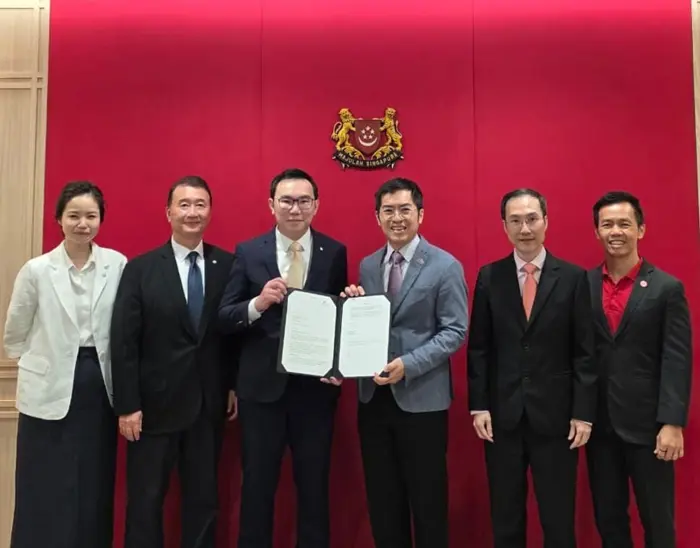
Ditrolic Energy Holdings Sdn Bhd has received conditional approval from Singapore’s Energy Market Authority (EMA) to export and supply up to 600 megawatts alternating current (MWac) of renewable electricity from Johor to Singapore, marking a major milestone in its cross-border clean energy ambitions. The approval was granted to its subsidiary, Southern Solar Alliance Pte Ltd, enabling the company to move forward with the technical, commercial and regulatory development required before securing final approval for the project. The proposed export project forms the first phase of the Southern Johor Renewable Energy Corridor (SJREC), a long-term renewable energy initiative jointly developed by Permodalan Darul Ta’zim (PDT), Ditrolic Energy and the International Finance Corporation (IFC). Planned over a 15-year period along Johor’s east coast, SJREC is designed to support Malaysia’s domestic energy needs while supplying renewable electricity to Singapore, including developments within the Johor-Singapore Special Economic Zone (JS-SEZ). From left: Ditrolic Energy executive director Michelle Ong; Ditrolic Energy board adviser Sam Ong; Ditrolic Energy group chief executive officer Tham Chee Aun; Singapore’s Energy Market Authority chief executive Phua Kok Keong; Singapore Ministry of Trade and Industry permanent secretary Augustin Lee; and Singapore Ministry of Trade and Industry deputy secretary Keith Tan during the presentation of the Letter of Conditional Approval. The initial phase will be powered by approximately four gigawatts-peak (GWp) of solar generation capacity, supported by 5.1 gigawatt-hours (GWh) of utility-scale battery energy storage systems (BESS). The integrated infrastructure is expected to provide a more stable and reliable supply of green electricity. Ditrolic Energy Group Chief Executive Officer Tham Chee Aun said the conditional approval demonstrates confidence in the project’s technical capability, scale and reliability. He added that the project highlights the strong collaboration between the Johor state government, the Malaysian Federal Government, Singapore and private sector partners in turning clean energy policies into commercially viable cross-border projects. The company said the project has already attracted significant market interest, with nearly 90% of its planned electricity output receiving offtake interest from Singapore-based customers across sectors including transport, aviation, ports, manufacturing, pharmaceuticals, logistics, real estate and industrial parks. PDT Chief Executive Officer Datuk Ramlee Rahman said SJREC is expected to position Johor as a regional renewable energy hub capable of serving both local demand and export markets. He noted that the project’s progress under EMA’s conditional approval also supports the long-term development of the Johor-Singapore Special Economic Zone. In addition to exports, SJREC will also supply renewable electricity to the domestic market through Malaysia’s Corporate Renewable Energy Supply Scheme (CRESS) and Self-Consumption (SELCO) programme. The first batch of power purchase agreements with local customers is expected to be signed within the next three months. The first delivery of green electricity for the Malaysian market is targeted for 2028, while commercial exports to Singapore are expected to commence in 2029, subject to the completion of the new cross-border interconnector and the necessary regulatory approvals in both countries.

Energy & Technology

NuEnergy Secures RM44.5 Million Johor Data Centre Contract

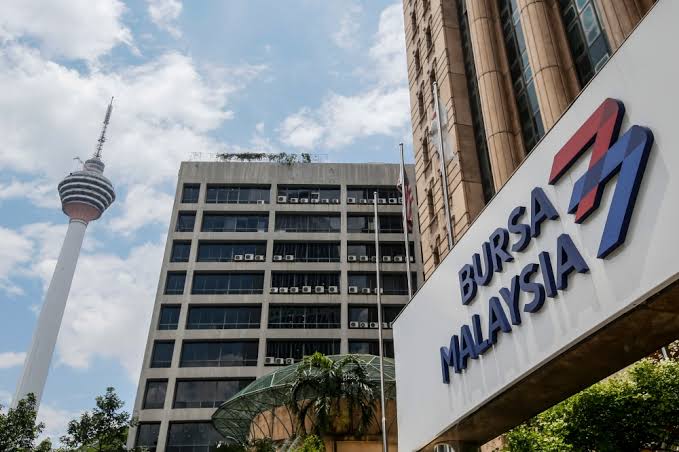
NuEnergy Holdings Bhd (NHB) has secured a RM44.5 million contract to undertake mechanical, electrical and plumbing (MEP) works for a data centre project in Johor Bahru, marking the company’s largest high-voltage project to date. In a filing with Bursa Malaysia, NuEnergy said it has accepted a Letter of Award from a China-based construction and engineering company for the MEP works involving a two-storey 265kV/11kV Consumer Landing Station Building for the data centre development. The project is scheduled for completion by the fourth quarter of 2026. NuEnergy said the contract represents a major milestone in its strategic expansion into the extra high voltage (EHV) and transmission line segment, particularly as demand for supporting infrastructure continues to grow alongside the rapid development of data centres in Malaysia. The company added that the project will further strengthen its presence in the high-voltage infrastructure sector while enhancing its capabilities in supporting critical power requirements for large-scale technology facilities. NuEnergy expects the contract to contribute positively to its order book, revenue and profitability for the financial year ending December 31, 2026. The latest project reflects the company’s efforts to capitalise on opportunities arising from Malaysia’s growing data centre ecosystem, where reliable and high-capacity power infrastructure has become increasingly essential to support digital transformation and cloud-based services.

Energy & Technology

GLICs Invest RM1.4 Billion To Strengthen Malaysia’s Semiconductor Value Chain

Government-linked investment companies (GLICs) have invested RM1.4 billion in 2025 across four strategic areas aimed at strengthening Malaysia’s semiconductor ecosystem and advancing the country’s position within the global technology supply chain. According to the Ministry of Finance’s (MoF) GEAR-uP Progress Report, the investments were focused on scaling Malaysian semiconductor companies, attracting high-value technology transfers, expanding the deep-tech ecosystem and establishing strategic partnerships with global players. The MoF said the growing demand for semiconductors, driven largely by the rapid adoption of artificial intelligence (AI), has created significant opportunities for Malaysia. While the country currently holds around 13% of the global semiconductor testing and packaging market, it needs to move further up the value chain by developing higher-margin, intellectual property (IP)-driven segments such as integrated circuit (IC) design under initiatives including the New Industrial Master Plan 2030 (NIMP 2030) and the National Semiconductor Strategy. The report highlighted that GLICs are providing long-term investment support to local technology companies at various stages of development, from early-stage venture funding to public market growth. This approach aims to help Malaysian semiconductor firms expand their research and development (R&D) capabilities, strengthen innovation and compete more effectively in global markets. Beyond supporting domestic companies, GLICs are also working to attract international technology leaders to Malaysia by encouraging high-value investments and facilitating the transfer of advanced capabilities into the local semiconductor industry. The report noted that partnerships with experienced industry players are being developed through initiatives such as the Cambrian Fund, which aims to nurture next-generation deep-tech startups and strengthen Malaysia’s innovation ecosystem. GLICs have also established strategic collaborations with international investment firms, including Chengwei Capital, NRL Capital, InterVest and Ilham Capital, to bring specialised expertise into Malaysia while connecting local semiconductor companies with global supply chains and technology networks. Among the key initiatives highlighted was SkyeChip, a Malaysian pure-play integrated circuit (IC) design company that raised RM352 million through its initial public offering (IPO) on Bursa Malaysia’s Main Market in May 2026. More than 60% of the IPO proceeds, amounting to RM212 million, will be allocated towards research and development of silicon intellectual property and silicon products. Meanwhile, GLICs subscribed to 15.5% of the IPO’s cornerstone allocation, reflecting institutional support for the growth of Malaysia’s IC design capabilities. The report also highlighted Khazanah Nasional Bhd’s investment in US-based edge AI company Syntiant, which involves the establishment of a 220,000-square-foot campus in Penang. The facility will integrate advanced micro-electro-mechanical systems (MEMS) processing and AI engineering capabilities under one roof. The project is expected to create 200 high-skilled jobs out of 800 planned positions, support an annual production capacity of 1.6 billion advanced MEMS components, and generate approximately RM118 million in local expenditure as of June 2026. To further strengthen Malaysia’s deep-tech ecosystem, Khazanah is also supporting the Cambrian Fund, which completed a RM105 million second close as of June 2026. The fund aims to support early-stage Industrial Revolution 4.0 (IR4.0) and deep-tech companies, with plans to mentor and scale around 15 startups. Meanwhile, Khazanah and the Retirement Fund (Incorporated) (KWAP) have committed a combined RM695 million in 2025 into strategic regional deep-tech funds through partnerships with Chengwei Capital, NRL Capital, InterVest and Ilham Capital. These investments are designed to accelerate technology transfer, provide Malaysian semiconductor companies with greater access to funding, strengthen industry partnerships and create new opportunities within regional and global supply chains. The MoF said the continued deployment of strategic capital by GLICs reflects Malaysia’s ambition to evolve from a major semiconductor assembly and testing hub into a more innovation-driven technology ecosystem capable of competing in higher-value segments of the global semiconductor industry.

Property

MRCB To Dispose of Cyberjaya Land For RM419 Million

Malaysian Resources Corp Bhd (MRCB) is set to sell a parcel of land in Cyberjaya for RM419.05 million cash as part of its ongoing asset monetisation strategy. The disposal will be carried out through MRCB’s indirect wholly owned subsidiary, Subang Sentral Sdn Bhd (SSSB), which has entered into a conditional Sale and Purchase Agreement (SPA) with Digital Cosmos Malaysia Sdn Bhd for the sale of seven land parcels. The land parcels, which currently span approximately 36.66 acres, will be consolidated into a single title following the surrender and re-alienation process, resulting in a larger combined tract measuring about 45.81 acres. In a filing with Bursa Malaysia, MRCB said the land is strategically located within Cyberjaya City Centre, an area positioned as a key technology and business hub. An independent valuation conducted by Raine & Horne International Zaki + Partners Sdn Bhd valued the land at RM419.1 million, equivalent to approximately RM210 per square foot, which is in line with the proposed disposal consideration. MRCB expects the transaction to generate a pro forma gain of approximately RM81.4 million, strengthening the group’s financial position while unlocking value from its existing property assets. The company said the proceeds from the disposal will primarily be used to support its financial management initiatives. Approximately RM350 million from the proceeds will be allocated towards the repayment of its Sukuk Murabahah financing due within the next 12 months. Based on the prevailing interest rate of 4.24% per annum, MRCB expects the repayment of borrowings to generate estimated gross interest cost savings of RM14.84 million annually. The remaining RM31.12 million will be utilised to support the group’s working capital requirements, including its ongoing construction and property development activities. MRCB said the proposed disposal aligns with its strategy of actively managing its asset portfolio, improving capital efficiency and strengthening its financial flexibility to support future growth opportunities.

Scroll to Top

Subscribe
FREE Newsletter