Author name: exchangemsia_admin

Investment & Market Trends

XL Holdings Buys 34 Giant Mini Stores In RM15 Million Deal To Enter Retail Segment

XL Holdings Bhd has agreed to acquire 34 Giant Mini outlets in the Klang Valley for RM15 million, marking its entry into the convenience retail sector. Its wholly-owned subsidiary, XL Retail Sdn Bhd, signed the asset purchase agreement with Jutaria Gemilang Sdn Bhd. In a filing with Bursa Malaysia, the company said the acquisition is part of its strategy to diversify into retail. It said the move will provide an additional income stream, reduce reliance on its core businesses, and serve as a platform for future expansion. The deal is expected to be completed by May 31 and is anticipated to contribute positively to future earnings. The purchase will be funded internally, with payment made in stages: RM1 million upfront, RM2 million upon signing, RM8.6 million by May 20, and the remaining RM3.4 million upon completion. XL Holdings is mainly involved in breeding Asian arowana, stingrays and other ornamental fish, as well as trading aquarium products and edible bird’s nest. For the nine months ended Jan 31, 2026, the company’s net profit fell 17.63% to RM5.95 million, while revenue rose 2.73% to RM93.68 million. Its shares closed 0.5 sen lower at 67.5 sen on Monday, giving it a market value of RM325.58 million.

The Executives

Standard Chartered Malaysia CEO Mak Joon Nien To Step Down After Nearly Four Years

Standard Chartered Malaysia said chief executive officer Mak Joon Nien will step down on May 8, after almost four years in the role. Mak, who has been with Standard Chartered for nearly 30 years, is leaving to pursue an external opportunity. He will also step down from the boards of Standard Chartered Malaysia Bhd and Standard Chartered Saadiq Bhd, as well as other related entities. Standard Chartered Malaysia – Chief Executive Officer, Mak Joon Nien. The bank has appointed its chief financial officer, Mushahid Syed, as interim CEO and head of coverage for Malaysia. He will lead the bank’s local operations while continuing in his current role. Standard Chartered said a permanent successor will be announced later. Mak joined the bank in 1997 as a graduate trainee and later spent 15 years in a regional role in Singapore before returning to Malaysia, where he became the bank’s first Malaysian chief executive. The bank said he helped raise the franchise’s profile, strengthen client and stakeholder relationships, and align the business with its global strategy. Mushahid, who joined Standard Chartered in 2013, has more than 20 years of leadership experience and has been part of the Malaysia management team since becoming CFO in 2024.

Investment & Market Trends

Adviser Recommends Accepting YTL Cement’s RM2.60 Offer For Concrete Engineering

An independent adviser has recommended that shareholders of Concrete Engineering Products Bhd accept the RM2.60 per share takeover offer by YTL Corp Bhd’s subsidiary, YTL Cement Bhd, deeming the proposal both “fair” and “reasonable”. In an independent advice circular issued on Monday, Mercury Securities Sdn Bhd said the offer is considered reasonable given the relatively low trading liquidity of Concrete Engineering’s shares. It is also viewed as fair as the offer price represents a meaningful premium over the company’s revalued net assets (RNAV) per share. The RM2.60 offer price reflects a 46.9% premium to the group’s RNAV per share of RM1.77. It also represents a substantial 122.2% premium to its latest consolidated net asset value of RM1.17 per share. In addition, the offer comes at a premium ranging from 39% to 96.2% over the stock’s volume-weighted average market price (VWAP) across periods spanning five days to one year. Mercury Securities further highlighted that Concrete Engineering’s shares have been relatively illiquid, with a simple average monthly trading volume equivalent to just 0.53% of its free float shares. This is significantly lower than the 7.1% recorded by the Bursa Malaysia Industrial Production Index, reinforcing the attractiveness of the cash offer for shareholders seeking an exit opportunity. Based on these considerations, the adviser concluded that the offer provides a compelling opportunity for shareholders to realise their investment at a favourable price, and has therefore recommended acceptance of the takeover bid. YTL Cement’s mandatory takeover offer was triggered in April following its acquisition of a 53.49% stake in Concrete Engineering for RM103.79 million from several vendors. These included Inch Kenneth Kajang Rubber PLC, which divested a 19.3% stake, as well as Datuk Dr Che Muhamad Fasir Samsudin and his son Muhammad Firdaus Muhamad Fasir, who sold stakes of 4.1% and 4.7% respectively. The takeover offer officially opened on April 22 and will remain valid until May 13, unless revised or extended. As at the midday trading break, shares in Concrete Engineering were up three sen, or 1.16%, to RM2.62, giving the company a market capitalisation of approximately RM195.5 million.

Investment & Market Trends

OCBC To Buy HSBC Indonesia’s Retail And Wealth Businesses

Oversea-Chinese Banking Corp (OCBC) has agreed to acquire the retail and wealth management assets of HSBC Holdings Plc in Indonesia, strengthening its presence in one of Southeast Asia’s fastest-growing markets. In a statement, OCBC said the purchase consideration will be based on the net asset value of HSBC Indonesia’s International Wealth and Premier Banking businesses, along with a premium of up to S$0.48 billion (approximately US$376 million or RM1.5 billion). The transaction is expected to be completed by the second quarter of 2027. The assets to be transferred include a total of S$6.6 billion under management, comprising S$4.3 billion in customer investments such as mutual funds, bonds and insurance products, S$2.3 billion in deposits, and a S$0.3 billion retail loan portfolio. HSBC said the divestment is part of its broader strategy to streamline operations and focus on areas where it has a stronger competitive advantage. The bank will continue to grow its corporate and institutional banking business in Indonesia. OCBC currently operates in Indonesia through its Jakarta-listed subsidiary, PT Bank OCBC NISP Tbk, and has expanded its footprint in the country through both organic growth and acquisitions, including the purchase of PT Bank Commonwealth Indonesia in 2024. The latest deal marks the first acquisition under OCBC’s new chief executive officer, Tan Teck Long, as the group looks to further expand across Asia, with a focus on growing its affluent and private banking segments. Indonesia continues to attract regional and global banks seeking growth opportunities, as institutions reposition their portfolios and strengthen their presence in key markets across Southeast Asia.

Energy & Technology

PetGas Plans RGT-3 Project In Lumut, Seeks Joint Venture Partner

Petronas Gas Bhd (PetGas) has received a notification letter from the Ministry of Economy dated April 30, 2026, to undertake the development of the Third Regasification Terminal in Lumut, Perak (RGT-3), which will be based on a floating storage and regasification unit (FSRU) concept. In a filing with Bursa Malaysia, the group said it is also exploring the possibility of jointly developing the project with a strategic partner, as part of efforts to optimise project execution and strengthen capabilities. PetGas noted that it had conducted detailed technical and commercial assessments on the development of new gas infrastructure, taking into account long-term gas supply and demand projections for Peninsular Malaysia. Following these evaluations, the company submitted a proposal to the Energy Commission for the RGT-3 project, targeting commercial operations by the second quarter of 2029. Under the proposed design, the RGT-3 will utilise an FSRU system, where liquefied natural gas (LNG) storage and regasification activities are carried out offshore. The regasified LNG will then be transported via a connecting pipeline from the offshore facility and its onshore berthing infrastructure into the Peninsular Gas Utilisation (PGU) system. This project will mark Malaysia’s first deployment of an FSRU-based regasification terminal. The facility is planned with an LNG storage capacity of 170,000 cubic metres and a regasification capacity of up to 500 million standard cubic feet per day (mmscfd). Once operational, the terminal is expected to support additional gas demand equivalent to approximately 3.5 gigawatts of power generation capacity in Peninsular Malaysia. PetGas added that the project will be regulated by the Energy Commission, with tariffs to be determined under the Incentive-Based Regulation (IBR) framework. The development of RGT-3 is in line with PetGas’ long-term strategy to expand and strengthen its gas and utilities infrastructure portfolio. The project is expected to enhance the capacity, resilience and flexibility of Malaysia’s gas supply network, ensuring it can meet evolving energy demand while supporting the country’s broader economic and industrial growth.

Energy & Technology

ADB Launches US$70bil Plan To Boost Asia’s Power And Digital Connectivity

The Asian Development Bank (ADB) plans to support US$70 billion in energy and digital infrastructure investments by 2035, aimed at strengthening regional connectivity across Asia and the Pacific through integrated power grids and enhanced digital networks. ADB president Masato Kanda said access to reliable energy and digital infrastructure will play a critical role in shaping the region’s future, with the initiatives designed to support economic growth, competitiveness and cross-border integration. “By linking power grids and digital networks across borders, we can reduce costs, expand opportunities, and deliver reliable energy and connectivity to hundreds of millions of people,” he said in a statement. The overall plan comprises two key components: a US$50 billion Pan-Asia Power Grid Initiative (PAGI) and a US$20 billion programme focused on digital and technology connectivity. Under PAGI, investments will be directed towards strengthening transmission infrastructure and grid integration, including the development of cross-border transmission lines, substations, energy storage systems and grid digitalisation. By 2035, ADB aims to facilitate the integration of around 20 gigawatts of renewable energy across borders, build approximately 22,000 circuit-kilometres of transmission lines, and improve access to electricity for 200 million people. The initiative is also expected to create about 840,000 jobs and reduce emissions in the regional power sector by 15%. ADB expects to fund roughly half of the US$50 billion power grid initiative from its own resources, with the remainder to be raised through co-financing arrangements, including private sector participation. In addition, up to US$10 million in technical assistance will be allocated to support regulatory alignment, adoption of common technical standards, feasibility studies and project preparation. On the digital front, the Asia-Pacific Digital Highway initiative aims to mobilise US$20 billion by 2035 to develop digital corridors, strengthen data infrastructure and support the growth of AI-ready economies. Investments will focus on improving connectivity through terrestrial and subsea fibre networks, satellite systems and regional data centres. ADB plans to contribute US$15 billion towards the digital initiative, with the remaining US$5 billion to be sourced through co-financing, including from private sector partners.

Investment & Market Trends

Malaysia Manufacturers Stay Strong In April Despite War Concerns

Malaysian manufacturers expanded operations in April, increasing hiring and inventory levels despite ongoing geopolitical tensions in the Middle East that have driven up costs and pushed selling prices to record highs. According to S&P Global, the seasonally adjusted manufacturing Purchasing Managers’ Index (PMI) rose to 51.6 in April from 50.7 in March. A reading above 50 indicates expansion in the sector, suggesting a modest improvement in overall manufacturing activity. However, S&P Global noted that part of the growth was driven by “safety-stock building”, as companies moved to secure inventory amid uncertainties linked to the conflict in the Middle East. “The sector’s outlook in the coming months will depend in part on how the situation in the Middle East develops,” said S&P Global economist Maryam Baluch, adding that manufacturers are already taking steps to cushion potential disruptions. Malaysia’s economy grew 5.3% year-on-year in the first quarter of 2026, slightly below expectations, as key sectors including manufacturing and services saw slower momentum following escalating geopolitical tensions earlier in the year. Despite this, the central bank maintains its full-year growth forecast of between 4% and 5%, supported by resilient domestic demand and continued investment activity. The latest PMI data also showed manufacturers increased hiring for a second consecutive month, with job creation at its strongest pace so far this year, although still described as moderate. At the same time, companies raised selling prices sharply in response to higher input costs, particularly for energy and raw materials. Input cost inflation reached a 45-month high, prompting firms to pass on these increases to customers at the fastest rate on record. Nonetheless, business sentiment remained cautious. Confidence among manufacturers weakened for the second straight month in April, falling to its lowest level in eight months, reflecting concerns over the prolonged impact of geopolitical uncertainties.

Energy & Technology

Jaycorp To Fully Acquire Green Energy Unit In RM15 Mil Deal

Jaycorp Bhd is proposing to acquire the remaining 40% stake in its subsidiary, Jaycorp Green Energy Sdn Bhd (JGE), for RM15 million in cash, as part of its strategy to expand its footprint in the renewable energy sector and diversify its earnings base. The acquisition involves the purchase of 2.33 million shares from Microban (M) Sdn Bhd, which will increase Jaycorp’s ownership in JGE from 60% to 100%. Upon completion, JGE will become a wholly owned subsidiary, allowing the group to fully consolidate its financial performance. In a Bursa Malaysia filing on Thursday, Jaycorp said the move would eliminate non-controlling interests, enabling shareholders to benefit fully from JGE’s future earnings. The acquisition will be funded entirely through internally generated funds, with no additional liabilities expected. Following the deal, the group also plans to formally diversify its core business to include renewable energy, covering the investment, development and operation of assets such as solar, biomass, biogas and waste-to-energy facilities. Currently, Jaycorp’s primary businesses span furniture manufacturing, packaging, wood processing, construction, and trading and property-related activities. JGE, meanwhile, is involved in renewable energy, biomass and environmentally friendly waste treatment, including producing industrial steam from palm oil waste for the oleochemical sector. Jaycorp noted that its renewable energy segment was the only division to record growth in both revenue and profitability for the financial year ended July 31, 2025, highlighting its potential as a more resilient earnings contributor. “The proposed diversification enables the group to position renewable energy as a core and growing pillar of the business, alongside its existing manufacturing operations, while providing greater strategic flexibility to pursue opportunities across the renewable energy value chain,” the group said. The proposals are expected to be completed by the fourth quarter of 2026, subject to shareholders’ approval and other regulatory requirements. Jaycorp shares closed unchanged at 22.5 sen on Thursday, giving the group a market capitalisation of RM61.8 million. The stock has declined about 25% year-to-date.

The Executives

Azizan Abdul Aziz Appointed Islamic Capital Market Director At Bursa Malaysia

Bursa Malaysia Bhd has appointed Azizan Abdul Aziz as director of its Islamic capital market (ICM), effective Friday, as part of its ongoing efforts to strengthen its position in the global Islamic finance space. In a statement, the exchange operator said Azizan will take on the additional responsibility alongside his current role as chief financial officer, reflecting a dual mandate that combines financial leadership with strategic oversight of the Islamic capital market segment. Bursa Malaysia chief executive officer Datuk Fad’l Mohamed said the appointment underscores the organisation’s continued commitment to advancing its Islamic capital market offering, which remains a key pillar of Malaysia’s broader capital market ecosystem. “Azizan’s experience, financial expertise and deep institutional knowledge position him well to guide our Islamic market priorities, while continuing to ensure strong financial stewardship in his capacity as CFO,” he said. Malaysia’s Islamic capital market has continued to show steady growth in recent years, expanding from RM2.2 trillion in 2020 to RM2.7 trillion as at end-2025. The segment is supported by strong contributions from both shariah-compliant equities and sukuk, which account for RM1.3 trillion and RM1.4 trillion respectively. The depth of the market is further reflected in the high proportion of shariah-compliant listings on Bursa Malaysia, with more than 80% of public-listed companies classified as shariah-compliant, reinforcing the country’s leadership in Islamic finance globally. In his new role, Azizan will be responsible for providing strategic direction and oversight across Bursa Malaysia’s Islamic capital market initiatives. This includes working closely with internal teams, regulators and market participants to further develop the ecosystem, enhance product offerings, and drive greater participation in shariah-compliant investments. He brings more than two decades of experience in finance, accounting, corporate finance and advisory, positioning him to play a key role in shaping the next phase of growth for Malaysia’s Islamic capital market.

Events

Is Beauty The New Cultural Currency?

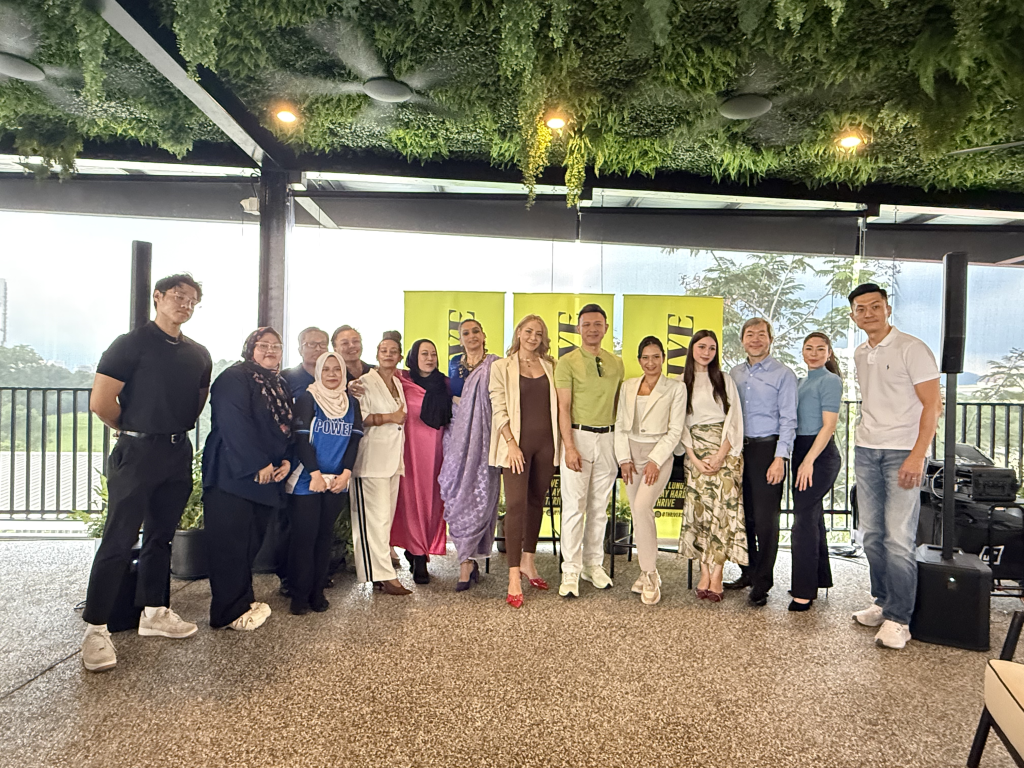
In Malaysia’s fast-evolving digital and consumer landscape, beauty is no longer confined to aesthetics. It is increasingly operating as a form of cultural and social currency — influencing identity, visibility, and even economic opportunity. This was the central premise of Being, Human KL: Is Beauty the New Cultural Currency?, a curated conversation by Think Geek Media and Arcc Spaces, bringing together voices across aesthetics, media, community, and identity to examine how perceptions of beauty are shifting in a hyper-visible world. From Aesthetics to Influence Malaysia’s digital economy provides a compelling backdrop to this conversation. With over 89% internet penetration and social media usage among the highest in Southeast Asia, platforms like Instagram and TikTok have accelerated the commodification of visibility — where image, presence, and perception directly translate into influence and monetisation. Against this context, the discussion explored how beauty has evolved into a form of social capital — shaping not just how individuals are perceived, but how they participate in modern economic and cultural systems. Moderated and curated by Ethel Da Costa, Founder of Think Geek Media, on April 29, she shared: “We’re living in a time where beauty is no longer passive. It is constructed, performed, and constantly negotiated. What we’re seeing today is not just a shift in aesthetics, but a shift in how value itself is assigned — socially and culturally.” Confidence, Identity and the Visibility Economy For Eleen Yong (National Director Miss Universe Malaysia 2024, Principal, Elpis Models Academy), the conversation around beauty is inseparable from self-definition in a world driven by external validation. “Confidence today is often interpreted through visibility,” she shared. “But real confidence is rooted in self-awareness — understanding who you are beyond how the world responds to you. What works in Malaysia does not necessarily work in Milan.” Her perspective reflects a broader shift in consumer behaviour, where identity is increasingly shaped in public spaces — often blurring the line between authenticity and performance. The Pressure to Be Seen As a digital-native voice, Sanjna Suri (Miss Supranational Malaysia 2018, Actor) addressed the realities of navigating constant visibility. “The pressure isn’t just to be seen,” she noted. “It’s to be seen in a way that resonates — that feels aspirational, but still believable.” Her insight highlights a growing paradox within the creator economy: while platforms enable self-expression, they also create implicit standards shaped by algorithms and audience expectations. Aesthetic Medicine and Cultural Perception From a clinical perspective, Dr Hew Yin Keat (Founder, Medical Director, The M∙A∙C∙ Clinic) highlighted how these societal pressures are increasingly reflected in aesthetic practice. “When patients say they want to ‘look better,’ it often goes beyond physical features,” he explained. “It’s shaped by what they are exposed to daily — curated images, idealised standards, and constant comparison.” Malaysia’s aesthetic and wellness sector has seen steady growth in recent years, driven by rising disposable income and increasing acceptance of non-invasive procedures — underscoring how beauty intersects with both personal identity and consumer behaviour. Curating Cultural Conversations At its core, the session was less about defining beauty and more about interrogating the systems that give it value. As a cultural and communications platform operating across India, the UAE, and Malaysia, Think Geek Media continues to position itself as a curator of culturally relevant narratives — creating spaces where conversations around identity, behaviour, and modern life can unfold with depth. Through initiatives like EMPOWER, Ethel Da Costa is not just moderating discussions — she is shaping dialogue at the intersection of culture, media, and society. A Broader Cultural Shift What emerged from the session is a recognition that beauty today is neither fixed nor neutral. It is dynamic — shaped by platforms, industries, and evolving social norms. In this context, the idea of beauty as currency reflects a broader shift in how value is created and exchanged — not just economically, but culturally. As Malaysia continues to grow as a digital-first society, conversations like these signal an important transition: From consuming culture… to consciously questioning it. The Takeaway If visibility is the new power, then beauty — in all its evolving forms — becomes one of the currencies through which that power is negotiated. The question is no longer whether beauty matters, but how deeply it shapes the way we see ourselves — and how we perceive one another — in the process. Will this shift lead to the democratisation of beauty, creating more inclusive, self-aware, and humane communities? Or will it accelerate a more standardised, systemic commodification of human perception — where identity, worth, and connection become increasingly filtered through curated ideals? Perhaps the real question is not what beauty has become, but what we are becoming because of it.

Scroll to Top

Subscribe
FREE Newsletter