Author name: theexchangeasia admin

Property

Penang To Auction Gurney Drive Land To Fund Delayed Air Itam Bypass Project

The Penang state government plans to auction a six-acre plot of land along Gurney Drive in George Town, aiming to raise more than RM300 million to support the completion of the delayed Air Itam bypass project. The land, identified as Plot 7A in Tanjung Pinang Town, is located along Jalan Peter Paul Dason, connecting Gurney Drive to Andaman Island. According to the state government gazette, the public auction was scheduled for 7 October 2026 at Komtar, with a reserve price of RM1,200 per square foot. Vacant land in the surrounding area is currently valued at more than RM1,000 per square foot. Sources cited by The Edge indicated that the land sale could generate over RM300 million, with the proceeds expected to help project concessionaire Consortium Zenith Construction Sdn Bhd (CZC) complete the bypass. The RM851 million project, known as Package Two of Penang’s undersea tunnel and paired roads development, covers approximately six kilometres. It will connect Lebuhraya Thean Teik in Farlim to the Tun Dr Lim Chong Eu Expressway through elevated roads, tunnels and ground-level routes. Construction began in February 2021 after several years of planning and approvals, with the project initially targeted for completion in 2025. However, progress has been affected by land acquisition delays and financial challenges faced by the concessionaire. In May, Penang Chief Minister Chow Kon Yeow clarified that the construction contract was awarded in 2020 and that physical work only began in 2021, despite the project having been discussed since 2012. He also acknowledged that the concessionaire had experienced financial difficulties, which contributed to slower construction progress. Chow dismissed the Covid-19 pandemic as an ongoing justification for the delays, stressing that the project must move forward. The project was granted its first extension of time in 2023 due to land acquisition issues, moving the completion deadline to 31 October 2026. A second extension was subsequently approved, setting a new completion date of 12 April 2027. Penang state executive councillor and Paya Terubong assemblyman Wong Hon Wai recently reported that construction had reached 91% completion. In a Facebook post, Wong said the contractor had assured him that the project would be completed by April 2027. However, he also highlighted that progress at certain sections remained unsatisfactory and called for further intervention from the state government to ensure timely completion. The bypass forms part of a larger infrastructure initiative introduced in 2013, when CZC was selected through an open tender to develop an undersea tunnel and three major bypass roads on Penang Island. The consortium was established as a joint venture between Beijing Urban Construction Group and local company Zenith Construction Sdn Bhd. Under the original arrangement, the Penang government granted the consortium development rights over approximately 45 hectares of land at Gurney Bay in exchange for infrastructure construction, rather than financing the project through toll collection. Federal environmental approval for the three bypass roads was obtained in 2017, followed by an agreement for the second package of works in 2019. Although a groundbreaking ceremony was held in November 2019, actual construction only commenced in February 2021. Once completed, the bypass is expected to significantly improve connectivity between Air Itam and the coastal expressway, potentially reducing travel time to approximately five minutes. The proposed land auction represents another effort by the Penang government to address the project’s funding challenges and accelerate completion of the long-awaited road connection.

Property

Creador Acquires Two Historic Buildings In Kuala Lumpur

Southeast Asian private equity firm Creador, through its philanthropic arm Creador Foundation, has reportedly acquired two historic buildings in downtown Kuala Lumpur — the former RHB building along Jalan Tun H S Lee and Bangunan UOB in Medan Pasar. The acquisitions are part of Creador Foundation’s ongoing efforts to restore and revitalise Kuala Lumpur’s historic city centre. According to sources, the 13-storey RHB building at 75 Jalan Tun H S Lee was acquired for approximately RM30 million, close to its previously reported reserve price. The building holds significant historical value, having originally served as the headquarters of Kwong Yik Bank, Malaya’s first local bank, established in 1913. It was officially opened in 1965 by Malaysia’s first prime minister, Tunku Abdul Rahman Putra Al-Haj. The building later became part of RHB Bank’s history following the acquisition of Kwong Yik Bank by Rashid Hussain Bhd in 1996 and its subsequent merger with DCB Bank in 1997. RHB has announced that its branch at the location will close in January 2027. Meanwhile, Creador Foundation is understood to have purchased Bangunan UOB at 10–12 Medan Pasar, together with two neighbouring shophouses, for slightly less than RM40 million. Both properties are located within Kuala Lumpur’s historic commercial district, where Creador Foundation and its founders’ Alaka Holdings Trust have been actively involved in restoration projects. Sources indicate that Creador has acquired approximately 17 of the 27 buildings in the Medan Pasar area, while the remaining 10 are believed to be leased. The foundation’s revitalisation efforts have also received government support. On 13 August, Minister in the Prime Minister’s Department (Federal Territories) Hannah Yeoh announced a collaboration between Kuala Lumpur City Hall (DBKL) and Creador Foundation to improve public spaces and rainwater management in Medan Pasar. Since 2024, Creador Foundation has been working to restore heritage buildings around Medan Pasar and Central Market, transforming previously vacant properties into new commercial, cultural and community spaces. Among its completed projects is the restoration of a row of historic shophouses in Medan Pasar, including the Sin Seng Nam corner building, which now houses KLCG Confectionery & Bakery. One of the foundation’s major upcoming developments is the Muara Arts Gallery, a 20,000 sq ft public gallery dedicated to modern and contemporary Malaysian and Southeast Asian art. Located across six restored Art Deco shophouses dating back to the 1930s, the gallery is scheduled to open in November 2026. The nearby Muara Arts Theatre is also under construction and is expected to be completed by 2029. Established in 2018, Creador Foundation was founded by Creador founder and CEO Brahmal Vasudevan and his wife, lawyer Shanthi Kandiah, who founded SK Chambers. Creador, established in 2011, is a Southeast Asian private equity firm known for its investments in companies such as MR DIY, Hock Kee Kopitiam and BIG Pharmacy. According to its website, the firm manages approximately US$3.1 billion (RM12.52 billion) in assets. The latest acquisitions further strengthen Creador Foundation’s role in preserving Kuala Lumpur’s architectural heritage while bringing new business, arts and cultural activities into the historic city centre.

Events

ASEAN Artpreneur Retreat 2026 Empowers Creative Entrepreneurs And Connects Regional Talent

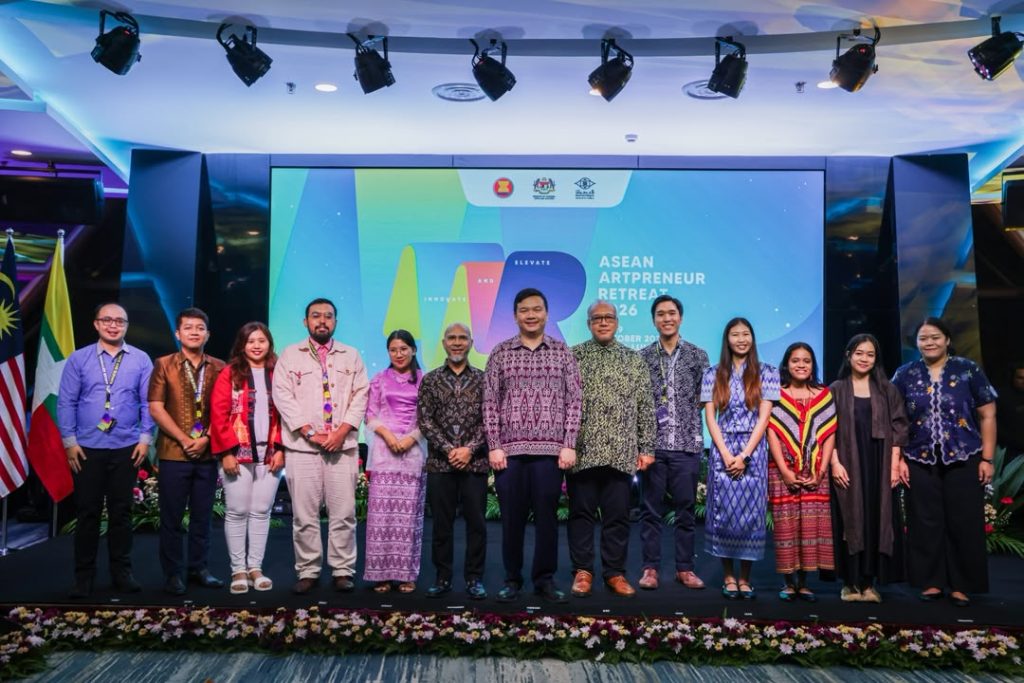
The Ministry of Tourism, Arts and  Culture (MOTAC), through the National Art Gallery of Malaysia, today  officially launched the ASEAN Artpreneur Retreat 2026 (AAR 2026),  bringing together emerging and established art entrepreneurs from across ASEAN to transform creative ideas into market-ready offerings and  sustainable businesses.  The Honourable Chiew Choon Man, Deputy Minister of Tourism, Arts and Culture; Dr. Jalaini bin Abu Hassan, Chairman of the National Visual Arts Development Board (NVADB); and Amerrudin Ahmad, Director-General of NVADB, with participants of the ASEAN Artpreneur Retreat 2026 (AAR 2026) at the opening ceremony held at HEMISFERA Luxury Sky Hall, Menara Kuala Lumpur. Held from 5 to 19 October 2026 in Kuala Lumpur under the theme  “Innovate and Elevate”, the 15-day intensive programme strengthens entrepreneurial capabilities, encourages knowledge exchange and expands opportunities within the regional creative economy.  The programme was officially launched by The Honourable Chiew Choon Man, Deputy Minister of Tourism, Arts and Culture, at HEMISFERA Luxury Sky Hall, Menara Kuala Lumpur. Also present were  Dato’ Shaharuddin bin Abu Sohot, Secretary-General of MOTAC; Dr. Jalaini  bin Abu Hassan, Chairman of the National Visual Arts Development Board  (NVADB); Amerrudin Ahmad, Director-General of the NVADB; along with ambassadors and representatives of ASEAN embassies in Malaysia.  AAR 2026 combines creative dialogue, mentorship and practical entrepreneurial development, focusing on product development, market  readiness, commercialisation and sustainable business models. Participants  will engage with industry experts and creative practitioners to refine their  ideas, understand market needs and strengthen their business capabilities. The retreat also features alumni of the Young Art Entrepreneur (YAE!)  programme, an ongoing National Art Gallery initiative supporting  entrepreneurship in Malaysia’s visual arts and creative industries. Alumni  contribute peer mentorship in market navigation, brand building and  production scaling, connecting Malaysian and fellow ASEAN artpreneurs  through shared experience.  In conjunction with Visit Malaysia 2026-2027 Campaign, participants will  develop a new product or service inspired by the campaign’s theme, drawing  on local cultural assets to create innovative offerings that enrich visitor  experiences and generate opportunities for creative communities.  The programme will culminate in a commercial product showcase,  presenting the outcomes developed during the retreat and highlighting  participants’ ability to translate artistic concepts into offerings with market  potential.  Guided by the principles of Malaysia MADANI, AAR 2026 reflects MOTAC’s  commitment to empowering creative talent, strengthening regional  collaboration and advancing inclusive, sustainable growth. Through this  initiative, art and culture serve as foundations for shared identity, meaningful  livelihoods and economic opportunity across ASEAN. 

News

BAC Brings Education And Industry Together To Develop The Future Workforce

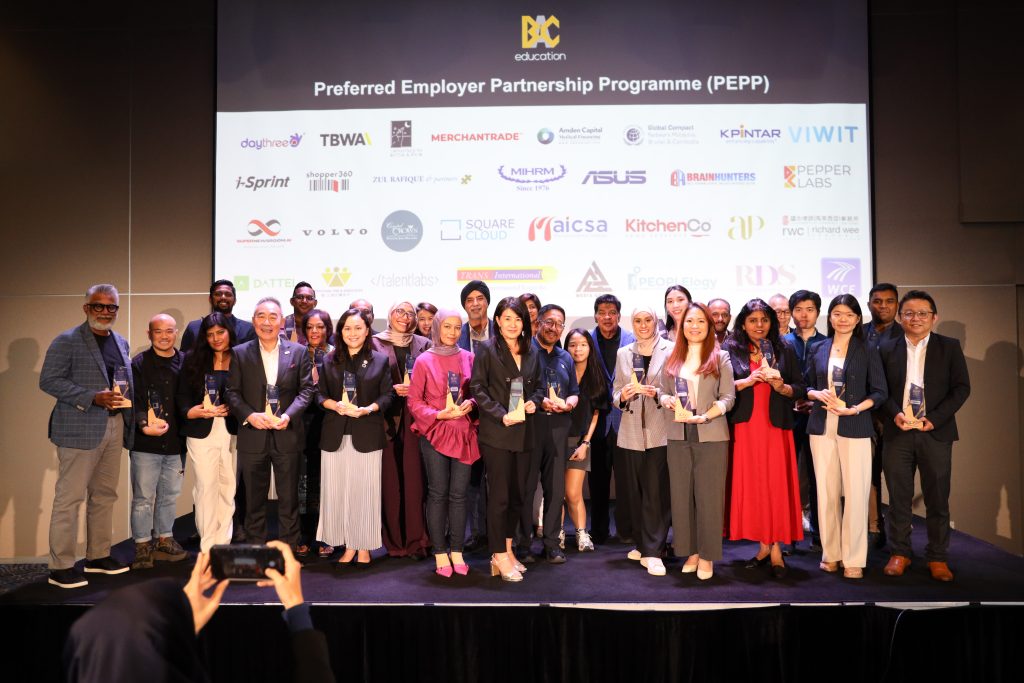
BAC Education Group launched its Preferred Employer Partnership Programme (PEPP) on 24 September 2026, bringing together 31 founding partners to help students build the skills, experience and connections needed for a changing world of work. The programme creates a closer working relationship between education and industry through internships, graduate employment, mentorship, industry engagement and future-skills development. Employers are invited to help shape students’ preparation throughout their education, giving them earlier exposure to real workplace challenges and expectations. BAC Education Group Co-Founder and Chief Future Officer Raja Singham. BAC Education Group Co-Founder and Chief Future Officer Raja Singham said developing talent was a shared responsibility, with educators and employers each playing a vital role in connecting learning with opportunity. “For me, this partnership is about opening doors. A young person’s potential can go much further when someone gives them an opportunity, guidance and the confidence to grow. Through PEPP, we want employers to be part of that journey from the beginning,” he said. “Employers understand how their industries are changing. Educators have a responsibility to bring that insight into what and how we teach. When we work together, we can prepare people to contribute, adapt and keep learning throughout their careers.” BAC’s Founding PEPP Partners with Raja Singham, Chief Future Officer and Co-Founder of BAC Education Group. Raja said BAC’s Career First Education and AI Native approach reflected the need to combine strong academic foundations with practical skills, industry experience and sound judgement. Students must learn to use emerging technologies responsibly while developing the ability to question information, solve problems and work across disciplines. “A degree should open up possibilities. It gives you a foundation to build on as your interests, skills and the world around you evolve. We want our students to see how far they can go when they connect their expertise with knowledge from other fields,” he said. He described this as a polymath mindset, supported by the depth and breadth of a T-shaped professional: strong expertise in one discipline, combined with the ability to work across areas such as technology, business, communication and governance. A law graduate, for example, could build towards opportunities in data protection, governance, ESG or legal technology. A media graduate could combine storytelling with data, communications technology and AI to pursue emerging roles across industries. Adaptability and continued learning would help graduates explore these possibilities throughout their working lives. Founding partners include Daythree Business Services, Merchantrade Asia, Volvo Car Malaysia, shopper360, Peoplelogy Bhd, Zul Rafique & Partners, Asustek Computer Malaysia Sdn Bhd, Supernewsroom.AI, Rosli Dahlan Saravanan n Partners,West Coast Expressway, The Malaysian Institute of Human Resource Management and the Chartered Governance Institute of Malaysia.  Supernewsroom.AI Chief Executive Officer Manminder Kaur Dhillon said the partnership would give students earlier exposure to the skills and technologies they would increasingly need in the workplace. BAC’s Founding Partners and participants of the Preferred Employer Partnership Programme (PEPP). “BAC deserves credit for recognising that the skills gap cannot be solved after graduation, employers need to be part of the education journey much earlier. For example, the PR and communications professionals of tomorrow must be AI-ready, and that means far more than knowing how to prompt. They need a deeper understanding of AI, communications technology, media intelligence, data and AI visibility, including how trusted information influences what AI cites and recommends. “At Supernewsroom.AI, we want students to understand that future now, so they enter the workforce ready for where the industry is heading,” she explained. The initiative also sits within BAC’s wider approach to lifelong learning, which includes HRDA Academy workforce development programmes, BAC Coursera Academy and postgraduate pathways across the group, supporting people at different stages of their careers. “The future workforce includes the people already working with us today. Alongside giving graduates their first opportunity, we must help experienced employees develop new capabilities and continue contributing. Both deserve a place in the future we are building,” Raja said. BAC’s longer-term ambition is to grow PEPP to 500 employers, with partnerships that create meaningful opportunities and bring industry insight into the learning journey. “We begin with 31 partners who are willing to help shape what comes next. Together, we can build the talent our organisations need and give more people the opportunity to build the lives they deserve,” Raja added. For programme information and partnership enquiries, email [email protected].

Energy & Technology

Inside The Quiet Reinvention Of Malaysian Manufacturing

Away from the headlines, Malaysian manufacturing is steadily changing how it competes — moving from cost and capacity towards engineering, precision and smarter production. Yoshitec is one of the companies making that transition. Manufacturing transformations rarely happen overnight. Vice President of Yoshitec – Elaine Soh. They happen quietly inside factories: when production data begins informing decisions once driven largely by experience, when automation improves precision, and when manufacturers stop asking how cheaply something can be made and start asking how much value they can add. In Mantin, Negeri Sembilan, Yoshitec offers a glimpse of that transition. The plastic injection moulding manufacturer has spent 18 years building a business that today employs 131 people, generates approximately RM42 million in annual revenue and distributes globally. It holds ISO, Halal and medical-grade certifications and has developed the capabilities to support international companies, including global giant 3M. But Yoshitec’s more interesting story is not how much it manufactures. It is what the company has decided to compete on.   Moving Away From Cheap For decades, manufacturing competitiveness was largely defined by volume, efficiency and price. That equation is changing. There will almost always be another factory somewhere capable of quoting lower. Yoshitec has deliberately chosen not to enter that race, avoiding low-margin mass production in favour of higher-complexity and higher-value projects where engineering, reliability and technical execution matter. It reflects a wider question confronting Malaysian manufacturers: rather than asking how much they can produce, should they be asking how difficult a problem they can solve? For Yoshitec, that problem-solving begins before production. Customers can arrive with little more than a sketch or product concept. An idea may look perfectly reasonable on paper but still be difficult, expensive or impossible to manufacture at scale. Yoshitec works through mould design, material selection and production requirements to turn those concepts into market-ready products. Its growing turnkey capabilities extend through moulding and assembly, giving customers access to multiple stages of production through one manufacturing partner. The manufacturer, in other words, is no longer simply receiving an order. It is increasingly helping determine how the product gets made.   Competing From Mantin When Yoshitec began in 2009, it identified a gap between large multinational manufacturers focused on major accounts and smaller workshops that could not always handle technically demanding projects. It positioned itself in the middle. Since then, that market has become considerably more sophisticated. Product tolerances have tightened, documentation requirements have increased and suppliers are expected to comply with increasingly complex global supply-chain standards. A factory may be located in Mantin, but the standard against which it is judged is international. That reality has driven Yoshitec’s investment in Industry 4.0 capabilities, earning the company recognition through the Smart Manufacturing Award from the Ministry of Investment, Trade and Industry (MITI). Its next phase includes deeper use of AI-driven quality systems. In precision manufacturing, the value of such technology is practical. Detecting defects earlier reduces waste. Better production data improves decision-making. Automation increases consistency. Smarter quality systems can identify patterns before they become expensive problems. The factory is no longer simply producing. Increasingly, it is learning from production.   Growing Without Becoming Slow Technology, however, does not solve every scaling problem. Growing to 131 employees has forced Yoshitec to introduce more formal management systems while attempting to preserve the agility of a smaller company. It is a familiar dilemma. Structure creates discipline, but too much structure creates bureaucracy. Yoshitec’s answer is to maintain what it describes as a “one-team” culture alongside stronger processes. Its internal YPE — Yes, Perfect, Excellent — ethos reinforces an emphasis on finishing details, quality and problem-solving. When a customer presents a design that appears impossible, Yoshitec wants its engineers’ instinct to be: let’s figure it out. As routine manufacturing becomes easier to automate and commoditise, that willingness to solve difficult problems could become increasingly valuable.   Less Waste, More Value The reinvention extends to sustainability. Yoshitec works around a straightforward principle: the best waste is no waste. It optimises plastic usage and recycles production scrap, recognising that sustainability and manufacturing efficiency increasingly overlap. A rejected component represents wasted material, machine time, energy and labour. Producing more accurately therefore makes both environmental and commercial sense. The company’s definition of responsible growth also includes people. Its team has volunteered with Pusat Jagaan Nur Hasanah, while internally Yoshitec maintains that expansion should not come at the expense of employee wellbeing.   Malaysia’s Bigger Manufacturing Opportunity Yoshitec ultimately wants to become a benchmark for smart, sustainable precision moulding in ASEAN and help create an environment where global OEMs think of Malaysia when seeking sophisticated manufacturing partners. That ambition points to a larger opportunity. Malaysia’s next manufacturing advantage may not come from producing more for less. It may come from engineering expertise, automation, precision, integrated services and the ability to solve increasingly difficult production problems. Yoshitec’s journey suggests that transition is already underway. The factories are still here. The production lines are still running. What is changing is the intelligence being built around them. And much of Malaysia’s manufacturing reinvention is happening quietly — one factory, one engineer and one difficult problem at a time.

Energy & Technology

Malaysia’s Skills Gap Has Become A Business Problem

Companies can invest in automation, advanced manufacturing and new technologies, but none of it works without people who know how to use them. Institut Latihan Umax is tackling one of the most persistent challenges facing Malaysian industry: finding workers with the skills to do the job. Malaysia does not have a shortage of people looking for work. Yet companies continue to struggle to find people with the right skills. That contradiction has become increasingly important as the country moves towards more sophisticated manufacturing, automation and Industry 4.0. The problem is no longer simply about education. It is a business problem.   Institut Latihan Umax, managed by Ukiran Maksima Sdn Bhd, operates directly within that gap. The Technical and Vocational Education and Training (TVET) institution specialises in welding technology and polymer technology, particularly injection moulding, combining theoretical education with hands-on technical training. Its students include SPM leavers, unemployed youth, job seekers and working adults. But the ultimate measure of its programmes is determined somewhere else: the workplace.   Training for the Job For employers, hiring someone with a qualification is not necessarily the same as hiring someone who is ready to work. Technical industries require employees who understand equipment, processes, safety and production environments. Businesses also need people capable of communicating, solving problems and working effectively within teams. Umax was built around closing that divide. Its programmes incorporate practical training, professional certification, career guidance and job-placement services. By working directly with employers and industry partners, the institution attempts to ensure that what students learn reflects what companies actually need. The distinction matters. Education can produce qualifications. Industry needs capability. For Umax, success therefore depends less on how many people enter its classrooms and more on how many leave equipped for sustainable employment.   Technology Keeps Changing the Skills The challenge is becoming harder because the workplace itself is moving. Automation, artificial intelligence, digitalisation and Industry 4.0 are changing how factories operate and what employers expect from workers. Technical skills can no longer remain static. Umax continuously reviews its curriculum, training equipment and certification programmes while investing in trainer development. Employer feedback, labour-market information and graduate employment outcomes are used to identify where skills demand is moving. This creates a continuous cycle between industry and education. As businesses adopt new technologies, training has to respond. As jobs evolve, workers need new competencies. And as existing roles change, even experienced employees may need to return to training. That is why Umax’s market extends beyond school leavers. Upskilling and reskilling working adults is becoming an increasingly important part of workforce development as companies attempt to modernise without leaving existing employees behind.   Quality Over Headcount There is an obvious growth strategy for any education provider: increase enrolment and introduce more courses. Umax is deliberately cautious about both. The institution says growth should instead be reflected in graduate employment, training quality, stronger employer partnerships and the ability to deliver skills that have genuine market demand. It does not want to introduce programmes simply because students might enrol in them. There must also be an industry need on the other side. That approach puts employability at the centre of the business model. It also explains the emphasis on job placement. Umax works with employers to connect graduates with employment opportunities, extending its role beyond training towards workforce development.   A Business Issue, Not Just an Education Issue As Umax itself expands, maintaining industry relevance becomes more difficult. Its response has been to strengthen governance, introduce clearer responsibilities across specialised teams and rely more heavily on performance monitoring, employer feedback and employment outcomes. The institution is also modernising training facilities, strengthening industry partnerships and developing its trainers to keep pace with technological change. These investments address a much larger economic challenge. Malaysia can attract investment, automate factories and encourage companies to move into higher-value activities. But those ambitions ultimately depend on whether businesses can find enough people capable of doing increasingly sophisticated work. Machines alone do not create an advanced economy. Neither do certificates. People with the ability to apply knowledge, adapt to technology and solve real problems do. That is why Malaysia’s skills gap increasingly belongs not only in conversations about education, but in boardrooms, factories and economic planning. For institutions such as Umax, the task is to make sure the skills being taught today still have value when graduates walk into the workplace tomorrow.  

Property

Penang To Auction Gurney Drive Land To Fund Air Itam Bypass

The Penang state government will auction a six-acre parcel of land on Gurney Drive in George Town to raise more than RM300 million to help complete the long-delayed bypass road project linking Air Itam with the Tun Dr Lim Chong Eu Expressway. The land, known as Plot 7A in Tanjung Pinang Town in the northeast district, is located on Jalan Peter Paul Dason, which connects Gurney Drive with Andaman Island. According to the state government gazette, the site will be offered at public auction at 11am on Oct 7 at Komtar. The reserve price has been set at RM1,200 psf, while vacant land in the surrounding area is currently fetching more than RM1,000 psf on the open market. Sources tell The Edge that the sale could generate more than RM300 million, with the proceeds intended to help the project’s concessionaire, Consortium Zenith Construction Sdn Bhd (CZC), complete the bypass. The RM851 million bypass project, also known as Package Two of Penang’s undersea tunnel and paired roads project, stretches approximately 6km. It is intended to connect Lebuhraya Thean Teik in Farlim with the Tun Dr Lim Chong Eu Expressway through a combination of elevated viaducts, tunnels and ground-level roads. Construction began in February 2021 after years of planning and approvals, and was initially expected to be completed in 2025. The project is being undertaken by CZC under Penang Infrastructure Corp (PIC). For years, the promised five-minute commute between Air Itam and the coastal expressway remained just that — a promise. The bypass project has moved at a crawl, and Penangites are starting to suspect that the delays are not purely technical. In May, Penang Chief Minister Chow Kon Yeow denied that the project has been dragging since 2012. He said the contract was awarded only in 2020, before physical works started in 2021. Asked whether the concessionaire had run into financial difficulties due to the Covid-19 pandemic, he said the pandemic was long over. “Covid-19 has already passed. We cannot continue using the same excuse,” he said. Chow confirmed that the concessionaire had faced financial issues that slowed progress on the project. He stressed, however, that work was still ongoing and the completion deadline remained April next year. The project received its first extension of time (EOT) in 2023, after land acquisition processes affected key stretches of the alignment, extending the deadline to Oct 31 this year. A second EOT was approved in the middle of last year, pushing the completion date to April 12 next year. Penang state executive councillor and Paya Terubong assemblyman Wong Hon Wai said in a recent Facebook post that the project had reached 91% completion and remains on track to be completed next year. He said the contractor had assured him the project would be finished according to schedule on April 12, 2027. He noted, however, that progress at the other end remained far from satisfactory, adding that intervention from the state government was needed at this juncture. In 2013, CZC was selected through an open tender to construct an undersea tunnel and three main bypass roads on the island. The consortium, formed a year earlier, is a joint venture between Beijing Urban Construction Group — known for its work on venues for the 2008 Beijing Olympics — and local firm Zenith Construction Sdn Bhd. Instead of funding the project through tolls, the state government granted CZC exclusive development rights over roughly 45ha at Gurney Bay, in a deal that effectively swapped infrastructure for property development. Federal environmental approval for the three bypass roads came in 2017. Two years later, the Penang government signed an agreement for the second package of works, followed by a groundbreaking ceremony in November that year. Actual construction did not begin until 2021, with completion now targeted for 2026.

Property

Creador Buys RHB And UOB Buildings In Kuala Lumpur

Private equity firm Creador, through its philanthropic arm Creador Foundation, has reportedly picked up two more buildings in downtown Kuala Lumpur — the historic RHB building on Jalan Tun H S Lee and Bangunan UOB on Medan Pasar — according to sources familiar with the deals. The RHB building, a 13-storey office block at 75 Jalan Tun H S Lee, had been listed earlier this year with a reserve price of RM30 million. Sources say it sold close to that figure. The building carries real history — it was once the headquarters of Kwong Yik Bank, Malaya’s first local bank, founded in 1913, and was officially opened in 1965 by then-prime minister Tunku Abdul Rahman. It later became linked to RHB Bank through a series of mergers in the 1990s. RHB has confirmed its branch there will close in January 2027. Fewer details are available on the Bangunan UOB deal, but sources say Creador Foundation bought the building along with two neighbouring shoplots for just under RM40 million. The property sits in the same historic banking district, just north of Dataran Merdeka. The area is clearly in transition — construction and restoration work is visibly underway. According to one source, Creador has now acquired 17 of the 27 buildings in the Medan Pasar area, with another 10 under lease. In August, the government announced a partnership between Kuala Lumpur City Hall and Creador Foundation to revamp the area’s public spaces and improve drainage. These latest purchases continue a heritage-restoration effort Creador Foundation has run since 2024, focused on Medan Pasar and the nearby Central Market district. Past projects include restoring a row of shophouses now home to KLCG Confectionery & Bakery. Its biggest undertaking so far is Muara Arts Gallery, a roughly 20,000 sq ft public art space set across six 1930s Art Deco shophouses, due to open in November. A companion performing arts theatre is under construction and expected to finish by 2029. Creador Foundation was founded in 2018 by Creador’s CEO Brahmal Vasudevan and his wife, lawyer Shanthi Kandiah. Creador itself, set up in 2011, is a well-known private equity investor in Southeast Asia — backing brands like MR DIY, Hock Kee Kopitiam and BIG Pharmacy — and manages about US$3.1 billion in assets.

Property

LBS Bina Partners With MYDIN For First Supermarket At KITA @ Cybersouth

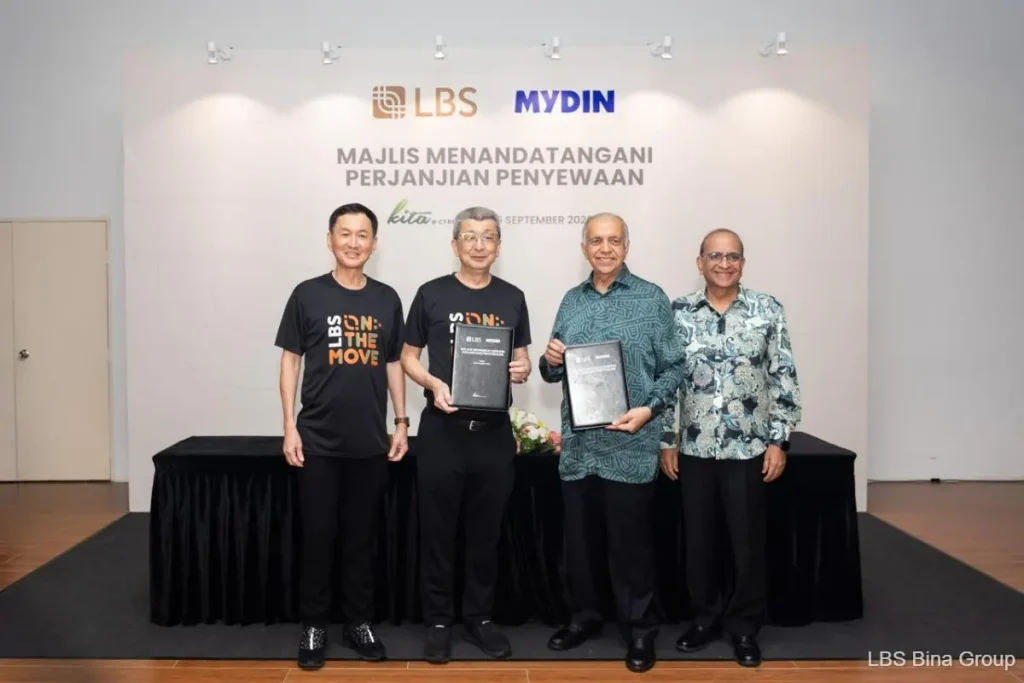
LBS Bina Group Bhd has secured MYDIN as the anchor supermarket for its flagship KITA @ Cybersouth township in Dengkil, Selangor, strengthening the range of retail and everyday amenities available within the growing development. MYDIN will become the first supermarket to operate within KITA @ Cybersouth, occupying approximately 1.37 acres of land with a built-up area of about 24,000 sq ft. The supermarket will serve residents of the 633-acre Malay Reserve Land township as the community continues to expand. The addition of MYDIN forms part of LBS Bina’s efforts to develop KITA @ Cybersouth into a more self-sufficient township by providing residents with convenient access to groceries, household necessities and other daily essentials closer to home. From left: LBS group managing director and CEO Datuk Lim Hock Guan, LBS group executive chairman Tan Sri Lim Hock San, MYDIN managing director Datuk Ameer Ali Mydin and MYDIN executive director Ahimmat Mydin Mohamed (Pix by LBS Bina Group). The supermarket will also complement the ongoing development of KITA Avenue Square, the township’s commercial component. Shoplots within the development are currently under construction, with prices starting from RM1.39 million. LBS Group Managing Director and Chief Executive Officer Datuk Lim Hock Guan said the introduction of MYDIN reflects the developer’s focus on ensuring that amenities within the township grow alongside the needs of its residents. “As KITA @ Cybersouth continues to grow, it is important that the amenities and services within the township evolve in line with our residents’ needs. The introduction of MYDIN as the township’s first supermarket is another step towards creating a more complete community, where everyday essentials are within easy reach,” he said. KITA @ Cybersouth currently has an estimated population catchment of about 67,000 people, with younger homebuyers forming a significant proportion of the township’s demographic. Buyers aged 40 and below account for approximately 63% of the total, highlighting the development’s appeal among younger households and families. The township is planned to comprise approximately 16,000 units upon completion. Nearly 40% of the units have already been completed, while another 5% are currently under construction. The remaining 55% are at various stages of planning, providing further room for residential and commercial growth. MYDIN Managing Director Datuk Ameer Ali Mydin said the decision to establish a supermarket at KITA @ Cybersouth reflects the retailer’s confidence in the long-term growth potential of Cybersouth. He said the collaboration with LBS is significant given the property developer’s experience in developing established communities as well as emerging growth areas. “Our decision to open MYDIN as the first supermarket in KITA @ Cybersouth also reflects our confidence in the strong potential of Cybersouth, which is developing rapidly and attracting a growing number of residents, particularly young families,” he said. The partnership is expected to further strengthen KITA @ Cybersouth’s retail offering as the township’s population grows, while providing residents with greater convenience and supporting the development of a more integrated residential and commercial community.

Energy & Technology

TotalEnergies To Cut Stake In Papua LNG, Hand Operatorship To Exxon

TotalEnergies will sell a 9.1% stake in the Papua LNG joint venture to its partners and hand over operatorship of the project to ExxonMobil, the French energy major said on Monday. The company, which co-owns the project with Exxon, Santos, Kumul Petroleum/MRDC and ENEOS Xplora, said it would sell shares to its partners in proportion to their existing interests, while retaining a 20% stake in the venture. TotalEnergies did not disclose the sale price for the transaction. Separately, TotalEnergies said it was nearing a final investment decision on the liquefied natural gas (LNG) facilities, noting that contractual and commercial hurdles have now been cleared. CEO Patrick Pouyanné had said in July that he was targeting a final decision by November, suggesting the project is moving closer to a definitive stage after years of development. Papua LNG forms part of TotalEnergies’ broader portfolio of projects aimed at growing lower-cost LNG supplies. The project is expected to produce 5.6 million metric tons per year (Mtpa) from the Elk and Antelope fields in Papua New Guinea’s Gulf Province, with output mainly destined for Asian buyers. Exxon, which already operates the neighbouring PNG LNG plant, will take over as the operator of the Papua LNG project going forward. Meanwhile, TotalEnergies’ offtake share, which gives it access to 1.5 Mtpa of LNG for its own portfolio, will remain unchanged despite the reduction in its equity stake. TotalEnergies said it has completed the tendering process for engineering, procurement and construction work on the project, with contracts now pending approval from its partners. The company added that close to US$4 billion in cost savings has been achieved since 2024 through the rebidding of those contracts and the optimisation of the project’s design, bringing overall capital spending down to approximately US$14 billion. In addition, the companies have finalised an amended gas agreement with Papua New Guinea’s government and established an LNG marketing joint venture with Kumul Petroleum to sell 2.4 Mtpa of the project’s total 5.6 Mtpa output.

Scroll to Top

Subscribe
FREE Newsletter