Investment & Market Trends

Investment & Market Trends, News

MSB Global Slumps 15% on ACE Market Debut Amid Tepid Investor Sentiment

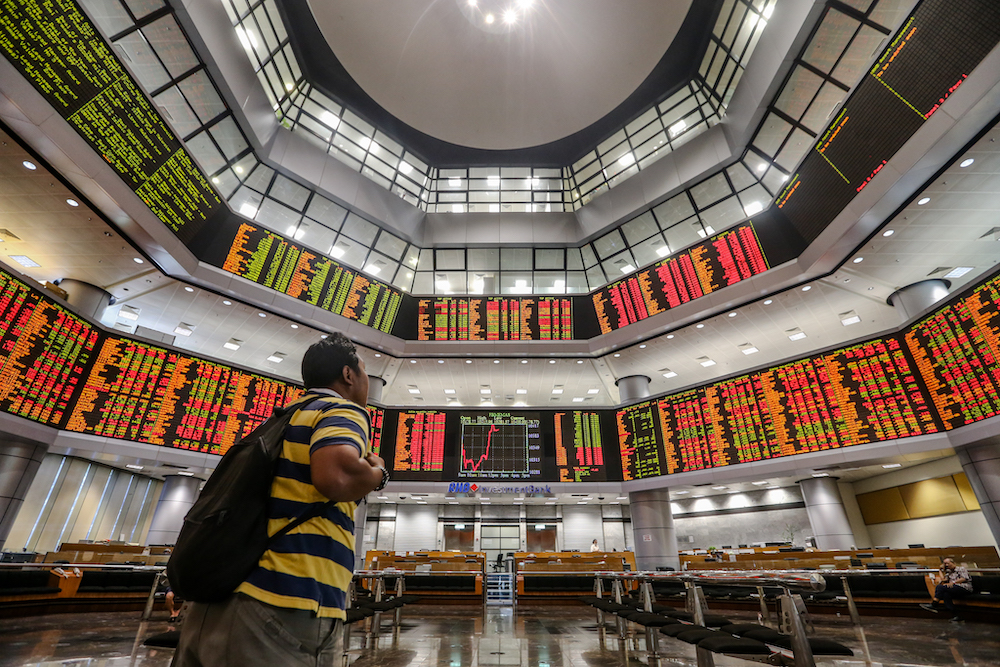
KUALA LUMPUR: Autoparts distributor MSB Global Group Bhd made a disappointing debut on the ACE Market, with its shares falling 15% below its IPO price in early trading on Tuesday, marking the sixth consecutive listing on the exchange to decline on day one since March. MSB Global opened at 17 sen, down from its initial public offering (IPO) price of 20 sen per share, and dipped further to 16.5 sen before recovering slightly to 18 sen by 9:05am. Nearly 14 million shares were traded within the first few minutes, valuing the company at RM104 million at its last traded price. The weak debut reflects broader market caution, despite a modest recovery in investor confidence following recent global trade tensions. MSB Global’s performance adds to a string of lacklustre IPOs on the ACE Market, indicating ongoing investor hesitancy toward small-cap listings. The IPO, which raised RM41.4 million, saw relatively muted retail interest with applications oversubscribed by just six times — a modest figure compared to more robust debuts seen in past years. MSB Global distributes GSP-branded automotive components such as driveshafts, suspension parts, steering racks, and wheel hub assemblies across Malaysia. The company plans to channel the IPO proceeds as follows: 22.58% for new machinery and equipment, 18.7% for construction of a new factory and warehouse, 3.14% for the development of an in-house electric vehicle (EV) charger, 20.67% for the repayment of bank borrowings, and the remainder for general working capital and listing-related expenses. A private placement of existing shares also raised RM14.8 million, which went to managing director Datuk Ow Kee Foo, executive director Lai Swee Ping, and Lee Li Lian, the spouse of a director in one of MSB Global’s subsidiaries. M&A Securities Sdn Bhd acted as the principal adviser, sponsor, sole underwriter, and placement agent for the listing. As MSB Global navigates its first days on Bursa Malaysia, all eyes will be on how the company delivers on its expansion plans — and whether confidence in ACE Market IPOs can be restored.–THE EDGE

Investment & Market Trends

Vertex Growth Commits €10 Million Investment in Dolphin Semiconductor

SINGAPORE, MEYLAN, MONTREAL: Vertex Growth, a Singapore-based growth-stage venture capital fund, has announced a €10 million investment in Dolphin Semiconductor, a leading provider of mixed-signal semiconductor intellectual property (IP) solutions. This strategic investment will support and accelerate Dolphin Semiconductor’s expansion plans and innovation roadmap. Backed by Vertex Holdings, a subsidiary of global investment firm Temasek, Vertex Growth focuses on scaling high-potential technology companies globally. The new funding reinforces Dolphin Semiconductor’s commitment to advancing next-generation semiconductor IP technologies, especially in power management and data conversion—critical components across modern semiconductor systems. Dolphin Semiconductor is poised to scale its operations to meet rising global demand across diverse sectors, including industrial, high-performance computing, consumer electronics, automotive, and the Internet of Things (IoT). The company will use the capital to enhance its research and development efforts, expand commercial activities, and pursue consolidation opportunities to strengthen its market position. This announcement follows a previous commitment of €26 million from Jolt Capital—a private equity firm specialising in deeptech—made in November 2024. With the additional support from Vertex Growth, Dolphin Semiconductor now has a robust foundation to deepen its global presence, particularly in Asia. “We are excited to support Dolphin Semiconductor alongside our long-time collaborator Jolt Capital,” said Hock Chuan Tam, General Partner at Vertex Growth. “Dolphin has built a remarkable team and an impressive IP portfolio, including innovations in self-adaptive and battery-less power management, on-chip monitoring, and cutting-edge audio solutions such as Class-D amplifiers and ultra-low power codecs. We look forward to facilitating their expansion across Asia and contributing to the semiconductor industry’s evolution.” Laurent Monge, CEO of Dolphin Semiconductor, welcomed the investment, stating: “This partnership with Vertex Growth is a key milestone for us. Beyond funding, their strong network and strategic insights in the Asian market will significantly accelerate our global growth and market reach.” Echoing this sentiment, Pierre Garnier, Managing Partner at Jolt Capital, said: “Vertex Growth joining Dolphin Semiconductor’s journey marks a pivotal moment. As we continue to scale the business in North America and Europe, Vertex’s regional expertise and connections in Asia will be invaluable in opening new markets and unlocking long-term value.” With strong financial and strategic backing from both Jolt Capital and Vertex Growth, Dolphin Semiconductor is well-positioned to advance its technological leadership and expand its footprint in the rapidly evolving semiconductor IP landscape.

Investment & Market Trends, News

Bursa Aims for 60 Listings Despite Setbacks

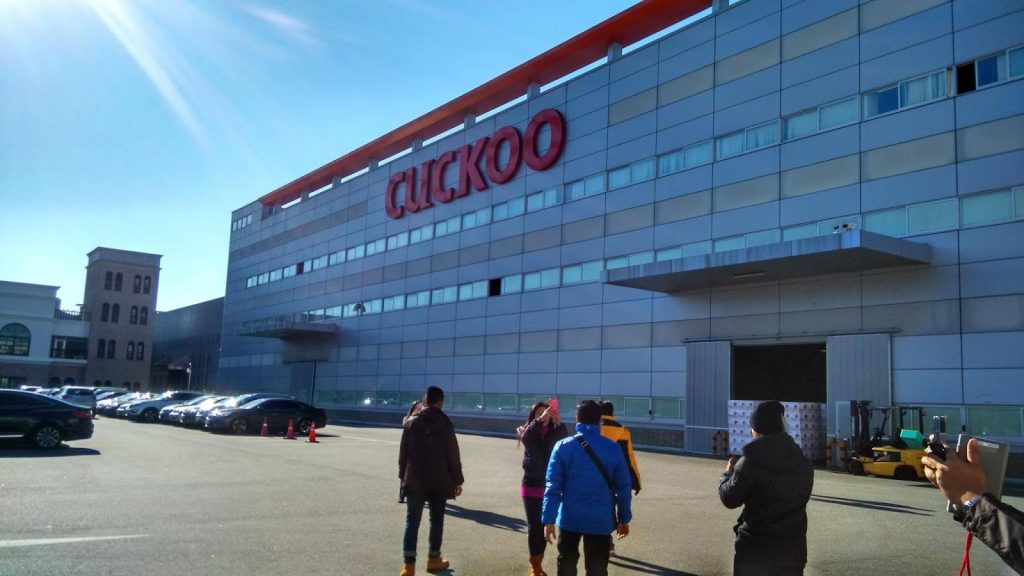
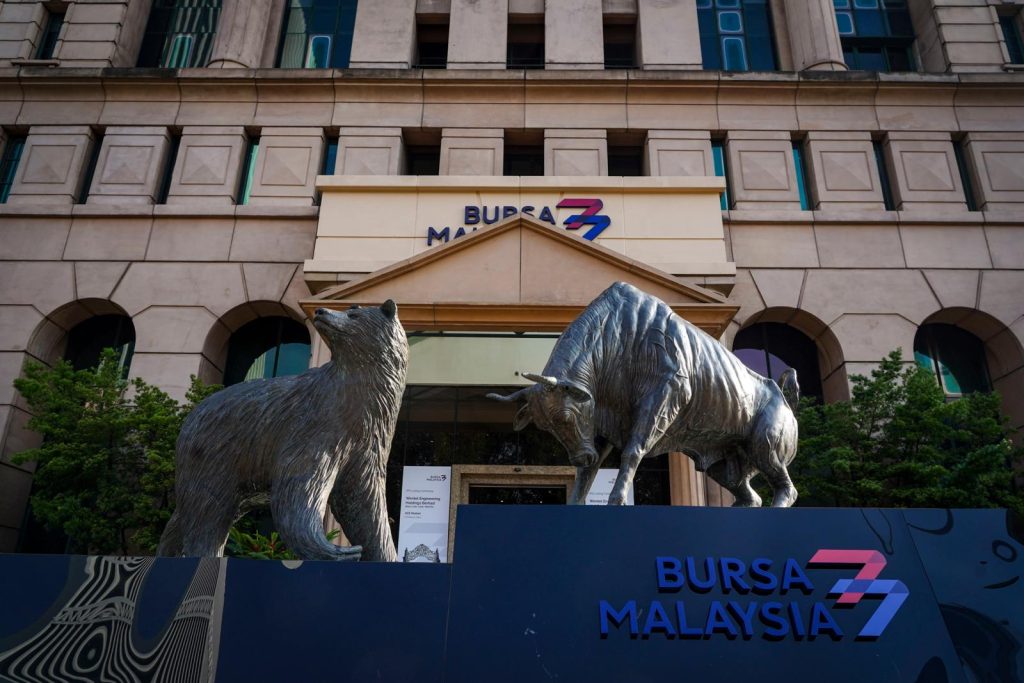
KUALA LUMPUR: Bursa Malaysia Bhd (KL:BURSA) disclosed today that several companies have opted to delay their planned initial public offerings (IPOs) amidst ongoing market instability spurred by recent shifts in US trade policies. “We understand that some entities are currently adjusting their timelines,” remarked Bursa Malaysia Bhd chairman Tan Sri Abdul Wahid Omar during a press briefing. He expressed confidence, however, that these companies intend to proceed with their IPOs once market conditions stabilize and uncertainties surrounding external factors diminish. Tan Sri Abdul Wahid Omar made these statements at the Bursa Malaysia-ECKL-CIMB Roundtable themed “Global Headwinds vs Domestic Resilience: Refreshed Outlook 2025,” underscoring the current challenges faced by Malaysian businesses amidst global economic uncertainties. Earlier today, Bloomberg reported that OCI Holdings Co of South Korea has temporarily halted preparations for the IPO of its Malaysian polysilicon unit due to volatile global stock markets. While OCI has not made a final decision on the matter, the move highlights the cautious approach adopted by firms in response to unpredictable market conditions. Adding to the cautious sentiment, Cuckoo International (MAL) Bhd recently announced a two-month postponement of its IPO, citing market uncertainties. The company has initiated investor subscriptions and offered refunds to those opting out of the IPO amid prevailing market anxieties. Despite these setbacks, Bursa Malaysia remains steadfast in its commitment to host 60 IPOs this year, collectively targeting a market capitalisation of RM40.2 billion. Tan Sri Abdul Wahid Omar reiterated this goal, emphasizing the exchange’s resilience and adaptability in navigating the current economic landscape. The global financial markets, including Malaysia’s, have been tumultuous, influenced by the US government’s fluctuating tariff policies and lingering uncertainties. These developments have contributed to heightened volatility, prompting both investors and businesses to navigate an increasingly erratic policy environment. Notable upcoming IPOs listed by Bursa Malaysia include MSB Global Group Bhd on April 15, WTEC Group Bhd on April 29, Reach Ten Holdings Bhd on May 2, West River Bhd on May 5, and Fibromat (M) Bhd on May 8. These listings are pivotal in maintaining market momentum despite prevailing challenges. Last year, Bursa Malaysia witnessed a significant uptick in IPO activity, with 55 new listings marking a 72% surge from the previous year. The highlight of 2024 was the IPO of 99 Speed Mart Retail Holdings Bhd (KL:99SMART), the largest retail offering in ASEAN since 2020 and the largest in Malaysia in eight years. As Malaysia’s financial markets brace for continued volatility, Bursa Malaysia remains resolute in its mission to foster economic growth and provide robust investment opportunities amidst a complex global landscape.

Investment & Market Trends

US Tariff Uncertainty Delays IPOs, Including Cuckoo Malaysia

The escalating tensions over US tariffs are causing significant ripples in Malaysia’s initial public offering (IPO) landscape, leading several companies, including Cuckoo International (MAL) Bhd (Cuckoo Malaysia), to postpone their IPO plans. Speaking at the Bursa Malaysia-ECKL-CIMB Roundtable on “Global Headwinds vs Domestic Resilience: Refreshed Outlook 2025,” Bursa Malaysia Bhd chairman Tan Sri Abdul Wahid Omar highlighted that market volatility triggered by US tariff developments has prompted these delays. He indicated that affected companies are opting to wait for more stable market conditions before proceeding with their IPOs. While Abdul Wahid did not specify the number of deferred listings, he confirmed that Cuckoo Malaysia, initially slated to list on April 30, has rescheduled its IPO to June. The postponements come amid a broader IPO surge this year, with 60 IPOs planned compared to 55 in 2024. Despite a strong start, recent IPO performances have been mixed, reflecting market unease following US tariff announcements by President Donald Trump. MSB Global Group Bhd is scheduled to debut on the ACE Market tomorrow, continuing the IPO momentum despite the challenges posed by global economic uncertainties.–BUSINESS TIMES

Investment & Market Trends, News

MDEC Launches Strategic Incentives to Accelerate Malaysia’s Digital Creative Industry

The Malaysia Digital Economy Corporation (MDEC) has unveiled a suite of new initiatives aimed at elevating Malaysia’s digital creative industry, reinforcing the nation’s position as a competitive player in the global digital content space. Among the programmes introduced are the Digital Games Testbed, Animation Shorts Challenge, and Business in Metaverse — all designed to nurture talent, cultivate innovation and enhance international market access. MDEC chief executive officer Anuar Fariz Fadzil emphasised the sector’s potential to generate high-value employment, develop local intellectual property, and boost export revenue. “Often driven by passion and creativity, the digital creative industry attracts professionals who are deeply committed to their craft. MDEC’s programmes are designed to support these talents by encouraging them to build on their strengths, explore innovative ideas and turn their passion into commercially viable content for local and global audiences,” he said. With these financial incentive programmes, MDEC aims to strengthen the end-to-end value chain — from talent development to content commercialisation — while encouraging innovation that aligns with Malaysia’s digital economy goals. Since 2011, Malaysia’s digital content market has recorded significant growth, generating RM87.25 billion in revenue and RM11.18 billion in export sales. The industry has also created over 11,000 high-quality jobs for Malaysians. Looking ahead, Anuar reaffirmed MDEC’s dedication to shaping a resilient digital ecosystem that champions local innovation and entrepreneurship. “The newly announced incentives are aimed at driving sustainable industry growth, attracting international investment and positioning Malaysia as a prominent player within the global digital creative landscape — which we already are,” he said. The initiative comes as Malaysia continues to expand its digital economy blueprint, with MDEC playing a pivotal role in fostering a future-ready, digitally skilled workforce and a thriving creative sector anchored in innovation and global competitiveness.–BUSINESS TIMES

Investment & Market Trends, News

Xi Jinping’s Visit to Strengthen Trade and Regional Ties, Says Fahmi

KUALA LUMPUR: Communications Minister Fahmi Fadzil has expressed confidence that the upcoming visit by Chinese President Xi Jinping will significantly bolster Malaysia-China relations, particularly in trade and regional cooperation. Speaking ahead of Xi’s official visit from April 15 to 17, Fahmi said Malaysia views the engagement as a milestone moment, underpinned by strong economic ties and a shared vision for closer people-to-people and diplomatic relations. “China has long been Malaysia’s largest trading partner, and as Asean chair this year, we have a great deal to discuss,” said Fahmi, at the Asean-China Media and Think Tank Forum. “Not only will trade relations be strengthened, but we also expect to deepen cultural and community-level exchanges.” Fahmi noted that Malaysia hopes to use Xi’s visit to send a clear and consistent message of cooperation, especially in the face of rising geopolitical uncertainty. “Globalisation is under scrutiny and re-evaluation, particularly after recent announcements from the White House,” he said. “Malaysia believes that longstanding trade ties and multilateral collaboration are the way forward.” Prime Minister Anwar Ibrahim had also cautioned yesterday that the US’ increasingly adversarial stance toward China could have far-reaching implications for Malaysia’s economy and its role within Asean. Amidst growing economic tensions between the world’s two largest economies, the Biden administration has paused tariffs for 90 days but raised duties on Chinese imports to 125%, up from 104%, in response to China’s 84% retaliatory tariffs on US goods. China has been Malaysia’s top trading partner for 15 consecutive years, with bilateral trade reaching US$190.24 billion (RM856.08 billion). Key Malaysian exports include integrated circuits, palm oil, computers, and plastic products. “This visit comes at a critical time, and we hope to build on past achievements to unlock new opportunities for both nations,” Fahmi said.–FMT

Investment & Market Trends, News

China’s Chagee Pushes Ahead with US IPO Amid Market Volatility

Chinese bubble tea chain Chagee Holdings Ltd is moving forward with its plans to go public in the United States, aiming to raise up to US$411 million through an initial public offering (IPO), despite turbulent equity markets driven by renewed trade tensions between the US and China. According to a recent filing with the US Securities and Exchange Commission (SEC), the Shanghai-based company is offering 14.68 million American depositary shares (ADS), priced between US$26 and US$28 apiece. At the upper end of the range, Chagee would be valued at approximately US$3.3 billion. Several institutional investors have expressed interest in the IPO. Entities tied to CDH Investment Management Co, RWC Asset Management, Allianz Global Investors Asia Pacific Ltd, and ORIX Asia Asset Management Ltd have indicated potential commitments totalling US$205 million, signalling confidence in the company’s growth story. The IPO marks a bold move as other firms, including StubHub, Klarna, and eToro, have opted to delay listings amid market uncertainty. Airo Group Holdings Inc, an aerospace and defence firm, also launched its IPO on Thursday, targeting US$80 million. Chagee’s decision to proceed comes as the US-China trade dispute intensifies, with tariffs and geopolitical risks featured prominently among the risk disclosures in its SEC filing. The company highlighted that all of its products are manufactured in China and shipped globally, a model vulnerable to future policy escalations. The listing follows the recent successful IPO of domestic peer Mixue Group in Hong Kong, which became the city’s largest flotation of the year, riding on strong demand for bubble tea stocks. According to Chagee’s filing, the company operated 6,440 tea houses as of December 2024, reflecting an 83% year-on-year growth rate. Founded in 2017 by Junjie Zhang, who will retain 89% of the voting power post-offering, Chagee has rapidly scaled its presence and now positions itself as a major player in the global premium tea market. The IPO is being underwritten by Citigroup Inc, Morgan Stanley, Deutsche Bank AG, and China International Capital Corp (CICC). Chagee plans to list on the Nasdaq Global Select Market under the ticker symbol CHA.

Investment & Market Trends, News

CIMB Securities Maintains ‘Hold’ on Nestlé Malaysia

KUALA LUMPUR: CIMB Securities has reiterated its ‘Hold’ rating on Nestlé (Malaysia) Bhd, maintaining a target price of RM92.00. The valuation is based on a weighted average cost of capital (WACC) of 5.9 per cent and a terminal growth rate of 2.5 per cent. While the stock continues to trade within the RM82.00–RM85.00 range, the research house remains cautiously optimistic. This outlook is supported by recent insights gained during a visit to Nestlé Malaysia’s Maggi manufacturing facility in Batu Tiga, Selangor. CIMB noted that the site visit provided deeper understanding into Nestlé’s local manufacturing capabilities, the strong market leadership of the Maggi brand, and the company’s sustained focus on product innovation. From financial years 2020 to 2024 (FY20–FY24), Nestlé Malaysia has invested RM1.5 billion in capital expenditure. These investments have been channelled towards capacity expansion, efficiency improvements, facility upgrades, and regulatory compliance.–BUSINESS TIMES

Investment & Market Trends, News

Trump Pauses Global Tariffs for 90 Days, Slaps 125% Tariff on China

WASHINGTON: US President Donald Trump has announced a 90-day pause on new tariff hikes for most countries, in an apparent response to recent market volatility. However, he intensified his trade offensive against China, imposing a steep 125% tariff citing a “lack of respect” from Beijing. The surprise move came after a turbulent week on Wall Street, with markets reeling from the president’s earlier announcement of sweeping global tariffs. Following the pause, stocks rebounded dramatically, with the S&P 500 surging 9.5% to close at 5,456.90—snapping a week-long losing streak. Despite the pause for most nations, Trump doubled down on China, saying the country’s leadership “doesn’t quite know how to go about” negotiating a deal. “A deal’s going to be made with China. A deal’s going to be made with every one of them,” Trump said, while hosting motor racing champions at the White House. Responding to criticism that he had backtracked on his aggressive trade stance, Trump insisted he was simply being “flexible.” “People were getting a little yippy, a little afraid,” he said, referring to market jitters. “I saw last night where people were getting a little queasy.” The move follows mounting pressure from investors and global leaders after the US imposed a baseline 10% tariff on all imports last Saturday, with elevated rates for key trading partners—including China and the European Union—taking effect Wednesday. Trump revealed on Truth Social that over 75 countries had reached out to negotiate and refrained from retaliatory action, prompting him to issue the 90-day tariff suspension, though the baseline 10% remains in effect. China, however, struck back earlier Wednesday by raising tariffs on US imports to 84%, retaliating against Trump’s escalation of duties on Chinese goods to 104%. In response to the latest move, Beijing’s finance minister remarked, “The United States simply piles mistakes on top of mistakes.” Meanwhile, the European Union announced retaliatory tariffs targeting over €20 billion worth of US goods—including soybeans, motorcycles, and beauty products. However, the EU has not responded to the separate “Liberation Day” tariffs of 20% that took effect Wednesday. Despite heightened tensions, Trump remains confident that his strategy will revive American manufacturing by compelling companies to relocate operations back to the US. “I’m telling you, these countries are calling us up kissing my ass,” he told fellow Republicans at a private dinner, referring to nations eager to secure favourable trade deals. In addition to economic tensions, diplomatic strains are escalating. China issued a travel advisory warning its citizens to assess risks before visiting the US. Meanwhile, US Defence Secretary Pete Hegseth, speaking from Panama, accused Beijing of issuing “threats” as tensions continue to build around control of the Panama Canal. As Trump presses forward with his trade vision, the world’s two largest economies appear locked in an increasingly hostile standoff. — AFP

Investment & Market Trends, News

Yuan Hits New Lows as US Tariffs on China Take Effect

HONG KONG: The Chinese yuan fell to a fresh 19-month low against the US dollar today, following a record-low drop in its offshore counterpart overnight, as tensions from the escalating Sino-US trade war continue to weigh on investor sentiment. In afternoon trading, the yuan weakened by 0.2%, hitting 7.3498 per US dollar, after briefly dipping to 7.3505 earlier, the lowest level since September 2023. Meanwhile, the offshore yuan pared some losses, rising 0.62% to 7.3812 per dollar after dropping over 1% in the previous session and reaching a record low of 7.4288 per dollar. The declines come amid growing concerns as the trade war between the world’s two largest economies intensifies. These concerns were exacerbated by China’s central bank loosening its control over the yuan in an effort to mitigate the negative impact on exports. US President Donald Trump’s “reciprocal” tariffs on numerous countries took effect today, including hefty duties of 104% on Chinese goods, even as the US prepares for further trade negotiations. Carol Kong, a currency strategist at Commonwealth Bank of Australia, noted that the recent shift in the dollar was significant, influenced by the decision to proceed with additional tariffs on Chinese goods. She predicts the offshore yuan could fall to 7.7 per dollar by the end of Q3, though this could happen sooner if further tariff hikes are imposed by both countries. To stabilise the market, China’s central bank set the onshore yuan’s midpoint rate at 7.2066 per dollar, the weakest since September 2023. The yuan is permitted to trade within a 2% band of this rate, with a lower limit of 7.3507, which is just above the September 2023 low. Despite this, the central bank’s fixing was slightly firmer than expected, indicating a reluctance to allow the yuan to depreciate drastically. Chinese state-owned banks were observed selling dollars in the onshore market early this morning to slow the yuan’s decline. Lei Zhu, head of Asian fixed income at Fidelity International in Hong Kong, commented that Chinese regulators are likely focused on stabilising the market, deeming this a priority over sending dramatic signals to the market. Both the onshore and offshore yuan have fallen by more than 1% against the dollar this month, continuing the downward trend since the start of the year, largely due to concerns over the impact of the tariffs. Economists noted that while a weaker yuan could make Chinese exports more competitive and ease pressure on the economy, a sharp decline could also lead to unwanted capital outflows, posing risks to financial stability.

Scroll to Top

Subscribe
FREE Newsletter