international

Lifestyle

Wisma Atria Debuts Eco Glam Spring/Summer 2025 with Sustainable Luxury Focus

Wisma Atria ushers in the new season with its Spring/Summer 2025 campaign, Eco Glam, a dynamic showcase of sustainable fashion and elevated shopping experiences. Reflecting the spirit of renewal that defines spring, the campaign features a curated selection of high-end collections, exclusive drops, and experiential activations—all underscored by a commitment to conscious luxury. At the heart of the Eco Glam initiative lies a forward-thinking blend of sustainability and style, inviting visitors to embrace refined fashion choices while engaging meaningfully with the theme of eco-conscious indulgence. This season’s highlights span six newly launched collections from globally acclaimed brands, accompanied by immersive experiences and member-exclusive rewards. Burberry Burberry’s High Summer 2025 collection sets the seasonal tone with a spirited tribute to adventure and heritage. Featuring brand ambassadors Rosie Huntington-Whiteley and Jack Draper, the campaign draws on nautical inspirations and the iconic Burberry check. Key pieces include checkered swimwear and pastel outerwear, seamlessly merging tradition with modern silhouettes tailored for sun-drenched getaways. Tod’s Italian luxury house Tod’s infuses its Spring/Summer offering with timeless sophistication. Showcasing hallmark craftsmanship, the brand reinterprets its Gommino driving shoes with intricate handwoven leather details. The Di Bag Folio, crafted in sumptuous calf leather, leads the accessory line-up, while standout items like the Bomber in Pashmy Suede and the T Vintage Sneaker underline Tod’s dedication to enduring elegance with a contemporary twist. Tory Burch Tory Burch’s Spring 2025 collection reflects a confident approach to feminine refinement. Introducing embroidered swimsuits, airy chiffon skirts, and colour-block knitwear, the line resonates with a versatile sensibility. Accessories echo the craftsmanship of martial arts-inspired design, while the launch of new packaging—featuring moss green hues, gold foil detailing and the signature T motif—enhances the gifting experience ahead of Mother’s Day. Seafolly Australian swimwear label Seafolly debuts Tropical Escape, a collection inspired by nature and the bohemian coastal lifestyle. Emphasising femininity and nostalgia, the collection reimagines classic silhouettes with retro scalloped edges, gingham patterns, and broderie details, capturing the relaxed yet spirited character of the Seafolly woman. Swarovski Marking its 130th anniversary, Swarovski reveals a bold seasonal vision under Global Creative Director Giovanna Engelbert. Revisiting the concept of Metamorphosis, the brand introduces luminous jewellery collections—Millennia, Idyllia, Dulcis, and Chroma—featuring intricate floral motifs and candy-toned resin accents. Global ambassador Ariana Grande embodies this radiant transformation, with several designs crafted from recycled materials as a testament to sustainability. Risis Risis celebrates maternal connections with its Timeless Nyonya collection. Drawing on Peranakan culture, the jewellery line features 24K Swiss gold and rhodium pieces, set with pink and blue sapphires. Inspired by traditional tile motifs, each piece is meticulously colour-matched by artisans to symbolise enduring family bonds, with coordinated sets perfect for mother-daughter pairings. Rewards and Immersive Experiences Wisma Atria enhances the retail journey with a suite of shopper rewards and experiential activations. Members of the Wisma Atria Rewards programme can earn five percent cashback on every S$200 spent at participating brands, including Burberry, Tod’s, Risis Atelier, and Tory Burch (terms and conditions apply). Further enriching the Eco Glam campaign, the Spring/Summer 2025 pop-up invites guests to participate in sustainability-driven experiences. Highlights include interactive upcycling workshops and a Peranakan-style fashion session hosted by designer Raymond Wong, spotlighting Risis Atelier’s new collection. Visitors can also engage with an in-mall photo booth, with a chance to win exclusive prizes such as Mauboussin watches and Risis earrings. With a harmonious blend of conscious fashion and curated lifestyle offerings, Wisma Atria’s Spring/Summer 2025 season redefines what it means to shop sustainably—elegantly, and with purpose. -Tatler

News

India’s Aviation Strategy Faces Crosswinds Amid Global and Domestic Constraints

Prime Minister Narendra Modi’s prominent presence at the International Air Transport Association (IATA) annual meeting this week highlights the central role aviation is expected to play in India’s broader development strategy. Yet, as India positions itself for global prominence in air travel, the sector faces mounting operational and regulatory headwinds. Despite ongoing global volatility in the aviation sector—fueled by trade uncertainties and weakened consumer sentiment—India’s major carriers remain bullish. Airlines continue to invest aggressively in fleet expansion, building on historic aircraft orders placed over the past two years. However, industry leaders caution that India’s impressive growth trajectory could stall without critical reforms and infrastructure upgrades. Participants at the IATA gathering in Delhi raised concerns about persistent issues, including aircraft shortages, underdeveloped maintenance capabilities, and high operating costs driven by fuel taxes and airspace restrictions. Hostilities with neighbouring Pakistan have forced Indian airlines into costly detours, increasing fuel consumption and adding to passenger management burdens. Airline executives are lobbying for policy relief, seeking tax exemptions and fee waivers, though the government’s willingness to intervene remains unclear. This comes in contrast to New Delhi’s stated ambition of transforming India into a job-generating global aviation hub, akin to Dubai, which currently channels a significant portion of India’s international traffic. “In the coming years, the aviation sector is expected to be at the centre of massive transformation and innovation, and India is ready to embrace these possibilities,” Prime Minister Modi told industry leaders on Monday. Realising this vision will require extensive capital investment—potentially running into billions of dollars—to modernise airport infrastructure and streamline regulatory frameworks. India Aims High, but Performance Lags India, already the world’s third-largest aviation market by seat capacity after the United States and China, is poised for exponential growth. According to IATA, passenger traffic in India is projected to triple over the next two decades. The government has set an ambitious target to increase the number of operational airports from 157 in 2024 to 400 by 2047. “We are fast emerging as a strategic connector country … India is a natural connector of the skies and aviation as well,” said Civil Aviation Minister Ram Mohan Naidu, addressing global airline executives in New Delhi. Yet, there remains a notable gap between potential and performance. India, the world’s most populous nation with 17.8% of the global population, accounts for just 4.2% of air passengers. In 2024, India registered a record 174 million domestic and international travellers—well behind China’s 730 million. “The outlook is potentially very positive for both the Indian economy and air transport industry. However, such outcomes are not guaranteed,” IATA noted in a recent assessment. Structural limitations continue to weigh down progress. Industry stakeholders argue that existing regulations require modernisation to support sustainable growth. “Even the regulators will agree that they need to update their regulation, because there is a reason why India is not punching above its weight. In fact, it is punching very much below its weight,” said Subhas Menon, Director General of the Association of Asia Pacific Airlines. Global competitors are also calling for India to liberalise its market. Emirates President Tim Clark pointed to demand outstripping available capacity, stating, “For every seat we offer, particularly in the peaks, we’ve got three to ten people trying to get it.” Maintenance capacity is another bottleneck. India lacks sufficient domestic maintenance, repair, and overhaul (MRO) infrastructure, leaving its fleet heavily reliant on overseas facilities amid global shortages. “Airframe maintenance is a huge opportunity for India because you require labour and skills—and that’s something India is investing in,” said IATA Director General Willie Walsh. Compounding these challenges are delays in the delivery of next-generation, fuel-efficient aircraft due to global supply chain disruptions. IndiGo, India’s largest airline, has turned to aircraft leasing to support its international expansion. It has also signed strategic partnerships with Air France-KLM, Virgin Atlantic and Delta to extend its global reach through shared networks. As India accelerates its push to become a global aviation powerhouse, the path forward will demand pragmatic policy reform, infrastructure enhancement, and a regulatory ecosystem conducive to international competitiveness. -Reuters

News

Japan Moves to Boost Domestic Bond Ownership to Stabilise Interest Rates

Japan’s government is expected to reinforce efforts to encourage greater domestic ownership of Japanese Government Bonds (JGBs) as part of a broader strategy to mitigate long-term interest rate volatility caused by supply-demand imbalances, according to a draft of the nation’s annual economic policy guidelines reviewed by Reuters. The draft document, which outlines key fiscal and economic targets for the coming years, maintains Japan’s longstanding objective of achieving a primary budget surplus. The government remains committed to realising this goal “as early as possible during fiscal years 2025 to 2026.” However, it also allows for potential reassessment of the timeline in response to evolving global conditions, notably the uncertain impact of United States trade and tariff policies on Japan’s economy and public finances. The policy draft, scheduled for finalisation later in June following consultations with ruling party lawmakers, signals the government’s intent to uphold fiscal discipline in the aftermath of recent turbulence in the bond market. While shorter-dated JGB yields have remained relatively stable—buoyed by fading expectations of imminent interest rate hikes—super-long bond yields surged to record highs in May, reflecting investor anxiety amid mounting political pressure for increased fiscal expenditure. In response, the Japanese government is reportedly weighing a reduction in the issuance of super-long JGBs, a move aimed at calming market concerns over the sustainability of public finances. The draft underlines the importance of fostering a stable environment for government bond issuance, recognising the crucial role of market confidence in sustaining fiscal operations. Japan’s fiscal strategy continues to hinge on achieving a primary budget surplus—defined as balancing spending without new debt issuance or additional borrowing to cover interest payments. This objective, in place since 2018, is viewed as a benchmark for the government’s ability to fund policy initiatives through existing revenue streams rather than accruing further debt. Nonetheless, a government forecast released earlier this year indicated that the 2025 surplus target might be deferred. Prime Minister Shigeru Ishiba’s administration, currently operating without a parliamentary majority, faces mounting fiscal pressures from opposition-led spending proposals, raising concerns over potential budgetary expansion. -Reuters

News

Lee Jae-myung Elected President of South Korea

SEOUL: Lee Jae-myung of the Democratic Party has been elected President of South Korea in a snap election triggered by the impeachment of former President Yoon Suk Yeol. The result, confirmed early Wednesday, showed an unassailable lead over his conservative rival, Kim Moon-soo, who subsequently conceded defeat and extended his congratulations. The outcome restores the Democratic Party to full control of South Korea’s government, with both the executive and legislative branches now under its leadership for the first time since 2022. Mr Lee, who refrained from formally declaring victory during a speech to supporters in Seoul, reiterated his administration’s priorities: economic revitalisation and national unity. “Let us move forward with hope and make a fresh start from this moment on,” he stated. “Though we may have clashed for some time, even those who did not support us are still our fellow citizens of the Republic of Korea.” Voter turnout reached a record high of 77.8%, the highest in the nation’s electoral history. South Korean media cited exit polls predicting a likely victory for Lee shortly after polling closed, a projection that materialised hours later. Kim Moon-soo, who previously served as Minister for Employment and Labour in Yoon’s Cabinet, acknowledged the result and told reporters he “humbly accepts the people’s choice”. Mr Yoon’s downfall stemmed from a controversial and abrupt declaration of martial law in December, which he claimed was necessary to preserve national security in the face of ideological threats. Initially pointing to North Korean infiltration, he later shifted his accusations towards Chinese influence. The move provoked mass protests, particularly among younger South Koreans, and culminated in a successful parliamentary impeachment. Despite holding considerable support from older and conservative voters, Mr Yoon’s refusal to step down voluntarily after impeachment is believed to have significantly swayed public sentiment in favour of Mr Lee and the Democratic Party. Mr Lee narrowly lost the 2022 presidential election to Yoon by just 247,077 votes, underscoring the political volatility that has gripped the nation in recent years. Given the extraordinary circumstances surrounding this election, no formal transition period is scheduled. Mr Lee will be inaugurated as the 21st President of South Korea on Wednesday, only hours after the final ballots were counted. -CBS News

News

Fujitsu Launches Strategic Overhaul to Drive Digital Transformation in Financial Services

KAWASAKI: Fujitsu Limited has unveiled a newly systematised business strategy aimed at accelerating the digital transformation of financial institutions. This strategic pivot, underpinned by a move towards service-based offerings, positions Fujitsu to address pressing societal challenges and align more closely with the rapidly evolving financial services landscape. The financial sector is undergoing unprecedented transformation. As digitalisation reshapes operations—from the rise of cashless transactions to automation of back-end processes—non-financial businesses are increasingly embedding financial services into their platforms. This cross-sector integration presents fresh opportunities for innovation, particularly through strategic collaboration between traditional financial institutions and other industries. Fujitsu intends to drive this evolution through the deployment of advanced accounting systems and digital channel solutions that harness the full potential of data. Central to this approach is Fujitsu Uvance, a service framework that brings together the company’s deep operational expertise with cutting-edge technologies, including artificial intelligence and open architecture. The firm’s revamped financial services offering includes two core solutions that will be expanded incrementally: Fujitsu’s core banking solution is a cloud-native platform designed to overcome the sector’s need for greater flexibility and scalability. With open API integration, it offers seamless connectivity to external services and is expected to support future automation of system development via generative AI. In tandem, Fujitsu’s digital channel services present a holistic store solution that integrates both in-person and remote customer interactions. This service redefines the financial front office, transforming traditional bank branches into agile decision-making hubs powered by AI. By managing digital operations and cash-based functions within a unified system, it enables significant operational efficiencies. As part of its long-term strategic realignment, Fujitsu has also confirmed it will discontinue the production and provision of its proprietary ATMs and branch-specific hardware in Japan by the end of March 2028. The company has reached a basic agreement with OKI Electric Industry Co., Ltd. for hardware procurement, ensuring continuity in this area. Fujitsu will continue to offer tailored hardware solutions for convenience store ATMs nationwide. This transition underscores Fujitsu’s commitment to redefining financial infrastructure through innovation while contributing to the broader social agenda. The initiative is closely aligned with the company’s pledge to support the United Nations’ Sustainable Development Goals (SDGs), reinforcing its corporate purpose: to make the world more sustainable by building trust in society through innovation. -Fujitsu Limited

Investment & Market Trends, News

Gold Prices Rebound Amid US-China Trade Tensions and Weak Dollar

Gold prices remain subject to sharp fluctuations, with no definitive directional trend emerging as of early June 2025. Renewed geopolitical uncertainty and the escalating trade conflict between the United States and China are proving to be key catalysts for recent volatility in the precious metals market. As investors seek clarity in uncertain times, the outlook for gold remains complex and reactive to global macroeconomic and political developments. After posting a weekly decline of 2.02% for the period ending 30 May, spot gold prices have rebounded sharply at the start of this week, supported by renewed safe-haven demand. The immediate trigger appears to be rising tensions between the US and China, as well as ongoing instability in Eastern Europe. On Monday, Beijing accused Washington of violating the existing US-China trade truce following the imposition of additional US restrictions on chip-related technologies. These include tighter curbs on the export of critical jet engine parts to China, broader regulatory action targeting Chinese subsidiaries, and visa revocations for students linked to the Chinese Communist Party or studying sensitive disciplines. In response, China has reportedly delayed approvals for rare earth exports, a strategic countermeasure affecting US industry. In parallel, the global economic backdrop continues to send mixed signals. US manufacturing data released Monday showed contraction for a third consecutive month. The ISM manufacturing index printed at 48.5—below the forecasted 49.5—while its import component fell to a 16-year low. The export gauge also dropped to a five-year low. Furthermore, construction spending in April declined by 0.4%, defying expectations of a 0.2% increase. European data offered marginally more stability. The Eurozone’s final manufacturing PMI for May came in at 49.4, aligning with estimates. The UK manufacturing PMI surprised to the upside, registering 46.4 versus the projected 45.1. On the investment front, global gold ETF holdings stood at 88.508 million ounces as of 30 May. Significantly, this marked the first weekly inflow after five consecutive weeks of outflows, bringing year-to-date inflows to 6.82%. Market participants are now closely monitoring a series of pivotal economic indicators due later this week. These include the ECB’s monetary policy decision on 5 June, where the central bank is widely expected to implement a 25 basis point rate cut—its eighth reduction since initiating an easing cycle in June 2024. Key US data such as JOLTs job openings, ADP employment change, ISM Services, and non-farm payroll figures are also due. Meanwhile, investors are tracking China’s manufacturing and services PMIs and the Eurozone’s services data for broader global context. On the geopolitical front, developments in the Russia-Ukraine conflict continue to pose systemic risk. On 1 June, Ukraine’s Security Service launched a significant drone strike inside Russian territory, reportedly damaging 41 aircraft. Despite peace talks held in Istanbul on 2 June, the outlook for a lasting resolution remains bleak. Currency markets are responding accordingly. The US Dollar Index has slipped to 98.71, its lowest level since April 2022 excluding the tariff-induced dip in April 2024. Leading institutional investors have been scaling back their bullish forecasts on the greenback, adding further pressure. Concurrently, US 10-year and 30-year Treasury yields rose by 0.90% to 4.44% and 4.9781%, respectively. From a technical perspective, gold may gain further support if it closes above $3,372. Analysts advise adopting a buy-on-dips strategy with stop-loss levels set at $3,325 or $3,300. Should geopolitical risks escalate further and the dollar remain under pressure, gold could test key resistance at $3,400, followed by potential moves towards $3,414 and $3,435. Market watchers are advised to stay alert to ongoing US-China trade dynamics to better manage risk exposure. -Times of India

News

Vietnam to Secure $2 Billion U.S. Agricultural Imports Amid Trade Deal Talks

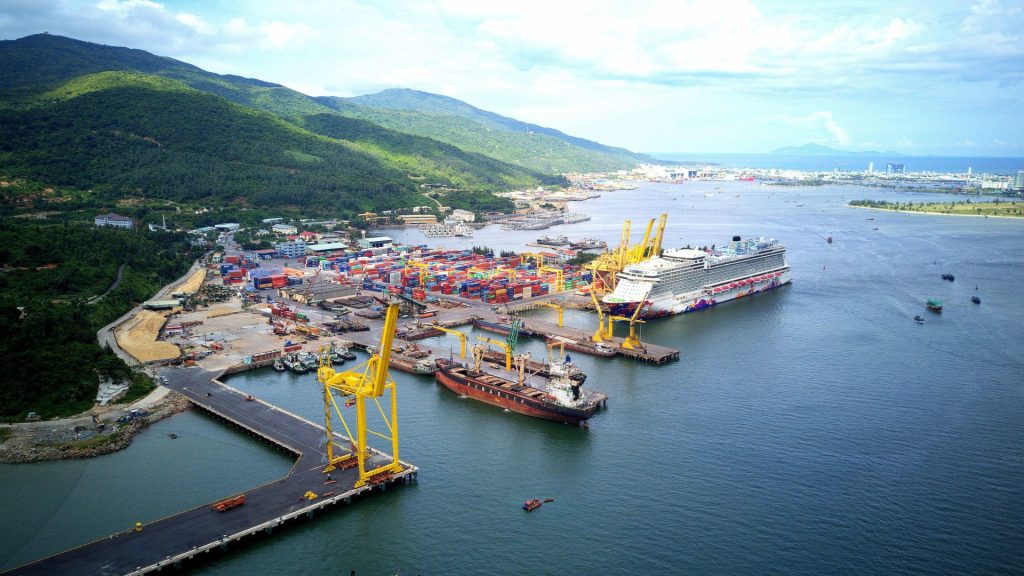
HANOI: Vietnamese enterprises are poised to sign memoranda of understanding (MoUs) with U.S. partners to purchase American agricultural products valued at $2 billion, the Ministry of Agriculture and Rural Development confirmed on Tuesday. The agreements form part of broader efforts to finalise a new trade arrangement between Vietnam and the United States. The MoUs are expected to be formalised during an official visit to the United States by a delegation of 50 Vietnamese companies, led by Agriculture Minister Do Duc Duy. Among the deals are five MoUs covering the purchase of $800 million worth of agricultural goods from the state of Iowa over a three-year period. These products include corn, wheat, dried distillers grains and soybean meal, the ministry stated. The negotiations come at a critical juncture as bilateral trade relations face potential strain. The Trump administration previously imposed 46% “reciprocal” tariffs on Vietnamese exports. Although implementation has been deferred until July, the threat of enforcement looms and could significantly disrupt Vietnam’s export-led growth model, particularly given the United States is its largest export market. Vietnam is seeking to address the growing trade imbalance with the U.S., which posted a trade deficit of $123 billion with the Southeast Asian nation in 2024. As part of its commitment to narrow the gap, Vietnam has agreed to expand imports of American goods and services. In 2024, Vietnam imported $3.4 billion worth of U.S. agricultural products, while exporting $13.68 billion in agricultural goods to the American market, according to Vietnam News Agency. The country has also pledged to increase purchases of other U.S. goods, including Boeing aircraft and liquefied natural gas, and to enhance its enforcement efforts against counterfeit goods and digital piracy following concerns raised by the U.S. government. -Reuters

News

China Says U.S. Breached Trade Agreement With New Sanctions and Visa Policies

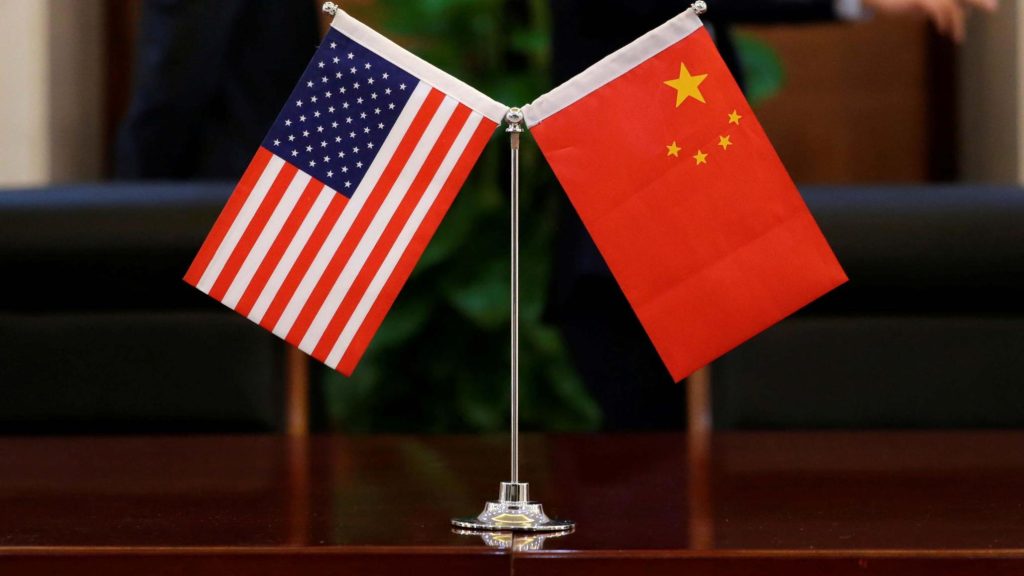
Beijing has strongly condemned a series of recent U.S. policy moves that it claims undermine a fragile trade détente agreed between the two economic superpowers, stating these actions “seriously violate” the consensus previously reached. In a formal statement released on Monday, China’s Ministry of Commerce cited new U.S. restrictions as cause for concern, including tightened export guidelines for artificial intelligence chips, a ban on the sale of chip design software to Chinese firms, and proposed revocations of student visas for Chinese nationals. These measures, it asserted, run counter to the trade de-escalation agreement struck just last month between Washington and Beijing. “These practices seriously violate the consensus,” the Ministry said, referring to the bilateral commitment to reduce tariffs and revive suspended trade flows. The agreement, which aimed to pause the escalating trade conflict, was meant to last 90 days to allow time for more substantive negotiations. Despite this temporary truce, major structural differences remain unresolved. The U.S. Trade Representative, Jamieson Greer, announced at the time that Washington would reduce its steep 145% import tax to 30%, while China agreed to lower its tariff rate on American goods from 125% to 10%. Yet tensions have continued to simmer. According to Beijing, it has upheld its obligations under the agreement by suspending or withdrawing retaliatory tariffs and other restrictive measures. “The United States has unilaterally provoked new economic and trade frictions, exacerbating the uncertainty and instability of bilateral economic and trade relations,” the Ministry’s statement said, noting that China had consistently honoured its commitments. The Ministry further warned that China would implement “resolute and forceful measures” in response to what it described as unjustified American actions, aimed at protecting its legitimate interests. U.S. President Donald Trump escalated the rhetoric last Friday, declaring via social media that China had “totally violated” the agreement and that he would no longer act as a conciliatory partner in trade discussions. “So much for being Mr. NICE GUY!” he wrote, adding in a separate Oval Office address that he still hoped to speak directly with Chinese President Xi Jinping to resolve the issues. The war of words continued over the weekend. In a televised appearance, U.S. Commerce Secretary Howard Lutnick accused China of “slow rolling” the deal and said the U.S. was taking actions “to show them what it feels like on the other side of that equation.” One such action includes the planned revocation of visas for Chinese students currently studying in the United States—a population exceeding 275,000. This decision further strains relations between the two countries as they compete for supremacy in critical technologies, including artificial intelligence and semiconductor development. Beijing also views the U.S. tightening of high-tech export controls as an attempt to constrain its ambitions in the Asia-Pacific, particularly in relation to Taiwan, a key American ally and a global leader in advanced semiconductor production. In response to President Trump’s accusations, the Commerce Ministry said Washington was distorting the facts and failing to take responsibility for its actions. “Instead of reflecting on itself, it has turned the tables and unreasonably accused China of violating the consensus, which is seriously contrary to the facts,” the Ministry stated. -The Marietta Times

News

Philippines’ Top E-Wallet GCash Prepares for IPO with Strategic Share Split

Globe Fintech Innovations Inc, the operator of the Philippines’ leading mobile wallet platform GCash, has approved a stock split aimed at increasing its pool of common shares, signalling early-stage preparations for a potential initial public offering. The fintech company will lower the par value of its common shares from PHP1.00 to PHP0.03 per share, thereby expanding the number of authorised common shares to 71.7 billion from the current 2.15 billion. The total authorised capital stock will remain unchanged at PHP2.15 billion. This corporate action, disclosed by shareholders Ayala Corporation and Globe Telecom Inc, remains subject to regulatory approval. Ayala Corporation noted, “The company is future-proofing for capital-raising opportunities, which could include an IPO.” While Globe Fintech Innovations Inc—also known as Mynt—has yet to formally file for a public listing, the firm’s potential valuation could reach at least US$8 billion (approximately RM33.9 billion), according to market observers. The move comes as other Philippine companies are testing the capital markets despite current volatility. Notably, Maynilad Water Services Inc and Hann Holdings Inc, a casino operator, have both indicated intentions to proceed with IPOs as early as this year. -Bloomberg

News

Microsoft Confirms Additional Job Cuts Following 6,000 Layoffs in May

Microsoft Corporation has executed a further round of job cuts, affecting several hundred employees, just weeks after initiating its largest workforce reduction in years. The latest development underscores the ongoing recalibration within the technology sector, where companies are simultaneously pursuing aggressive investment in artificial intelligence (AI) while restructuring to improve cost efficiency. According to a regulatory notice filed in Washington state and reviewed by Bloomberg, more than 300 roles were eliminated on Monday. A spokesperson for Microsoft confirmed that the reduction forms part of the same broader restructuring strategy that led to approximately 6,000 redundancies last month. “We continue to implement organisational changes necessary to best position the company for success in a dynamic marketplace,” the spokesperson stated. The AI-driven transformation sweeping across the tech industry is reshaping workforce demands. Companies are increasingly reallocating resources to AI-focused roles while leveraging automation and AI capabilities to streamline operations and reduce headcount. Microsoft, alongside other technology leaders such as Meta Platforms, has been vocal in its endorsement of AI-powered software development tools. These tools, which support coding and operational efficiency, are being credited with accelerating development timelines and reducing labour needs. Just last week, Salesforce reported that its internal use of AI had enabled it to limit new hires. While Microsoft’s previous layoffs disproportionately impacted software engineering roles, the specific departments or functions affected by the most recent cuts have not been disclosed. As of June 2024, Microsoft employed approximately 228,000 full-time staff globally, with around 55% based in the United States. -South China Morning Post

Scroll to Top

Subscribe
FREE Newsletter