Author name: theexchangeasia admin

Property

Sime Darby Property Acquires Kulai Land From SD Guthrie For RM418.5 Million

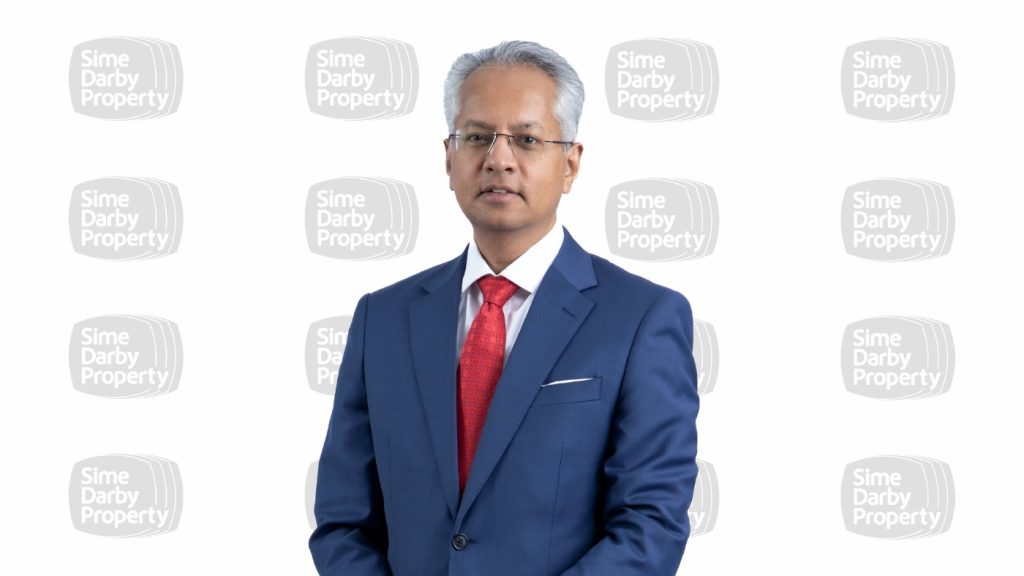
Sime Darby Property Bhd is acquiring 225.39 hectares of freehold land in Kulai, Johor, from SD Guthrie Bhd for RM418.5 million. The land, located along Jalan Kulai-Kota Tinggi within Flagship Zone F of the Johor-Singapore Special Economic Zone (JS-SEZ), will be developed into a township with an estimated gross development value of RM3 billion. Sime Darby Property Bhd is acquiring 225.39 hectares of freehold land in Kulai, Johor, from SD Guthrie Bhd for RM418.5 million to develop a township with an estimated gross development value of RM3 billion. The acquisition is being made through Sime Darby Property (Kulai) Sdn Bhd, which has signed an agreement with SD Guthrie. The planned township will include landed residential and commercial properties, with the first phase expected to be launched in 2028. The entire development is expected to take 10 to 15 years to complete. Sime Darby Property group managing director and CEO Datuk Seri Azmir Merican said the acquisition would strengthen the company’s presence in Johor and expand its development portfolio. He said the site’s location within the JS-SEZ provides an opportunity to develop a sustainable township that supports growing market demand, economic activity and job creation. The acquisition will add to Sime Darby Property’s existing Johor developments, including Bandar Universiti Pagoh and Taman Pasir Putih in Pasir Gudang. The company said the purchase would also diversify its earnings beyond the Klang Valley and Negri Sembilan while strengthening its long-term development pipeline.

ESG

Cypark Gets Seda Approval To Expand Port Dickson Waste-To-Energy Plant

Cypark Resources Bhd has secured approval from the Sustainable Energy Development Authority (Seda) to expand its waste-to-energy (WTE) plant in Port Dickson. The approval, granted to its wholly owned subsidiary Cypark Smart Technology Sdn Bhd under the 2026 Feed-in Tariff (FiT) programme, covers a total installed capacity of 44.73MW and a net export capacity of 29.99MW. The project, under the biomass category, involves the company’s Solid Waste Modular Advanced Recovery and Treatment WTE (SMART WTE) Plant at Ladang Tanah Merah, Port Dickson. Cypark said the approval marks an important step towards the implementation of Phase 2 of the WTE plant. The development comes as Malaysia continues to expand its renewable energy capacity under the FiT programme. Economy Minister Akmal Nasrullah Mohd Nasir recently said 42 renewable energy projects had been approved under the latest FiT bidding round, covering biomass, biogas and small hydropower. The projects are expected to attract RM4.3 billion in investments and add 331MW of combined generation capacity. Malaysia aims to increase renewable energy’s share of its installed power generation capacity to 70% by 2050. Cypark shares closed 0.5 sen, or 0.71%, higher at 71 sen on Tuesday, giving the company a market value of RM584.21 million.

Energy & Technology

Sime Darby’s Inokom Opens RM300mil Paint Shop In Kulim

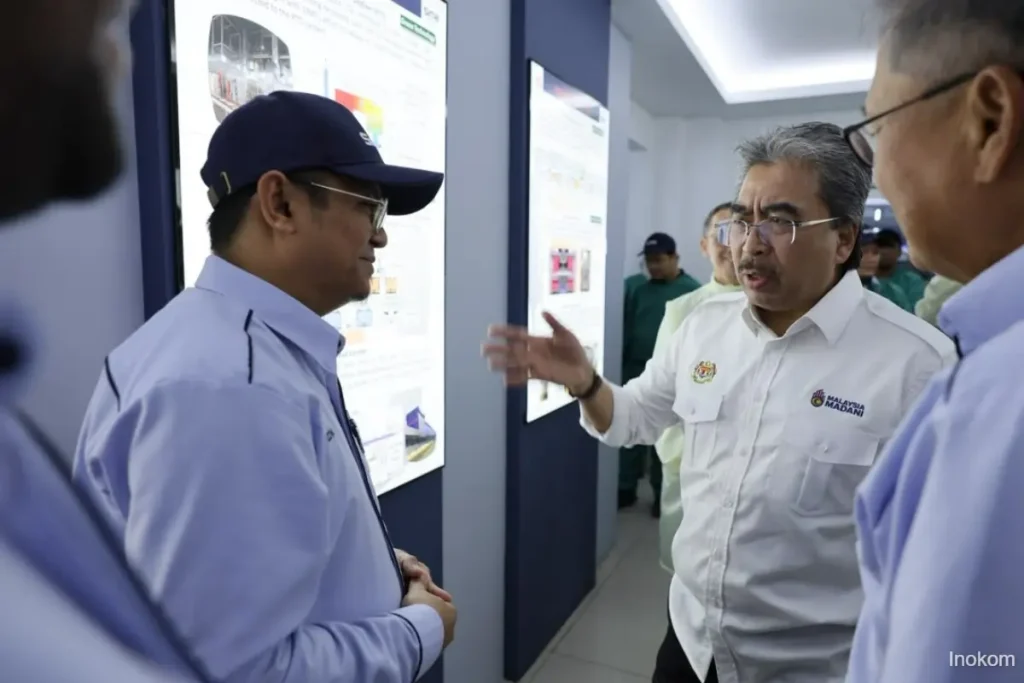
Inokom Corporation Sdn Bhd officially unveiled a new facility on Tuesday, doubling its total painting capacity at its flagship Kulim complex. The RM300 million facility, named Paint Shop 3 (PS3), is capable of processing up to 50,000 painted vehicle bodies annually under a two-shift operation, bringing Inokom’s combined paint shop capacity to 100,000 units a year, the company said in a statement. “The investment is aimed at positioning Inokom as the manufacturing partner of choice for local and regional automotive ecosystems, while creating employment opportunities and enhancing competitiveness,” it said. Investment, Trade and Industry Minister Datuk Seri Johari Abdul Ghani visiting Paint Shop 3. Inokom, which assembles vehicles for seven brands at its 200-acre manufacturing hub in Kulim, Kedah, is 51%-owned by Sime Darby Bhd. South Korea’s Hyundai Motor Company holds a 15% stake in Inokom, while their joint venture, Sime Hyundai Sdn Bhd, owns 5%. The remaining 29% is held by Bermaz Auto Bhd, which mainly assembles Mazda-branded vehicles. Described as one of Sime’s largest manufacturing investments to date, PS3 marks “a significant enhancement to Inokom’s manufacturing ecosystem,” said Syed Ahmad Muzri Syed Faiz, managing director of Sime Motors’ assembly and strategic businesses. “The facility expands our painting capacity, increases production flexibility and strengthens our ability to support the evolving requirements of our customers,” he added.

Investment & Market Trends

Sports Toto Divests Stakes Worth RM16.61mil

Sports Toto Bhd has disposed of part of its investments in 7-Eleven Malaysia Holdings Bhd and Berjaya Assets Bhd for a total cash consideration of RM16.61 million, according to a filing. The company’s wholly owned subsidiary, Magna Mahsuri Sdn Bhd, sold 5.03 million shares, representing a 0.45% stake, in 7-Eleven Malaysia yesterday for RM10.05 million, or RM2 per share. In a separate transaction, Sports Toto also disposed of 21.87 million shares, equivalent to a 0.85% interest, in Berjaya Assets for RM6.56 million, or 30 sen per share. Following the two disposals, Sports Toto and its subsidiaries continue to hold about 7.89 million shares, or a 0.71% stake, in 7-Eleven Malaysia, as well as 29.35 million shares, representing a 1.15% interest, in Berjaya Assets. The gaming and lottery group said the proceeds from the sale would be channelled towards investment purposes and/or working capital requirements, which include investments in debt securities as well as covering the company’s operating expenses. The disposals come as Sports Toto continues to manage its portfolio of investments across various sectors, with the group periodically adjusting its holdings in listed companies as part of its broader capital allocation strategy. No further details were provided on whether additional disposals of its remaining stakes in either company are being considered.

News

Hextar Portfolio Set To Acquire Hextar Retail

Hextar Portfolio Sdn Bhd has launched a conditional voluntary takeover offer, on behalf of Datuk Ong Choo Meng, to acquire all remaining shares in Hextar Retail Bhd not already held by the offeror and its ultimate offeror. The offer is priced at RM0.43 per share. Dato Eddie Ong Choo Meng. According to the offer document, Hextar Portfolio currently holds 142.29 million shares in Hextar Retail, representing a 30.6% stake in the company. Meanwhile, Datuk Ong Kook Liong, who is acting in concert with the offeror, holds an additional 0.6% stake. The offer price of RM0.43 per share represents a 7.5% premium over Hextar Retail’s last traded price of 40 sen on Aug 7. It also translates into premiums ranging from 0.3% to 7.8% over the company’s five-day, one-month, three-month and six-month volume-weighted average market prices, reflecting a consistent premium across various trading periods leading up to the offer. The takeover offer is conditional upon Hextar Portfolio and Ong Choo Meng securing valid acceptances that would bring their combined shareholding to more than 50% of Hextar Retail’s voting shares. If this condition is met, it would give the offeror and its concert party a controlling stake in the company, potentially paving the way for further corporate restructuring or a change in the company’s strategic direction. As of the time of the offer, no additional details have been disclosed regarding the offeror’s future plans for Hextar Retail should the takeover succeed, including whether the company would maintain its listing status on the stock exchange or undergo any operational changes.

Investment & Market Trends

Indonesia Launches First Gold ETF To Deepen Capital Market

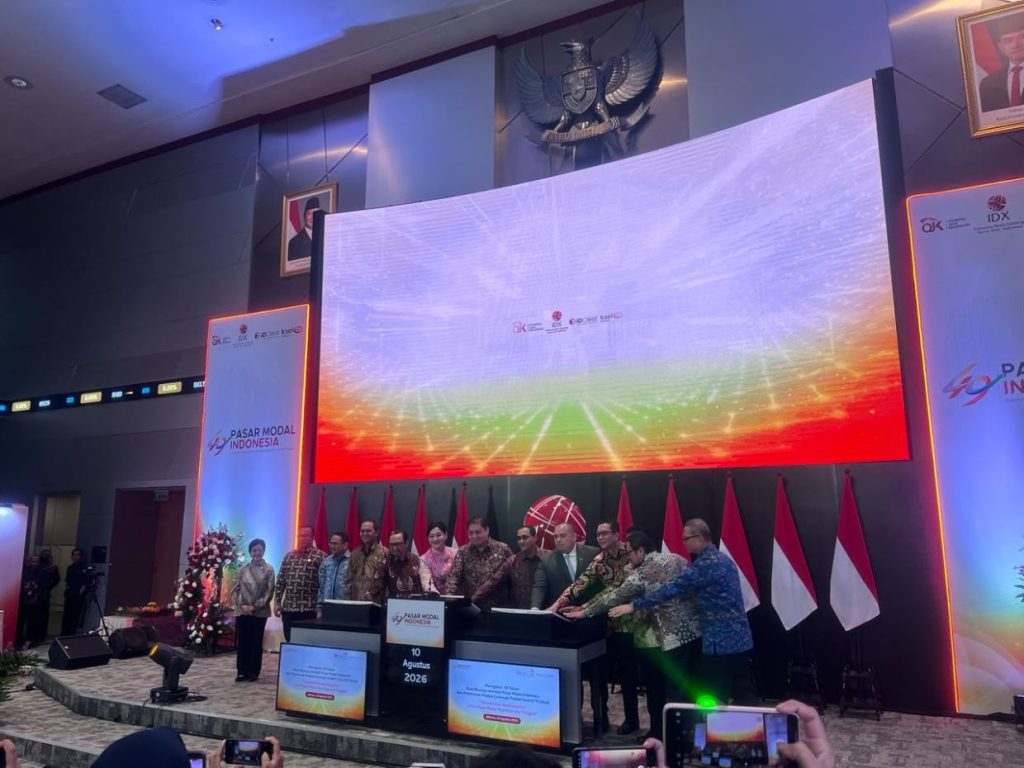
The Indonesia Stock Exchange (IDX) launched the country’s first physically backed gold exchange-traded fund (ETF) on Monday, Aug 10, in a move authorities say will strengthen the national bullion ecosystem and broaden investment options for the public. The launch, held at the IDX office in Jakarta, was attended by officials from the Coordinating Economy Ministry, the Finance Ministry, the Financial Services Authority (OJK) and self-regulatory organisations. The initiative was also positioned as a way to improve financial inclusion by linking the capital market to the bullion ecosystem, giving investors a new avenue to gain exposure to gold. Deputy Finance Minister Juda Agung described the rollout as a concrete step in the government’s broader capital market reform agenda, which includes efforts to boost liquidity and deepen the market. He noted that global demand for gold ETFs has been rising, with worldwide gold ETF assets under management reaching US$559 billion in 2025, backed by 4,025 tonnes of physical gold. “Today we have achieved a new milestone. The bullion market will continue to grow, while the capital market will deepen further,” he said, adding that the public will gain access to a wider range of gold investment alternatives. Coordinating Economy Minister Airlangga Hartanto said he expects Indonesia’s gold assets to keep growing following the ETF launch, potentially overtaking countries like Singapore and India. He pointed to domestic gold assets managed by state-owned pawnshop PT Pegadaian, which have reached 153 tonnes, equivalent to roughly US$20 billion. OJK Chairwoman Friderica Widyasari Dewi said the ETF rollout is part of the government’s quick-win initiatives and confirmed the product has been designed to comply with syariah principles. Separately, reports indicate the ETF is trading under the ticker XTRA, with Friderica calling the launch the realisation of an initiative that had been studied for more than a decade, made possible by regulatory changes and the maturing of Indonesia’s financial ecosystem. President Director of PT Kustodian Sentral Efek Indonesia (KSEI), Samsul Hidayat, said he expects the vehicle to serve as a viable option for both retail and institutional investors, while bridging the capital market with the wider national bullion framework. Some reports note that the launch actually comprised five separate gold-backed ETFs, marking a new step in the development of Indonesia’s capital market and giving investors a way to gain gold exposure without directly purchasing or storing physical bullion.

News

Four Decades, One Evolving Business

Longevity in business is rarely about doing the same thing well for decades. More often, it is about knowing what should remain unchanged — and recognising what must evolve. For Salleh Food Industries Sdn. Bhd., almost four decades in Malaysia’s food manufacturing industry have been shaped by precisely that balance. Established in 1987, the company began with products deeply familiar to Malaysian consumers: kerepek ubi, kerepek pisang and a variety of traditional snacks made from locally sourced agricultural produce. Chief Executive Officer di Salleh Food Industries Sdn Bhd – Mohd Fauzie Salleh. The flavours may be rooted in tradition, but the business behind them is increasingly looking forward. Today, Salleh Food distributes its products throughout Malaysia via retailers and distributors while embracing newer channels including e-commerce and TikTok Shop. Behind that expansion is a wider transformation taking place across the company — one that involves strengthening its brand, modernising systems, developing people and preparing the organisation for its next phase of growth. For a business approaching its fourth decade, the question is no longer simply how to sell more products. It is how to build an organisation capable of remaining relevant for decades more.   The Business Behind the Snack Salleh Food may be recognised as a snack manufacturer, but its role extends further along the value chain. The company takes locally grown agricultural produce and transforms it into accessible, higher-value consumer products. In doing so, its business connects farmers and suppliers with consumers while creating economic opportunities across the communities that support its operations. There is also an emotional dimension to the products it makes. Traditional food occupies a distinctive place within Malaysian culture. A familiar snack can carry memories of childhood, family gatherings and traditions passed from one generation to another. Preserving that connection has remained important to Salleh Food even as the expectations surrounding food manufacturing have changed. The challenge is to retain the familiarity consumers appreciate while ensuring the business behind the product continues to advance. That means bringing modern processes, technology, stronger quality standards and contemporary distribution into a category that has traditionally been dominated by smaller producers.   When a Good Product Is No Longer Enough When Salleh Food began operating in 1987, the opportunity in the market was relatively clear. Demand for local snacks was strong, but many smaller producers faced challenges in maintaining consistency, developing their brands and reaching consumers beyond their immediate markets. Building greater structure around these areas created room for businesses such as Salleh Food to grow. Nearly 40 years later, the market gap has changed. Producing something that tastes good remains fundamental, but it is no longer enough to guarantee success. Consumers have more choices. Brands are discovered through social media as much as supermarket shelves. E-commerce has changed how products are purchased, while digital platforms allow new competitors to enter the market much faster. Trust, consistency, visibility and convenience have become increasingly important. This has pushed Salleh Food to think beyond manufacturing. The company is now focused on building the infrastructure around the product — from its brand and distribution capabilities to its internal systems, people and leadership. Its strategic direction centres on three priorities: strengthening the brand, developing systems and talent, and expanding into larger markets. It is a deliberately focused approach. Like any business, Salleh Food operates with finite time, capital and management resources. Rather than pursuing every opportunity available, the company is increasingly assessing opportunities according to their ability to contribute to long-term organisational value.   Growing Stronger, Not Simply Bigger The distinction between getting bigger and becoming stronger has become increasingly important to Salleh Food. Sales growth is one measurement of success, but the company believes genuine growth should also be reflected in the organisation’s ability to operate without excessive dependence on any single individual. That requires processes that can be repeated, people who can make decisions and leaders capable of taking responsibility. As organisations expand, this becomes significantly more difficult. A management approach that works with ten employees may become ineffective with 50 or 100. Communication becomes more complex. Informal decision-making begins to create bottlenecks. Responsibilities must become clearer, and maintaining alignment around a common vision becomes a leadership challenge in itself. For Salleh Food, scaling has therefore required a shift in the way leadership is approached. Where a leader may once have been heavily involved in solving day-to-day operational problems, the next stage requires becoming what the company describes as a “builder of leaders”. Instead of solving every problem, leadership must develop people who can solve problems themselves. It is a fundamental transition for any growing organisation — particularly one that has evolved from a family-founded enterprise. The objective is to create a business that can continue progressing because capability has been distributed throughout the organisation rather than concentrated at the top.   What Four Decades Really Teach a Business Remaining in business for almost 40 years inevitably means operating through very different economic and commercial environments. Salleh Food has experienced changing consumer preferences, rising costs, operational pressures, new forms of competition and the disruption created by the pandemic. Through each period, the company’s competitive advantage has not necessarily been something consumers can see on its packaging. It has been adaptability. Products can be copied. Prices can be challenged. New competitors can enter a category. What is considerably harder to replicate is an organisation’s ability to continuously learn, adjust and recover when circumstances change. This willingness to evolve has become one of Salleh Food’s most important strengths. While consumers see the final product on a shelf or online, behind it sits an ongoing process of improvement — refining operations, strengthening systems, developing employees and responding to what the market requires next. That mindset is particularly important for established businesses. Longevity can be an advantage, bringing experience, market knowledge and consumer familiarity. But history alone does not guarantee future relevance. The companies that endure are often those willing to challenge the very practices that helped them succeed in the past.  

Investment & Market Trends

Malaysia Palm Oil Reserves Climb 3.32% To 2.63 Million Tonnes In July 2026, Says MPOB

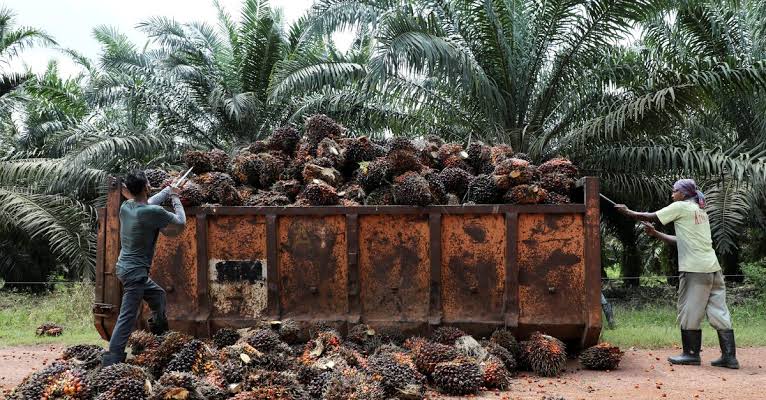
Malaysia’s palm oil stockpiles rose 3.32 per cent, or 84,495 tonnes, to 2.63 million tonnes in July 2026, up from 2.54 million tonnes the previous month, according to the Malaysian Palm Oil Board (MPOB). MPOB said crude palm oil (CPO) stocks climbed 7.24 per cent, or 96,495 tonnes, to 1.43 million tonnes in July 2026, from 1.33 million tonnes in June 2026. “However, processed palm oil stockpiles eased 0.99 per cent to 1.20 million tonnes from 1.21 million tonnes in June,” it said in its July industry performance report. On production, MPOB said CPO output rose 9.41 per cent, or 154,183 tonnes, to 1.79 million tonnes from 1.64 million tonnes a month earlier, while palm kernel output increased 10.69 per cent month-on-month to 422,266 tonnes from 381,486 tonnes. Crude palm kernel oil production jumped 14.55 per cent to 199,392 tonnes from 174,071 tonnes in June, while palm kernel cake output rose 10.11 per cent to 215,304 tonnes from 195,534 tonnes. MPOB said palm oil exports increased 14.50 per cent in July 2026 to 1.39 million tonnes, up from 1.22 million tonnes the previous month. Palm kernel oil exports edged down 1.73 per cent to 82,261 tonnes from 83,712 tonnes, while palm kernel cake exports fell 8.72 per cent to 203,454 tonnes from 222,887 tonnes. Meanwhile, oleochemical exports rose 17.81 per cent to 265,198 tonnes from 255,098 tonnes in June, and biodiesel exports surged 496.77 per cent to 28,745 tonnes from 4,817 tonnes the previous month. MPOB reported zero CPO imports in July. Combined processed palm oil and palm oil imports fell 51.93 per cent to 49,566 tonnes from 103,113 tonnes in June, while palm kernel oil imports rose 93.12 per cent to 11,545 tonnes from 5,978 tonnes the preceding month.

News

Why Your Accountant Should Know More Than Your Numbers

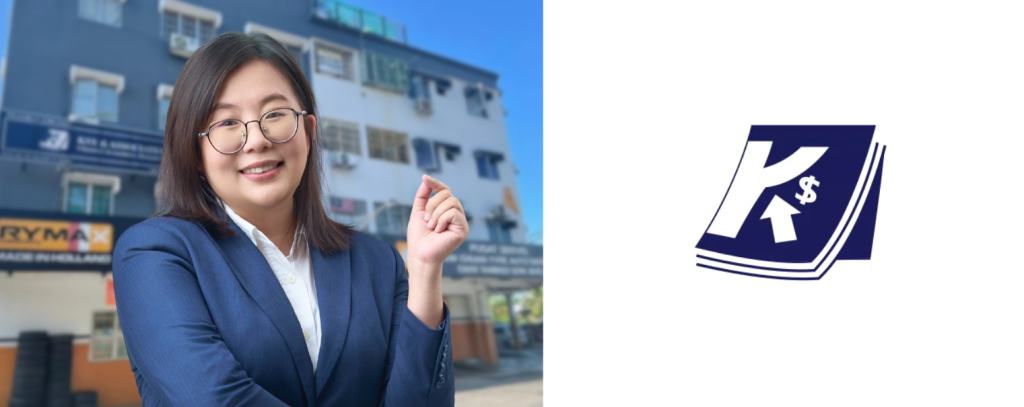
Revenue can grow while a business gets weaker. It is one of those uncomfortable realities that entrepreneurs tend to discover only after running a company for some time. A strong sales month does not necessarily mean strong cash flow. A profitable year does not automatically mean a business is financially prepared to expand. And a company that is completely compliant with its tax obligations can still be making poor financial decisions. Founder of KPL Corporate Advisory Sdn. Bhd. – Shu Yi Kuek. This is why KPL Corporate Advisory Sdn Bhd believes the relationship between an SME and its accountant needs to change. The Malaysian taxation, audit, accounting and corporate advisory firm works with business owners who are often very good at what they do. They know their customers. They understand their products. They can spot an opportunity and instinctively know when something might sell. What they do not always have is the financial clarity to know whether the business is actually moving in the right direction. And that can become expensive.   Compliance Is the Starting Point Tax has to be filed. Accounts have to be prepared. Regulations have to be followed. KPL does all of that. But compliance tells a business owner surprisingly little about what decision to make on Monday morning. Should another employee be hired? Is there enough cash to open a second location? Why is turnover increasing but profitability barely moving? Is the business financially structured for its next stage? What risks are quietly accumulating? These are not accounting questions in the traditional sense. They are business questions that happen to require a strong understanding of the numbers. That distinction has increasingly shaped KPL’s work. The firm has moved towards becoming an adviser that can sit alongside an entrepreneur and translate financial information into something commercially useful. No unnecessary jargon. No assumption that the person sitting across the table has an accounting degree. Just: What do these numbers mean for my business?   SMEs Have Changed. Their Advisers Have To Change Too. The Malaysian SME of today can move remarkably quickly. A small e-commerce company can suddenly be selling nationwide. A family business can move into export markets. A founder-led operation can become an organisation employing dozens of people within a relatively short period. The financial complexity grows with it. KPL saw early that accounting and taxation were still frequently treated as obligations to be dealt with after the fact. Professional advice could also be overly technical, creating distance between advisers and the very business owners who needed to understand it. Digitalisation has since raised expectations further. Clients want answers faster. They expect better visibility. And increasingly, they want advisers who understand commercial realities rather than simply regulatory requirements. That has pushed KPL towards three priorities: technology, deeper advisory capabilities and people.   Bigger Isn’t the Objective There is an interesting restraint to KPL’s growth philosophy. The firm does not necessarily want every client. It has become increasingly selective about the businesses it works with, favouring organisations that value transparency, ethical practices and sustainable long-term growth. The logic is simple. Taking on more work means very little if the quality of advice deteriorates. For KPL, a better measure of growth is whether clients trust the firm with more complex decisions, whether relationships become deeper, whether employees become stronger professionals and whether internal systems allow the organisation to handle greater complexity without becoming impersonal. That philosophy also explains why rapid expansion holds limited appeal if it comes at the expense of culture or service.   Technology Should Make Advice More Human Accounting is one of many professions being transformed by technology. KPL has increased its adoption of digital workflows and paperless processes, improving efficiency while reducing unnecessary operational waste. Further digital integration forms an important part of its next phase. But the interesting question is not whether technology will replace parts of traditional accounting work. Inevitably, some repetitive processes will become easier to automate. The more important question is what professionals do with the time that creates. For KPL, the answer should be more advisory, not less interaction. If technology can process information faster, professionals can spend more time interpreting it. If systems can handle routine workflows, advisers can devote more attention to understanding the client, identifying risks and discussing decisions. In other words, technology should make the relationship more valuable rather than more distant.   The Growing Pains Are Internal Too KPL faces the same challenge it advises many clients about: scaling changes the organisation itself. In a small team, information moves informally. People know what everyone else is doing. Decisions can happen across a desk. Growth makes that increasingly difficult. The firm has had to strengthen workflows, improve delegation and create clearer processes while investing more heavily in developing its people. Leadership has consequently shifted from personally overseeing work towards building teams capable of taking ownership. The balancing act is maintaining the responsiveness associated with a smaller advisory firm while developing the discipline required of a larger professional organisation. That is not always easy. But neither is building a sustainable SME—which is precisely why KPL understands the clients sitting on the other side of the table.   The Question After the Numbers KPL’s next phase is centred on becoming recognised less as a company businesses visit because they have to file something and more as one they speak to because they are about to make an important decision. Taxation, accounting and audit will remain fundamental. The opportunity is what happens after them. Because when a business owner receives a set of financial statements, the most valuable conversation should not end with: “Here are your numbers.” It should begin with: “So, what are you going to do next?”  

Energy & Technology

ITMAX’s Sabah Win Boosts Smart-City Revenue Outlook, Says HLIB

ITMAX System Bhd’s latest RM134 million smart city project in Kota Kinabalu is expected to boost the annual revenue run rate of its supply and installation division, according to Hong Leong Investment Bank Bhd (HLIB). ITMAX has accepted the notification of approval as the Universal Service Provider for the Kota Kinabalu Smart City Project from the Malaysian Communications and Multimedia Commission (MCMC). HLIB said the project mainly involves a network operation command centre and around 1,500 closed-circuit television (CCTV) cameras, with supply and installation revenue recognised over the first two years, followed by five years of managed services. “Beyond the initial contract period, we see scope for ITMAX to secure a longer-term managed services agreement with Kota Kinabalu City Hall (DBKK), potentially spanning 15 to 20 years, upon project completion. Coupled with the recently secured DBKL smart street-lighting contract, this award should lift the annual revenue run rate of ITMAX’s supply and installation division towards about RM80 million to RM100 million, by our estimates,” it said. HLIB added that ITMAX’s successful expansion into Sabah, Johor and Penang, beyond its traditional Kuala Lumpur City Hall (DBKL) market, reinforces the competitiveness of its smart city solutions. It noted that Selangor is the next key state to watch, with CCTV contracts potentially coming up for tender in 2027-2028 following the award of SIP Phase 2. “As the operator of SIP Phase 1, ITMAX has an upper hand in demonstrating the effectiveness of its solutions. More importantly, some CCTVs installed for parking-payment enforcement under Phase 1 could also support broader surveillance functions, giving ITMAX an existing infrastructure base and a potential advantage when bidding for Selangor’s CCTV contract,” it said. HLIB also flagged Penang as an emerging growth market, after local councils awarded contracts to fully replace around 1,000 existing CCTVs. Overall, the firm maintained its “Buy” call on ITMAX with an unchanged target price of RM6.00. “Over time, we also expect ITMAX to further monetise its infrastructure through smart city applications such as digital twins, traffic impact assessments and analytics, cementing its role as a key enabler of urban digital transformation,” it added.

Scroll to Top

Subscribe
FREE Newsletter